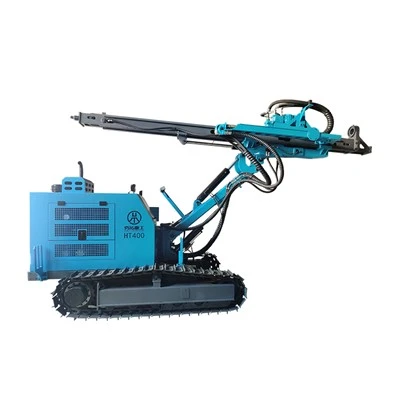
Drill rigs play a very vital role in open-pit mining, mining, and construction, as heavy works such as drilling and blasting and making underground tunnels are performed. As per the impact technique, the most frequently utilized drilling rigs include the top hammer drilling rig and the down-the-hole drilling rig. To what extent do you have an understanding of these two kinds of drill rigs?
Structure
The structure of the top hammer drill rig
Let's talk about the structure of the top hammer drill rig first. It is mainly composed of the drill arm, the drill rod push beam, the rod changer, the rock drill, the hydraulic control system, the fuel system, the chassis, the cab and other structures. It generally works in stone mines that need drilling and blasting, and is also used in places such as splitting stone and excavating the base of buildings.
Down-the-hole drill impactor structure
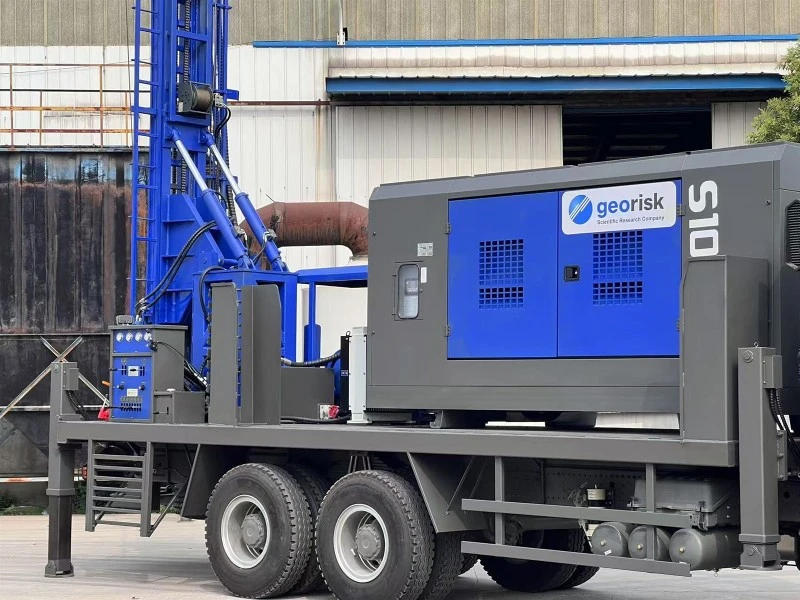
Comprising elements like a slewing, lifting, pushing, support, and impact mechanisms, the down-the-hole drill rig is structured. In rock drilling, submerging the impactor into the hole minimizes energy depletion due to the work carried by the drill rod, thus lessening the hole's depth effect on drilling efficiency.
Position of the impact force
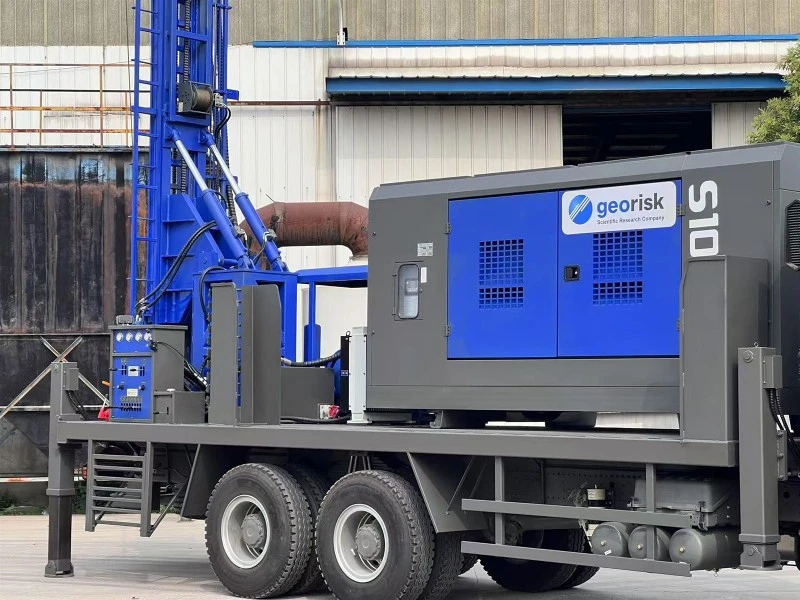
From the appearance alone, it is difficult to tell the difference between the top hammer and the down-the-hole type at first glance. In fact, the biggest difference between the two is the difference in the position of the impact force, which is why there are two forms.
The difference between the two can be vividly seen from the above picture. The left one is the down-the-hole type, and the impact force acts directly on the tail of the drill bit, which is what we call the drill bit; the right picture is the top hammer type, which generally uses the hammer force provided by the rock drill to transmit the drill bit at the bottom of the hole to break the rock, and the impact force acts on the top of the drill rod.
Application Scope
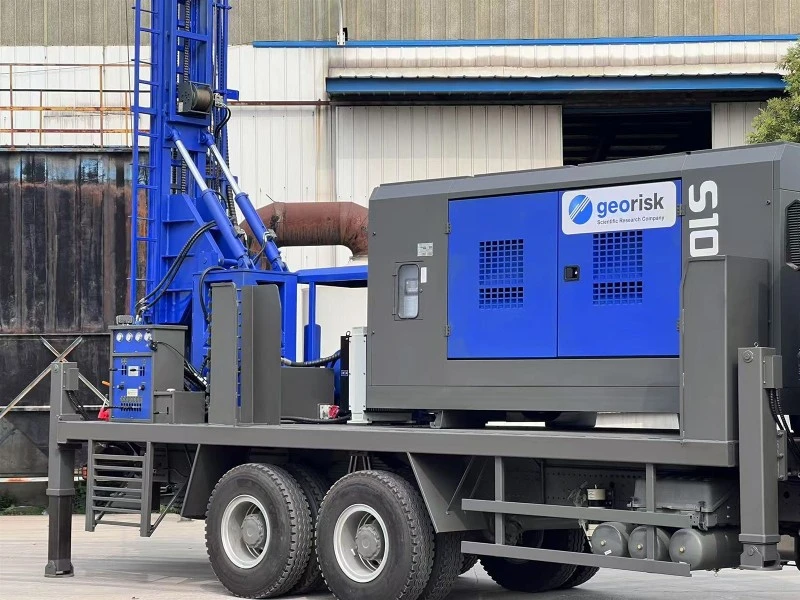
Top hammer type appeared earlier than DTH type, and its application scope is relatively wide. Top hammer type can drill very small holes, and hydraulic impactor can be used to achieve higher efficiency and drilling speed. Its main feature is that it is suitable for small hole diameters. In small hole and DTH applications, such as tunneling, anchoring, decorative stone, construction, etc., top hammer type is more popular.
In addition, since the drill rod has to withstand the thrust, rotational torque, and shock wave, it is also more prone to deflection. In general, the design and manufacturing difficulty of top hammer drilling rigs is much greater than that of DTH type.
The T640J surface top hammer drill rig is an advanced and efficient rock drilling solution designed for demanding surface mining and large construction projects. This T640J Fully Hydraulic Integrated Crawler Surface Rock Drill was developed and manufactured by our company after extensive market research and is designed for harsh conditions in open pit mining and large construction projects. Our engineers have also received a successful job from Malaysia, where the customer was very impressed with the service and performance of the drill.
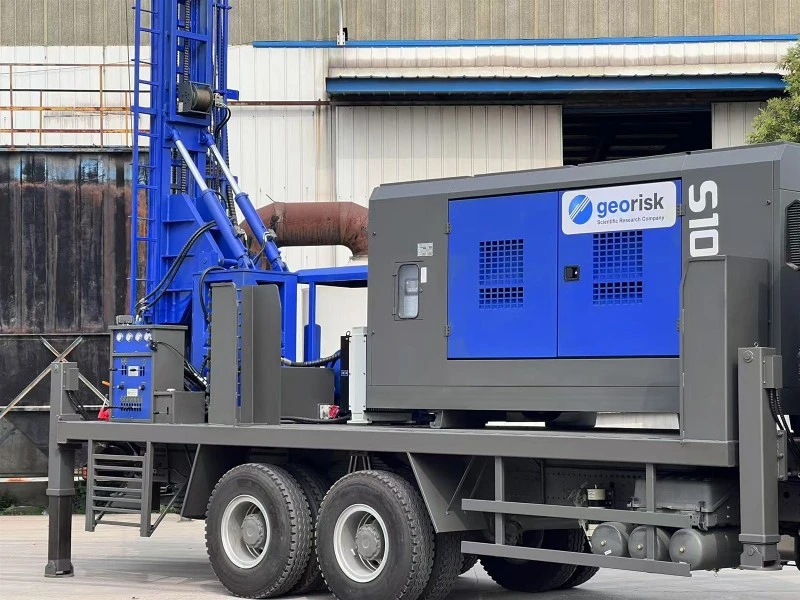
The down-the-hole hammer of the down-the-hole type is at the bottom of the hole, so the hole diameter cannot be too small. A major feature of this type of drilling rig is that it is suitable for drilling large holes, especially hard rocks above 200 MPa, while the top hammer type is more suitable for rock operations with a hardness below 200 MPa.
Summary
Nowadays, with the continuous improvement of technical level, many new drilling rigs have emerged, and they continue to undertake their mission in the drilling construction of mines. Our tracked surface drilling rig is a versatile, efficient, environmentally friendly drilling solution that offers superior productivity even in the harshest conditions. Advanced features put it at the forefront of large-scale mining and construction drilling operations.