Presentation
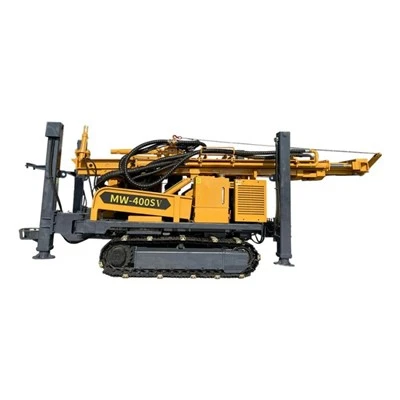
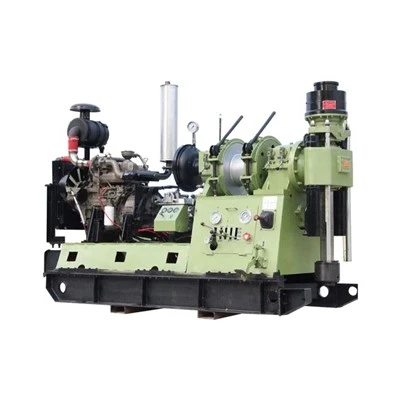
In the course of developing large diameter deep-hole mining methods, two kind drills, down-the-hole drills and rotary drills-mostly are used for boring large diameter deep holes. Until now, after decades of development, rotary drills only get bigger in diameter, with greater power and much greater drilling depth compared to down-the-hole drills. They have achieved technical advantages in operating efficiency and drilling medium-hard rock, widely used in engineering surveys and engineering reinforcement.
However, in medium-hard rock, if the diameter of the drilling hole is less than 250 mm, practice has proved that the life of a rotary drill bit cannot be very ideal, and the life of a drill bit for a down-the-hole drill is better compared with that of a rotary drill. Besides, the down-the-hole drill has two types: pneumatic and electric. Compared with the electric drill, the pneumatic drill has more power for drilling into rock formations and can drill bigger hole diameters. On the other hand, the advantage of an electric drill compared to a pneumatic drill is that a complete set requires fewer numbers and weights, which makes field transportation easier.
Advantages of Down Hole Drilling Rigs
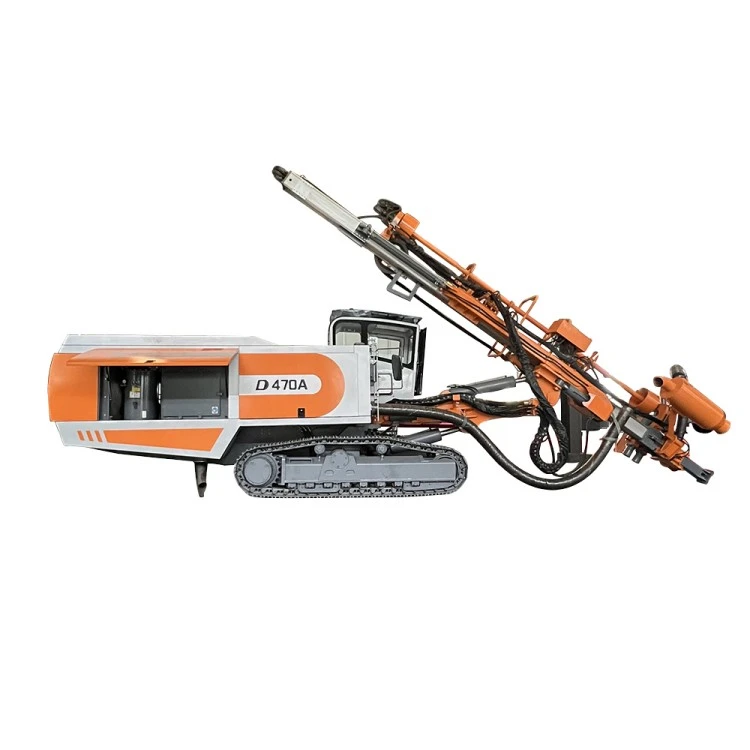
In comparison, down-the-hole drills have the following eight advantages, take the following new down-the-hole open pit drill rig for example:
1. No need to select rock type: Down-the-hole drills can be used to drill blastholes in soft, hard, extremely hard rock and various consolidated rock formations.
2. Can drill oblique holes or holes in any direction: Down-the-hole drills do not need to apply high axial pressure to rocks during operation, so drills that can drill holes in any direction can be designed, which brings a series of benefits to operations such as slope treatment of open-pit mines, graded mining, formulation of reasonable rock drilling and blasting process parameters, reduction of the destructive effect of seismic waves on the ground and improvement of blasting quality.
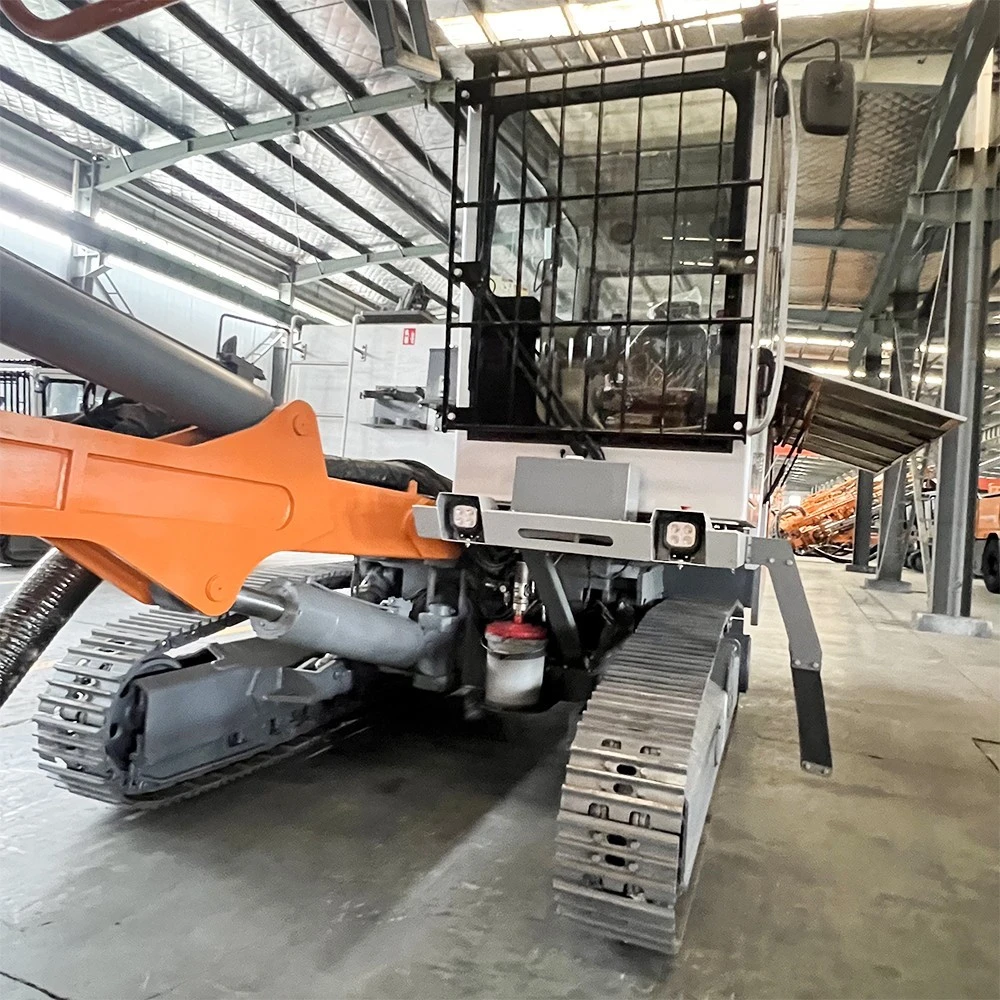
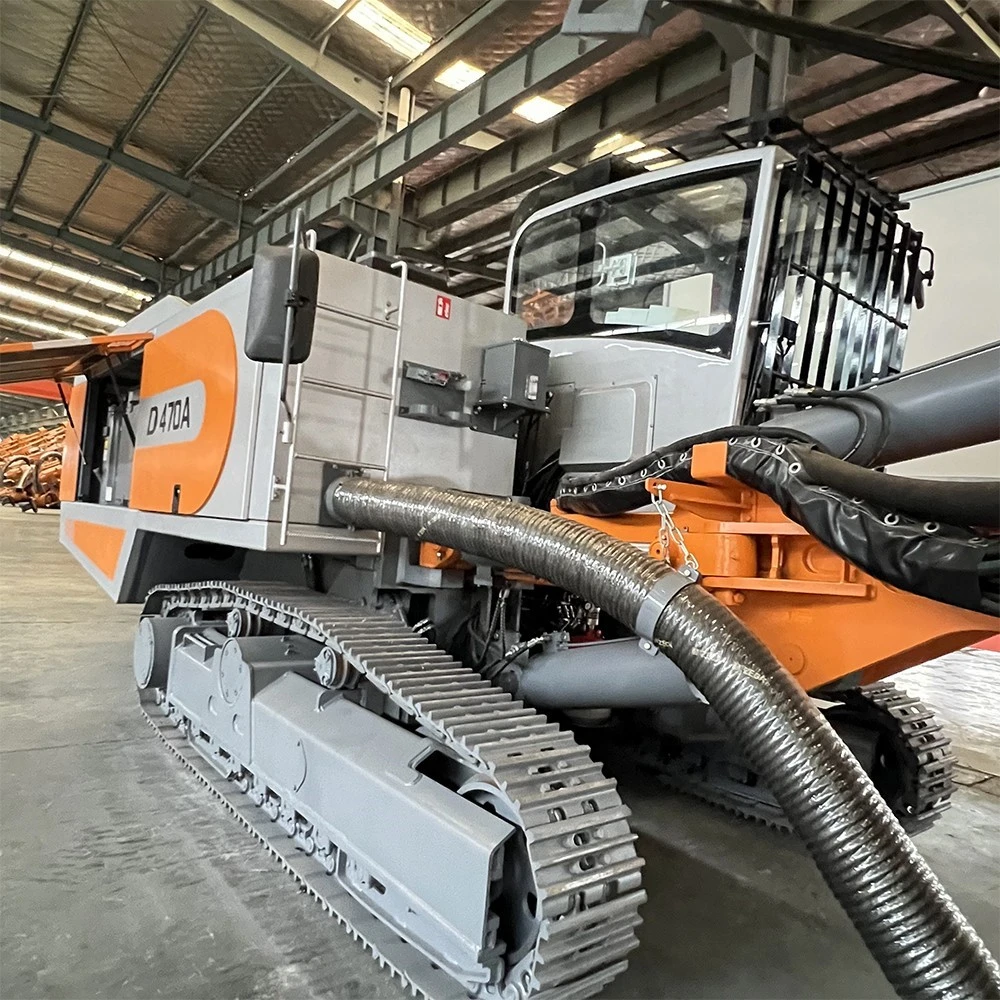
3. Can drill straighter holes: Because the impact of the down-the-hole drill is short and fast, it can minimize the impact of broken rock formations, inclined rock formations, cracks and caves, so that straighter holes can be drilled and the hole wall can be kept intact.
4. The drilling range of the drill is large: At present, down-the-hole drills can drill blastholes with a diameter of 80 to 762 mm.
5. The pollution to the environment is relatively small, and it can provide a good working environment for the operator: the exhaust gas of the drilling rig impactor cleans the bottom of the hole through the drill bit, and the rock powder is discharged from the annular space between the drill rod and the hole wall, and is processed by the dust removal mechanism on the ground.
6. Long life of the drill rod: The drill rod of the down-the-hole drill has a low speed and small load, and the cost of the drill rod is low and the life is long.
7. High drilling speed: The impactor of the drilling rig increases the drilling speed by multiples with the increase of air pressure.
8. Deep holes can be drilled: Because the down-the-hole drill only needs appropriate axial pressure, a smaller drill (lightweight) can be used to drill deeper holes, thereby reducing the economic losses of mine depletion.