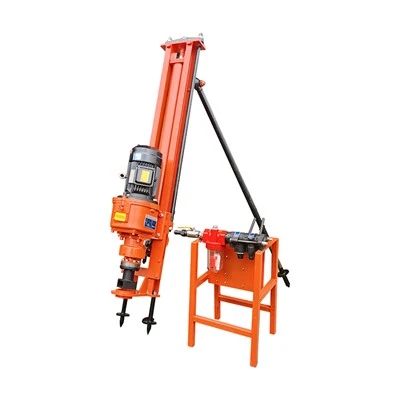
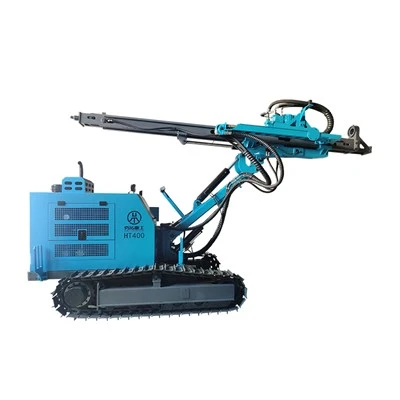
The down the hole (DTH) drilling method is widely used in various industries, such as mining, construction, and geothermal energy extraction. In a DTH drilling system, the shock absorber plays a crucial role in ensuring the efficiency, safety, and longevity of the equipment. As a professional down the hole drilling supplier, I'd like to share in - depth insights into the role of the shock absorber in down the hole drilling.
1. Understanding Down the Hole Drilling
Down the hole drilling involves a drill bit that is located at the bottom of the drill string. Compressed air or other fluids are used to power the hammer mechanism within the drill bit, which repeatedly strikes the rock to break it. This method is known for its high - penetration rate and the ability to drill in hard rock formations.
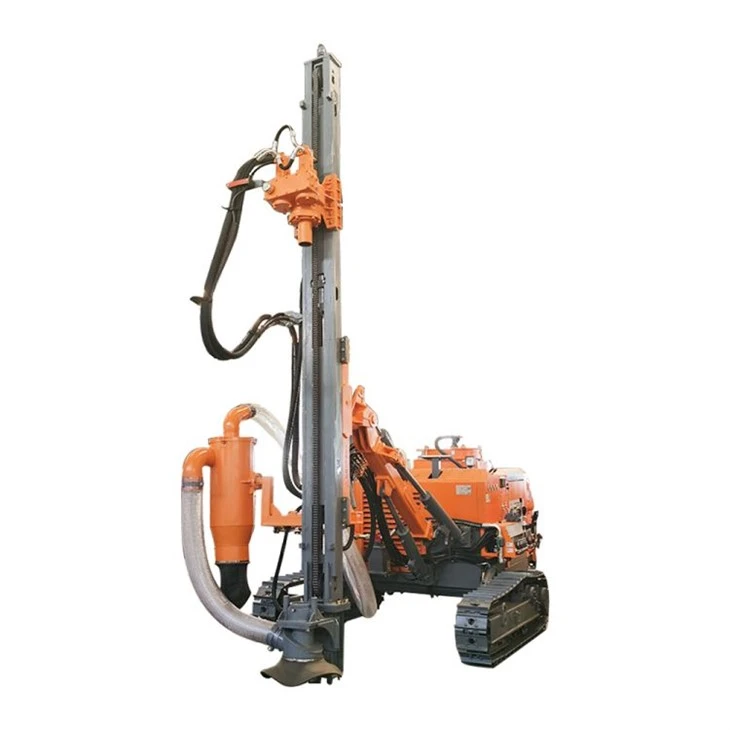

Our company offers a wide range of down the hole drilling equipment, including Fully Hydraulic Drilling Rigs, top hammer surface drill rig, and Down The Hole Drill Rig. These rigs are designed to meet different drilling requirements in various geological conditions.
2. The Function of the Shock Absorber in DTH Drilling
2.1 Vibration Damping
During the DTH drilling process, the hammer mechanism generates intense vibrations. These vibrations can cause several problems if not properly managed. Firstly, excessive vibrations can lead to premature wear and tear of the drill components. For example, the drill pipes, couplings, and the drill bit itself can experience accelerated fatigue due to the continuous stress caused by vibrations.
The shock absorber acts as a buffer, absorbing and dissipating the vibrational energy. It reduces the amplitude of the vibrations transmitted to the rest of the drill string and the drilling rig. By minimizing vibrations, the shock absorber helps to extend the service life of the drilling equipment, reducing maintenance costs and downtime.
2.2 Protection of the Drilling Rig
The drilling rig is a complex and expensive piece of equipment. The high - impact forces generated during DTH drilling can potentially damage the rig's structure, hydraulic systems, and control components. The shock absorber helps to protect the rig by preventing these high - impact forces from being directly transferred to the rig.
It ensures that the rig operates smoothly and safely. For instance, in a hydraulic drilling rig, excessive vibrations can cause hydraulic fluid leaks, damage to valves, and malfunction of the control systems. The shock absorber reduces the risk of such problems, thereby enhancing the reliability of the drilling rig.
2.3 Improvement of Drilling Accuracy
Vibrations can also affect the accuracy of the drilling process. When the drill bit vibrates excessively, it may deviate from the intended drilling path, resulting in inaccurate hole placement and reduced hole quality. The shock absorber helps to maintain the stability of the drill bit, ensuring that it drills straight and true.
This is particularly important in applications where precise hole placement is required, such as in the construction of foundations or in mining operations where the drill holes need to be accurately aligned for blasting. By improving drilling accuracy, the shock absorber can enhance the overall efficiency and productivity of the drilling operation.
3. Types of Shock Absorbers Used in DTH Drilling
3.1 Rubber - Based Shock Absorbers
Rubber - based shock absorbers are commonly used in DTH drilling. Rubber has excellent damping properties, which allow it to absorb and dissipate vibrational energy effectively. These shock absorbers are relatively simple in design and cost - effective.
They can be easily installed between the drill string and the drilling rig. Rubber shock absorbers can withstand a wide range of operating conditions, including high - temperature and high - humidity environments. However, they may have limitations in terms of their load - bearing capacity and durability in extremely harsh conditions.
3.2 Hydraulic Shock Absorbers
Hydraulic shock absorbers are another type of shock absorber used in DTH drilling. They work by using hydraulic fluid to dampen the vibrations. Hydraulic shock absorbers offer more precise control over the damping process compared to rubber - based shock absorbers.
They can be adjusted to suit different drilling conditions and requirements. For example, in a deep - hole drilling operation, a hydraulic shock absorber can be adjusted to provide more damping force to handle the higher impact forces. However, hydraulic shock absorbers are more complex in design and require regular maintenance to ensure proper functioning.
4. Factors Affecting the Performance of Shock Absorbers
4.1 Geological Conditions
The geological conditions of the drilling site have a significant impact on the performance of the shock absorber. In hard rock formations, the impact forces generated during drilling are higher, requiring a shock absorber with greater damping capacity.
In soft rock or soil, the shock absorber may not need to work as hard. Additionally, the presence of fractures or irregularities in the rock can also affect the vibration characteristics, and the shock absorber needs to be able to adapt to these changing conditions.
4.2 Drilling Parameters
Drilling parameters such as the drilling speed, feed rate, and air pressure also affect the performance of the shock absorber. Higher drilling speeds and feed rates generally result in higher impact forces and vibrations. The shock absorber needs to be selected and adjusted according to these parameters to ensure optimal performance.
For example, if the drilling speed is increased, the shock absorber may need to be adjusted to provide more damping force to handle the increased vibrations.
4.3 Maintenance and Installation
Proper maintenance and installation of the shock absorber are crucial for its performance. Regular inspection and replacement of worn - out components are necessary to ensure that the shock absorber continues to function effectively.
Incorrect installation can also lead to reduced performance or even damage to the shock absorber. For example, if a rubber shock absorber is not installed correctly, it may not be able to absorb the vibrations properly, leading to increased wear and tear of the drilling equipment.
5. Conclusion and Call to Action
In conclusion, the shock absorber plays a vital role in down the hole drilling. It helps to protect the drilling equipment, improve drilling accuracy, and enhance the overall efficiency and productivity of the drilling operation. As a down the hole drilling supplier, we understand the importance of high - quality shock absorbers in ensuring the success of your drilling projects.
If you are looking for reliable down the hole drilling equipment and high - performance shock absorbers, we invite you to contact us for a detailed discussion about your specific requirements. Our team of experts is ready to provide you with the best solutions and support for your drilling needs.
References
- C. A. Breeds, "Drilling in Mining and Construction", Elsevier, 2018.
- R. Singh, "Geotechnical Drilling: Principles and Practices", CRC Press, 2020.
- B. G. Miller, "Shock and Vibration Handbook", McGraw - Hill, 2019.