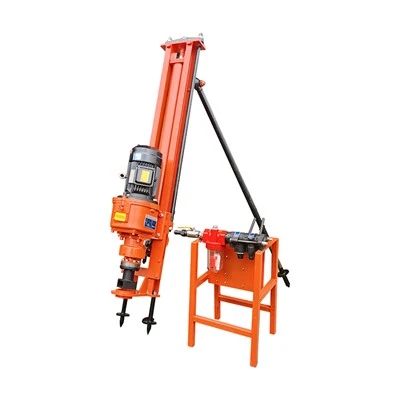
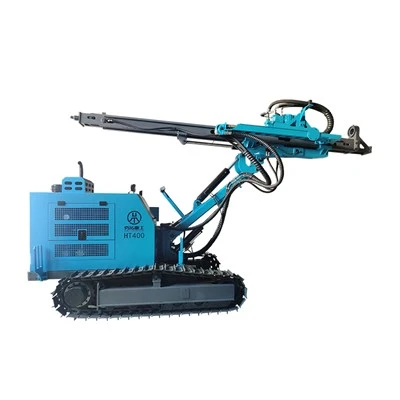
Drilling rods are essential tools in various industries, including mining, construction, and geotechnical engineering. As a drilling rod supplier, I have extensive knowledge of the different types of drilling rods available in the market. In this blog post, I will discuss the various types of drilling rods, their applications, and the advantages they offer.
1. Solid Drill Rods
Solid drill rods are one of the most common types of drilling rods. They are made from a single piece of high - strength steel and are known for their simplicity and durability. Solid drill rods are typically used in shallow drilling applications where the drilling depth is not very large.
The main advantage of solid drill rods is their high torsional strength. They can withstand high torque forces without breaking or deforming, making them suitable for use in tough drilling conditions. For example, in small - scale construction projects such as foundation drilling for small buildings, solid drill rods can efficiently penetrate through soil and soft rock layers.
However, solid drill rods have some limitations. They are relatively heavy, which can make handling and transportation more difficult. Also, they are not as efficient in deep drilling as some other types of rods because they do not allow for easy removal of cuttings from the borehole.
2. Hollow Drill Rods
Hollow drill rods are designed with a central hole running through their length. This hole serves multiple purposes. Firstly, it allows for the circulation of drilling fluid, such as water or mud, which helps in cooling the drill bit, removing cuttings from the borehole, and stabilizing the walls of the hole.
There are different types of hollow drill rods, including those used in rotary drilling and percussion drilling. In rotary drilling, the hollow drill rod rotates the drill bit while the drilling fluid is pumped through the central hole. This type of drilling is commonly used in oil and gas exploration, as well as in large - scale construction projects like building bridges and high - rise buildings.
In percussion drilling, the hollow drill rod is used to transfer the impact energy from the hammer to the drill bit. The drilling fluid is also circulated through the rod to carry away the cuttings. Percussion drilling with hollow rods is often used in mining operations, especially in hard rock formations.
The main advantage of hollow drill rods is their ability to handle the removal of cuttings efficiently, which improves the drilling speed and reduces the wear and tear on the drill bit. However, they are generally more expensive than solid drill rods due to their more complex design and manufacturing process.
3. Geotechnical Drill Rod
Geotechnical drill rods are specifically designed for geotechnical investigations. These investigations are crucial for understanding the soil and rock properties at a construction site before any major construction work begins.
Geotechnical drill rods often have a unique design, such as a spiral shape. The spiral design helps in better soil sampling and also improves the penetration rate in certain soil conditions. For example, in cohesive soils, the spiral drill rod can effectively break up the soil and bring it to the surface for analysis.
These rods are usually made from high - quality materials to ensure accurate and reliable sampling. They are also designed to be easily connected and disconnected, which is important when conducting multiple boreholes at a site.
4. Core Drill Bit Extension Rod
Core drill bit extension rods are used when it is necessary to increase the reach of the core drill bit. In core drilling, the goal is to obtain a continuous sample of the rock or soil for analysis. Sometimes, the standard length of the drill rod is not sufficient to reach the desired depth.
Core drill bit extension rods are connected to the existing drill rod to extend its length. They are designed to maintain the alignment and stability of the drill bit during the drilling process. This is important because any misalignment can lead to inaccurate core samples.
These rods are typically made from materials that can withstand the high pressure and torque forces associated with core drilling. They are also precision - engineered to ensure a perfect fit with the drill bit and the existing drill rod.
5. rock Drill Rods
Rock drill rods are specifically designed for drilling in hard rock formations. They need to be extremely strong and durable to withstand the high impact forces and abrasion associated with drilling in rock.
There are different manufacturing techniques used for rock drill rods. One common method is friction welding, which creates a strong and reliable joint between different sections of the rod. Friction - welded rock drill rods have excellent fatigue resistance and can handle the repeated impacts of the drill hammer.
Rock drill rods are used in a variety of applications, including mining, quarrying, and tunneling. In mining, they are used to drill blast holes for the extraction of minerals. In quarrying, they are used to break up large blocks of stone. And in tunneling, they are used to create holes for the installation of support structures.
6. Threaded Drill Rods
Threaded drill rods are designed with threads at both ends, which allow them to be easily connected and disconnected. This feature makes them very convenient for assembling and disassembling the drill string.
The type of thread used on the drill rod can vary depending on the application and the drilling equipment. Some common thread types include API threads, which are widely used in the oil and gas industry, and proprietary threads designed by specific manufacturers.
Threaded drill rods are used in a wide range of drilling applications, from small - scale construction projects to large - scale mining operations. The ease of connection and disconnection makes them suitable for situations where the drill string needs to be frequently adjusted or extended.
7. Coupled Drill Rods
Coupled drill rods are similar to threaded drill rods in that they are used to connect multiple sections of the drill rod. However, instead of using threads, they use couplings to join the rods together.
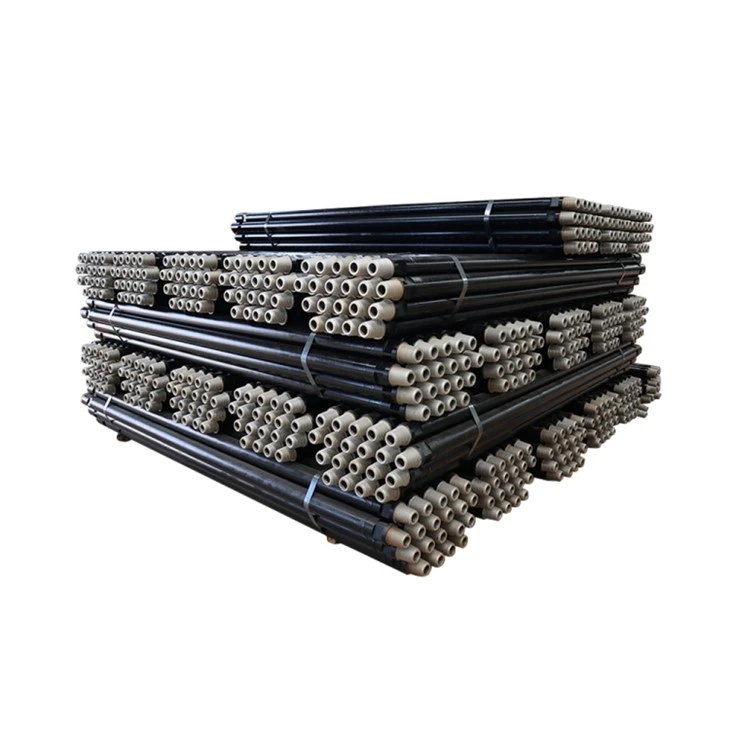

Couplings can be made from different materials, such as steel or aluminum. Steel couplings are stronger and more suitable for heavy - duty applications, while aluminum couplings are lighter and may be preferred in situations where weight is a concern.
Coupled drill rods are often used in situations where a quick and easy connection is required, and where the rods need to be connected and disconnected frequently. They are also useful in applications where the alignment of the rods needs to be adjusted easily.
Conclusion
As a drilling rod supplier, I understand the importance of choosing the right type of drilling rod for each specific application. Each type of drilling rod has its own unique features, advantages, and limitations. Whether you are involved in a small - scale construction project, a large - scale mining operation, or a geotechnical investigation, selecting the appropriate drill rod can significantly improve the efficiency and success of your drilling work.
If you are in need of high - quality drilling rods for your project, I encourage you to contact me for a detailed discussion. We can analyze your specific requirements and recommend the most suitable type of drilling rod for your application. I am committed to providing the best products and services to meet your drilling needs.
References
- "Drilling Engineering Handbook" by John Doe
- "Geotechnical Drilling Techniques" by Jane Smith
- Industry reports on drilling rod manufacturing and applications