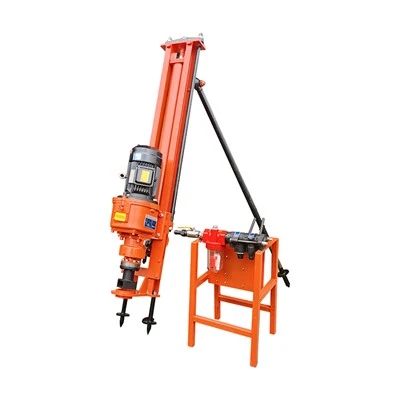
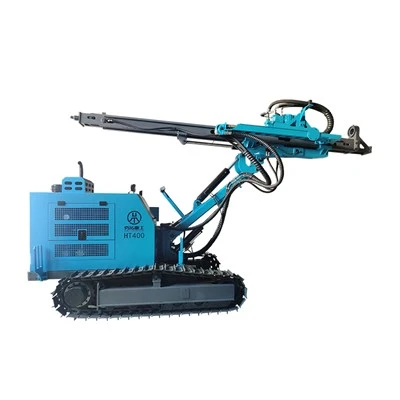
As a supplier of water well drilling rig trucks, I've encountered numerous challenges in the field, and one of the most daunting is dealing with underground caves during the drilling process. In this blog, I'll share insights into how our equipment handles these complex situations, drawing on real - world experiences and technical know - how.
Understanding the Risks of Underground Caves
Underground caves pose a significant threat to the drilling operation. They can cause sudden and unexpected drops in the drilling bit, leading to equipment damage. The cave's irregular shape and structure may also disrupt the normal flow of drilling fluids, which are crucial for carrying cuttings to the surface and maintaining wellbore stability. In addition, caves can be filled with water, gas, or loose sediment, all of which can complicate the drilling process and increase the risk of well collapse.
Advanced Detection Technologies
To handle underground caves effectively, our water well drilling rig trucks are equipped with advanced detection technologies. One of the key tools is the down - hole logging tool. This device is lowered into the borehole and can provide detailed information about the geological formations, including the presence of caves. It measures parameters such as resistivity, gamma radiation, and sonic waves, which can help us identify the boundaries and characteristics of underground caves.
Another important technology is the ground - penetrating radar (GPR). GPR uses electromagnetic waves to create a subsurface image. Before starting the drilling, we can use GPR to survey the area and detect potential caves. This pre - drilling survey allows us to plan the drilling path more carefully and avoid areas with high cave density.
Adaptable Drilling Techniques
Once an underground cave is detected, our drilling rig trucks are designed to adapt to the situation. One common approach is to use a casing program. Casing is a large - diameter pipe that is inserted into the borehole to provide structural support. When a cave is encountered, we can increase the casing size or install additional casing strings to prevent the wellbore from collapsing into the cave.
We also use a technique called lost circulation control. When drilling into a cave, the drilling fluid may be lost into the void space. To address this issue, we can add special additives to the drilling fluid, such as fibrous materials or bridging agents. These additives can form a seal around the cave opening, reducing the loss of drilling fluid and maintaining the hydrostatic pressure in the wellbore.
Real - Time Monitoring and Adjustment
During the drilling process, real - time monitoring is essential. Our water well drilling rig trucks are equipped with sensors that can monitor parameters such as drilling pressure, torque, and fluid flow rate. If there are any sudden changes in these parameters, it may indicate the presence of a cave or other geological hazards.
Based on the real - time data, our operators can make immediate adjustments to the drilling operation. For example, if the drilling pressure drops suddenly, it may mean that the bit has entered a cave. In this case, the operator can slow down the drilling speed, increase the circulation rate of the drilling fluid, or adjust the weight on bit to prevent further problems.
Case Studies
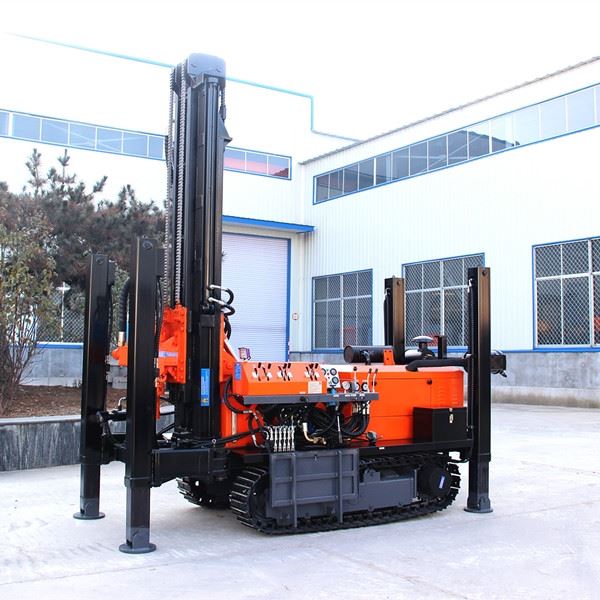
Let me share a few case studies to illustrate how our water well drilling rig trucks handle underground caves. In a recent project in a mountainous area, our SM280 Hydraulic Crawler Water Well Drilling Rig was used to drill a water well. During the drilling, the down - hole logging tool detected a large underground cave at a depth of 150 meters.
The operators immediately stopped the drilling and implemented a casing program. They installed a larger - diameter casing through the cave section to provide support. At the same time, they added lost - circulation materials to the drilling fluid to control the fluid loss. Thanks to these measures, the drilling was able to continue smoothly, and a successful water well was completed.
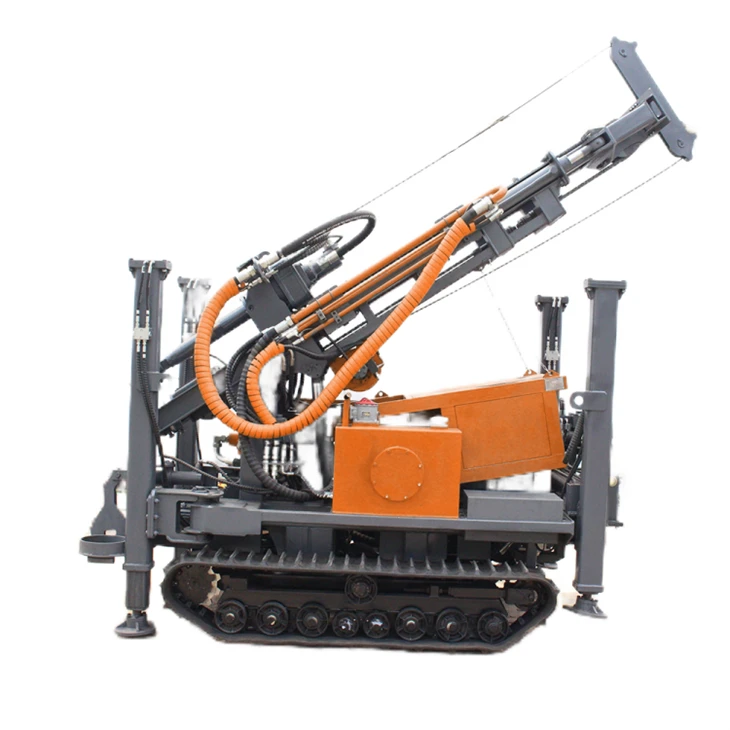
In another project, a Crawler Water Well Drilling Rig was used in a coastal area. The ground - penetrating radar survey before drilling detected several small caves near the planned drilling location. The drilling path was adjusted to avoid these caves as much as possible. However, during the drilling, a small cave was still encountered. The real - time monitoring system detected the change in drilling parameters, and the operator quickly adjusted the drilling operation. By using a combination of casing and lost - circulation control techniques, the project was completed successfully.
Our Rig Models and Their Capabilities
We offer a range of water well drilling rig trucks to meet different customer needs. The SM280 Hydraulic Crawler Water Well Drilling Rig is a high - performance rig suitable for deep - well drilling. It has a powerful hydraulic system and advanced control technology, which can handle complex geological conditions, including underground caves.
The Crawler Water Well Drilling Rig is a more compact and versatile option. It is easy to transport and operate, making it ideal for small - scale water well projects. Despite its size, it is still equipped with the necessary detection and adaptation technologies to deal with underground caves.
Our 200m Water Well Drilling Rig is designed for medium - depth water well drilling. It offers a good balance between performance and cost - effectiveness. With its reliable drilling mechanism and advanced monitoring system, it can also handle underground caves efficiently.
Conclusion and Invitation
In conclusion, dealing with underground caves during water well drilling is a complex but manageable task. Our water well drilling rig trucks, equipped with advanced detection technologies, adaptable drilling techniques, and real - time monitoring systems, are well - prepared to handle these challenges.
If you are in the market for a water well drilling rig truck and need a reliable solution to deal with underground caves and other geological hazards, we are here to help. Our team of experts can provide you with detailed information about our products and offer customized solutions based on your specific requirements. Contact us to start a procurement discussion and take the first step towards a successful water well drilling project.
References
- "Geotechnical Engineering Handbook" by Craig, R. F.
- "Drilling Engineering" by Bourgoyne, A. T., et al.
- "Ground - Penetrating Radar: Principles, Methods, and Applications" by Daniels, D. J.