Hey there! I'm really excited to share with you all about how a mud rotary drilling rig works. As a drilling rig supplier, I've seen these machines in action countless times, and they're truly fascinating pieces of equipment.
Let's start with the basics. A mud rotary drilling rig is a type of drilling rig that uses a drilling fluid, commonly known as mud, to drill boreholes in the ground. This method is widely used in various industries, such as water well drilling, oil and gas exploration, and geotechnical investigations.
The Main Components of a Mud Rotary Drilling Rig
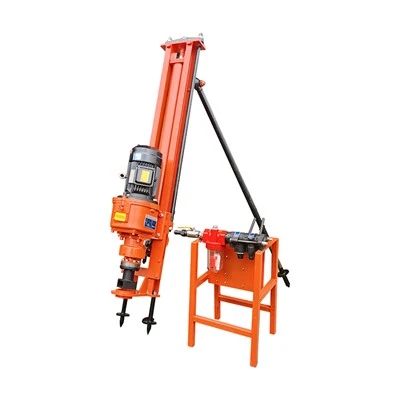
First off, we've got the mast. The mast is like the backbone of the drilling rig. It's a tall, vertical structure that supports the drill string and the other drilling equipment. The mast allows the drill string to be raised and lowered into the borehole. It needs to be strong and stable because it has to handle the weight of the drill string and the forces generated during drilling.
Next, there's the drill string. The drill string is a series of connected drill pipes that extend from the surface down to the drill bit. These pipes are usually made of high - strength steel. The drill string not only transfers the rotational force from the rotary table or top drive to the drill bit but also provides a pathway for the drilling mud to flow down to the bit and back up to the surface.
The drill bit is the part that actually does the cutting. There are different types of drill bits for different types of formations. For example, in soft formations, a drag bit might be used, while in harder rocks, a roller cone bit or a diamond bit could be more appropriate. The drill bit has cutting elements that break up the rock or soil as it rotates.
Now, let's talk about the mud system. The mud system is crucial for the operation of a mud rotary drilling rig. It consists of a mud pit, a mud pump, and various pipes and valves. The mud pit is where the drilling mud is stored. The mud pump is responsible for pumping the mud from the pit, down through the drill string, and out through the drill bit.
How the Drilling Process Works
The first step in the drilling process is to set up the rig at the drilling site. This involves leveling the rig, securing it to the ground, and connecting all the necessary equipment. Once the rig is set up, the drill string is assembled and lowered into the borehole.
The mud pump is then started, and the drilling mud begins to flow. The mud has several important functions. First, it cools and lubricates the drill bit. Drilling generates a lot of heat, and if the bit gets too hot, it can wear out quickly or even break. The mud also helps to carry the cuttings (the pieces of rock and soil that are broken up by the drill bit) back to the surface. As the mud flows out through the drill bit and up the annulus (the space between the drill string and the borehole wall), it picks up the cuttings and brings them to the surface.
As the drill bit rotates, it cuts into the formation. The rotational force is usually provided by a rotary table or a top drive. A rotary table is a large, circular device at the surface that grips the drill string and rotates it. A top drive, on the other hand, is a more modern and efficient way of providing rotational force. It's located at the top of the mast and can move up and down the drill string, allowing for more precise control of the drilling process.


As the drill bit advances deeper into the formation, more drill pipes are added to the drill string. This is called "making a connection." The process of making a connection involves stopping the rotation, lifting the drill string slightly, adding a new drill pipe, and then resuming the drilling.
The Role of the Drilling Mud
The drilling mud is not just water. It's a carefully formulated mixture that can contain various additives. For example, bentonite is often added to increase the viscosity of the mud. A more viscous mud can better carry the cuttings to the surface. There are also additives to control the density of the mud. Controlling the density is important because it helps to balance the pressure in the borehole. If the mud density is too low, there's a risk of a blowout (when the formation fluids, like oil or gas, rush into the borehole). If the density is too high, it can cause damage to the formation.
Another important function of the mud is to stabilize the borehole wall. As the drill bit cuts through the formation, the borehole wall can become unstable. The mud forms a thin layer called a filter cake on the borehole wall, which helps to prevent the wall from collapsing.
Some Related Equipment
If you're in the market for related equipment, we've got some great options. For example, the Atlas Copco Air Compressor 5–25 Bar can be a great addition to your drilling setup. It provides the necessary compressed air for various operations, like cleaning the drill bit or powering some of the auxiliary equipment.
Our Geological Hydraulic Core Drilling Rig is also a top - notch piece of equipment. It's designed for taking core samples from the subsurface, which are very useful for geological investigations.
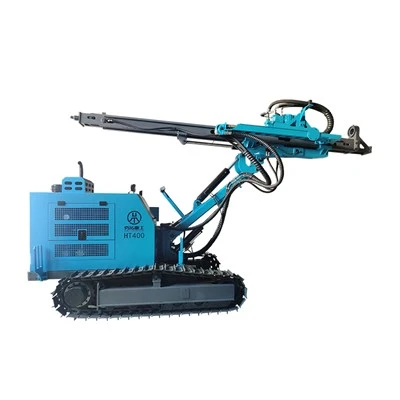
And if you need a rig for water well drilling, our truck mounted water well drilling rig is a great choice. It's mobile and easy to transport to different drilling sites.
Conclusion
So, there you have it! That's a basic overview of how a mud rotary drilling rig works. These rigs are complex but incredibly effective machines that have been used for many years in a wide range of industries. Whether you're looking to drill a water well, explore for oil and gas, or conduct a geotechnical investigation, a mud rotary drilling rig can get the job done.
If you're interested in purchasing a drilling rig or any of the related equipment, don't hesitate to reach out. We're here to help you find the right solution for your specific needs. We can provide you with detailed information, technical support, and competitive pricing. So, let's start a conversation and see how we can work together to meet your drilling requirements.
References
- API Recommended Practice 13B - 1, "Standard Practice for Field Testing Water - Based Drilling Fluids"
- Bourgoyne, A. T., et al. "Applied Drilling Engineering." Society of Petroleum Engineers, 1986.
- Mitchell, R. F., & Miska, S. Z. "Fundamentals of Drilling Engineering." Society of Petroleum Engineers, 2002.