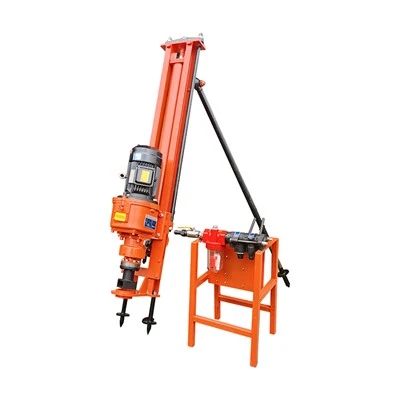
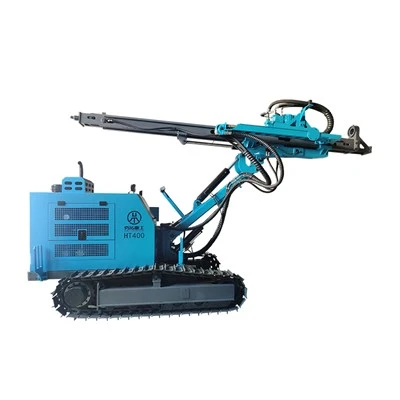
Hey there! As an air rock drill supplier, I've been getting a lot of questions lately about how well our air rock drills can handle different rock hardness. So, I thought I'd take a few minutes to break it down for you.
First off, let's talk about what an air rock drill is. Simply put, it's a tool that uses compressed air to create a high - speed impact force, which helps in breaking through rocks. These drills are super handy in a bunch of industries, like mining, construction, and quarrying.
Now, onto the main topic: the adaptability of air rock drills to different rock hardness. Rock hardness can vary widely, from soft sedimentary rocks like shale to extremely hard igneous rocks like granite. And our air rock drills are designed to handle this wide spectrum.
Soft Rocks
Soft rocks, such as shale, sandstone, and limestone, have a relatively low hardness. When it comes to drilling in these types of rocks, our air rock drills can work like a charm. The lower hardness means that less force is required to break through the rock. So, the drill can operate at a higher speed, and the wear and tear on the drill bits are also reduced.
For example, in a limestone quarry, our mini pneumatic drill can quickly and efficiently drill holes for blasting. The drill's air - powered mechanism provides a consistent and powerful impact, allowing it to penetrate the soft rock with ease. The compact size of the mini pneumatic drill also makes it highly maneuverable in tight spaces, which is often a requirement in quarry operations.
Medium - Hard Rocks
Medium - hard rocks, like marble and some types of sandstone, present a bit more of a challenge. These rocks have a higher hardness than soft rocks, so the drill needs to apply more force. Our air rock drills are equipped with adjustable air pressure settings. This feature allows the operator to increase the air pressure, which in turn increases the impact force of the drill.
When drilling in medium - hard rocks, it's also important to choose the right drill bits. We offer a variety of drill bits designed specifically for different rock types. For medium - hard rocks, tungsten - carbide - tipped bits are a great choice. These bits are extremely durable and can withstand the higher forces required to break through the rock. Our small down the hole drilling equipment is well - suited for medium - hard rock drilling. It can maintain a good drilling speed while ensuring the quality of the holes.
Hard Rocks
Hard rocks, such as granite and basalt, are the toughest to drill through. They have a very high hardness and require a significant amount of force to break. But don't worry, our air rock drills are up for the challenge.
To drill in hard rocks, we recommend using our high - performance air rock drills. These drills are designed to deliver maximum impact force. The air - powered system is optimized to generate a powerful and rapid succession of blows. In addition, we use advanced materials for the drill bits. For example, diamond - impregnated drill bits are often used for hard rock drilling. These bits can cut through the hardest rocks with relative ease.
Our hand held rock drilling equipment is also a great option for hard rock drilling in some cases. It provides the operator with more control, especially when drilling in hard - to - reach areas. However, it's important to note that when working with hard rocks, the drill bits will wear out faster, so regular inspection and replacement of the bits are necessary.
Factors Affecting Adaptability
Apart from rock hardness, there are other factors that can affect the adaptability of air rock drills. One of these factors is the air supply. A stable and sufficient air supply is crucial for the proper functioning of the drill. If the air pressure is too low, the drill may not be able to generate enough impact force, especially when drilling in hard rocks.
The drilling technique also plays a role. The operator needs to know how to adjust the drilling speed, air pressure, and feed rate according to the rock hardness. For example, when drilling in hard rocks, a slower drilling speed with higher air pressure may be more effective.
Another factor is the maintenance of the drill. Regular cleaning, lubrication, and inspection of the drill components are essential to ensure its optimal performance. A well - maintained drill will be more adaptable to different rock hardness conditions.
Why Choose Our Air Rock Drills
We've been in the air rock drill business for a long time, and we know what it takes to make a great drill. Our drills are built with high - quality materials and advanced technology. They are designed to be reliable, efficient, and easy to operate.


We also offer excellent customer support. If you have any questions about which drill is right for your specific rock - drilling needs, our team of experts is here to help. We can provide you with detailed information about the drill's performance, features, and maintenance requirements.
In addition, we offer a wide range of air rock drills to meet different customer needs. Whether you need a small, portable drill for a DIY project or a heavy - duty drill for large - scale mining operations, we've got you covered.
Contact Us for Purchase and Consultation
If you're in the market for an air rock drill, or if you just want to learn more about how our drills can adapt to different rock hardness, don't hesitate to get in touch. We're always happy to have a chat and help you find the perfect drill for your needs. Whether it's a small - scale project or a large - scale industrial operation, our air rock drills are up to the task. So, let's start the conversation and see how we can work together to make your rock - drilling projects a success.
References
- “Rock Mechanics and Rock Engineering” by E. T. Brown and E. Hoek.
- “Drilling and Blasting of Rocks” by O. Ouchterlony.