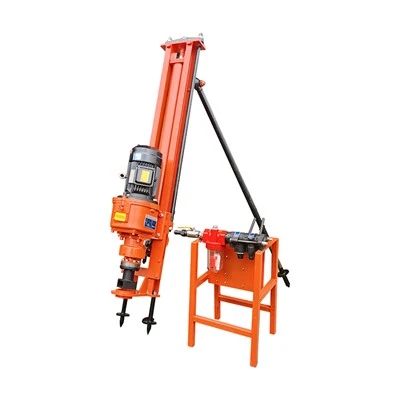
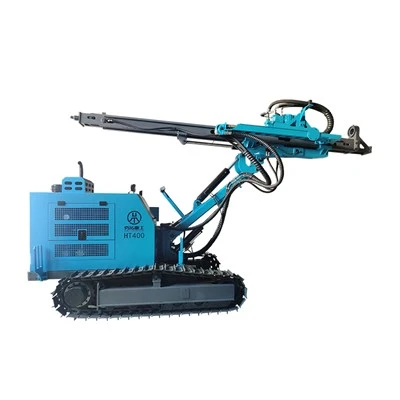
Hey there! As a supplier of water well drill rig trucks, I've seen firsthand how crucial it is to accurately measure the water level in a well. Whether you're a farmer looking to irrigate your crops, a construction company in need of a water source, or just someone interested in setting up a well for personal use, knowing the water level is essential. In this blog post, I'll share some effective methods to measure the water level in a well drilled by a water well drill rig truck.
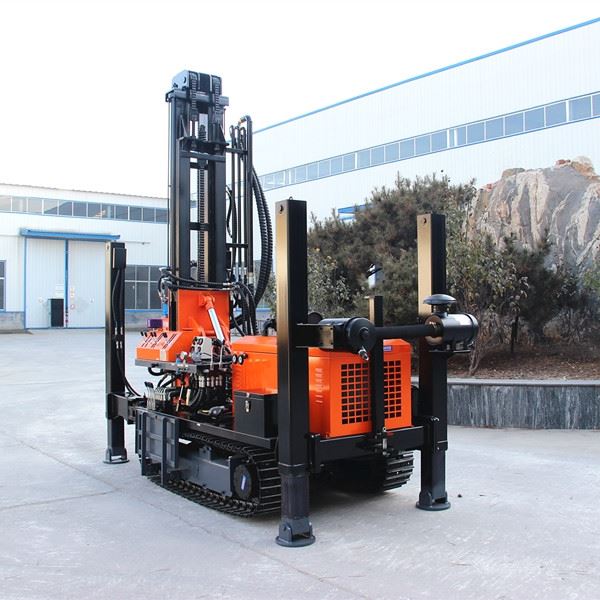
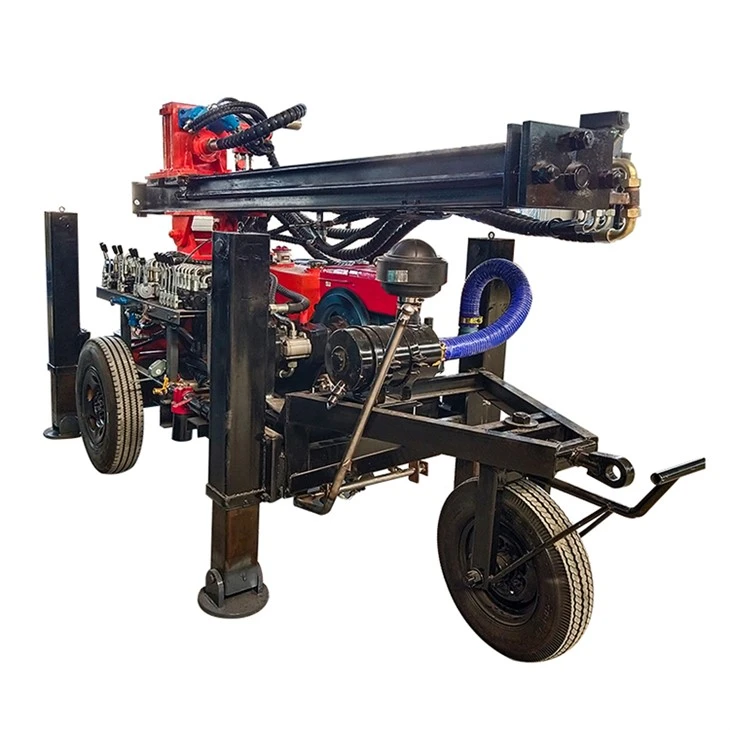
First off, let's talk a bit about the types of water well drill rig trucks we offer. We've got the reverse circulation water well drilling rig, which is great for drilling in various soil conditions. It uses a unique reverse circulation system that can improve drilling efficiency and reduce costs. Then there's the Wheels Hydraulic Water Well Drilling Rig, which is highly mobile and easy to operate. And if you need something more heavy - duty and suitable for rough terrains, our Crawler Water Well Drilling Rig is the way to go.
Now, let's get into the methods of measuring the water level.
The Sounding Line Method
One of the simplest and oldest methods is using a sounding line. All you need is a weighted line, like a fishing line with a heavy weight attached to the end. You slowly lower the line into the well until you feel the weight hit the water surface. Mark the point on the line where it meets the top of the well. Then, measure the length of the line from the mark to the weight. This length gives you the distance from the top of the well to the water surface.
The advantage of this method is its simplicity and low cost. You don't need any fancy equipment, just a line and a weight. However, it can be a bit inaccurate, especially if there's a lot of debris in the well or if the well is very deep. The line might get tangled or the weight could get stuck on something before reaching the water.
Electric Water Level Meters
These are more advanced and accurate than the sounding line method. An electric water level meter consists of a probe attached to a cable with markings on it. When the probe touches the water surface, it completes an electrical circuit, and a signal is sent to a handheld device. The device then shows the depth of the water level.
The great thing about electric water level meters is their accuracy. They can measure the water level to within a few millimeters. They're also relatively easy to use. You just lower the probe into the well until you get the signal. But they do come at a higher cost compared to the sounding line method. And if the well has a lot of electrical interference, it might affect the accuracy of the readings.
Pressure Transducers
Pressure transducers work based on the principle that the pressure exerted by a fluid (in this case, water) increases with depth. You install a pressure transducer at the bottom of the well or at a known depth. The transducer measures the pressure of the water column above it and converts it into a depth reading.
This method is very accurate, especially for deep wells. It can continuously monitor the water level, which is useful if you need to keep track of changes over time. However, installing a pressure transducer can be a bit complicated. You need to make sure it's properly calibrated and installed at the right depth. And the cost of the transducer and the installation can be quite high.
Ultrasonic Level Sensors
Ultrasonic level sensors use sound waves to measure the distance from the sensor to the water surface. The sensor emits an ultrasonic pulse, which travels down to the water surface and bounces back. The sensor then measures the time it takes for the pulse to return and calculates the distance based on the speed of sound in air.
These sensors are non - contact, which means they don't need to be submerged in the water. This makes them suitable for wells with corrosive or dirty water. They're also easy to install and can provide real - time readings. But they can be affected by factors like temperature, humidity, and the presence of obstacles in the well that might reflect the sound waves.
Radar Level Sensors
Similar to ultrasonic level sensors, radar level sensors use electromagnetic waves instead of sound waves. They emit a radar signal that travels to the water surface and back. The sensor measures the time of flight of the signal to determine the distance to the water surface.
Radar level sensors are very accurate and can work in a wide range of conditions, including high - temperature and high - pressure environments. They're also suitable for wells with a lot of steam or dust. However, they're quite expensive and might require some technical knowledge to install and operate.
When choosing a method to measure the water level in your well, you need to consider several factors. The depth of the well is an important one. For shallow wells, a sounding line or an electric water level meter might be sufficient. But for deep wells, pressure transducers or radar level sensors might be a better choice. The condition of the water, such as its cleanliness and corrosiveness, also matters. If the water is dirty or corrosive, a non - contact method like an ultrasonic or radar level sensor could be more suitable.
Another factor is the frequency of measurement. If you only need to measure the water level occasionally, a simple method like the sounding line might be okay. But if you need continuous monitoring, you'll probably want to invest in a more advanced system like a pressure transducer or an ultrasonic level sensor.
As a water well drill rig truck supplier, I understand that getting accurate water level measurements is just as important as drilling a good well. That's why we're always here to help you choose the right equipment for your needs. Whether you're looking for a drill rig or a water level measurement device, we've got you covered.
If you're interested in our water well drill rig trucks or have any questions about measuring water levels in wells, don't hesitate to reach out. We're eager to have a chat with you and discuss how we can meet your requirements. Whether it's for a small - scale project or a large - scale commercial operation, we're committed to providing you with the best solutions.
References
- "Well Drilling and Water Well Construction Handbook"
- "Water Well Technology: Principles and Practices"
- "Instrumentation and Measurement in Engineering"