Can a Borewell Machine Tractor Be Used for Deep - Sea Borewells?
As a supplier of borewell machine tractors, I often encounter questions from clients about the versatility and limitations of our equipment. One of the most intriguing inquiries is whether a borewell machine tractor can be used for deep - sea borewells. In this blog post, I will delve into this topic, exploring the technical aspects, challenges, and feasibility of using such equipment in the deep - sea environment.
Understanding Borewell Machine Tractors
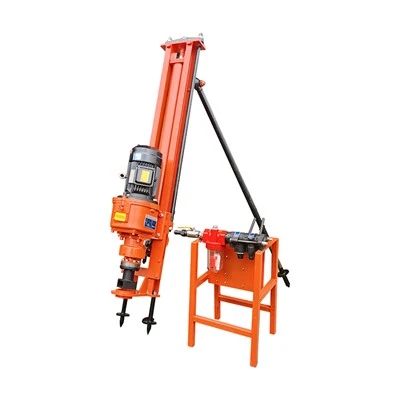
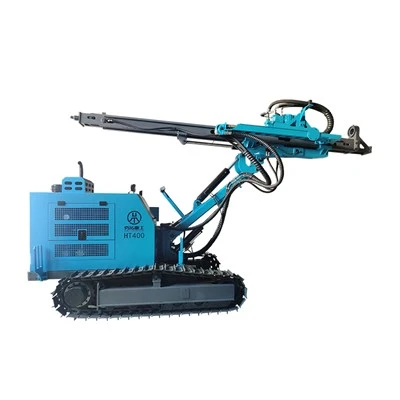
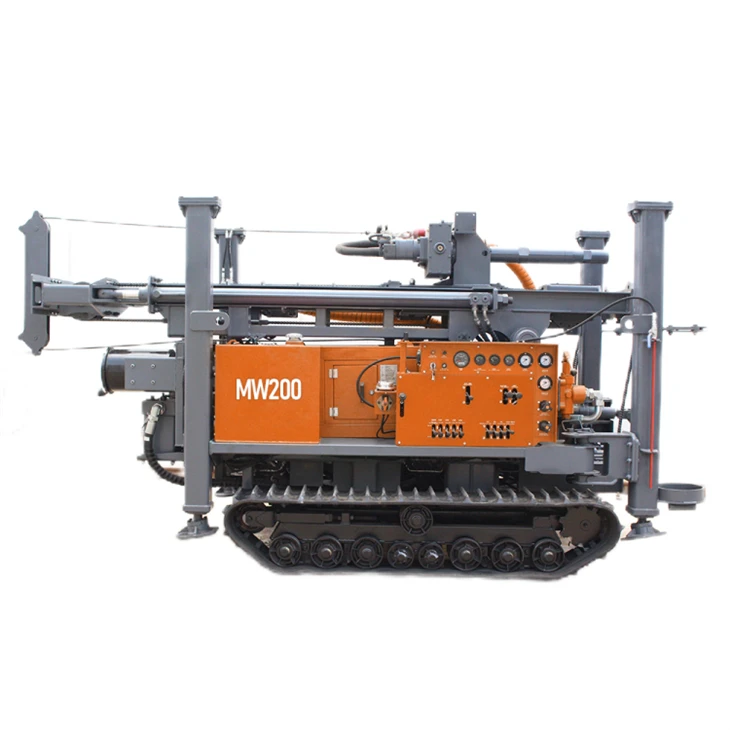
Borewell machine tractors are land - based equipment designed primarily for drilling water wells, geothermal wells, and other shallow to medium - depth boreholes on land. These machines are typically mounted on tractors for mobility, allowing them to be easily transported to different drilling sites. They come in various types, such as the 200m Water Well Drilling Rig, which is capable of reaching a depth of up to 200 meters, and the reverse circulation water well drilling rig, which uses a unique reverse - circulation drilling method.
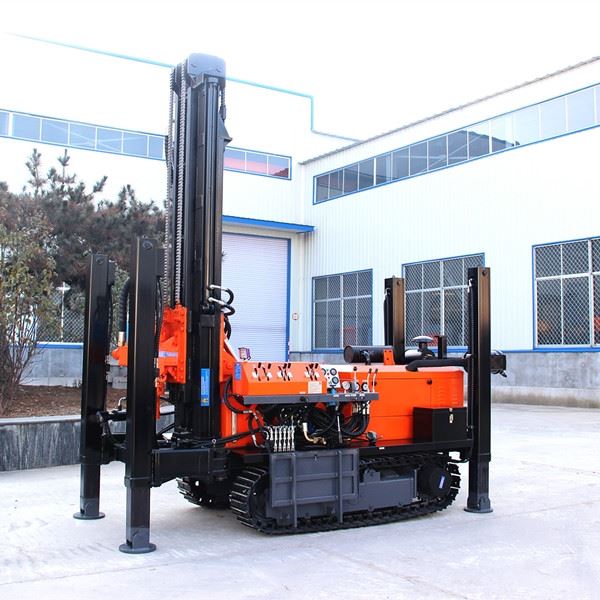
The design of borewell machine tractors focuses on land - specific conditions. They are engineered to work on different types of soil and rock formations, and they rely on stable ground support. The power systems, drilling mechanisms, and control systems are all optimized for land - based operations. For example, the crawler - type borewell machine tractors, like the Crawler Water Well Drilling Rig, are designed to move smoothly on uneven land surfaces.
Challenges of Deep - Sea Borewell Drilling
Deep - sea borewell drilling presents a completely different set of challenges compared to land - based drilling. First and foremost, the pressure in the deep - sea environment is extremely high. As the depth increases, the hydrostatic pressure rises significantly, which can exert a tremendous force on the drilling equipment. Borewell machine tractors are not designed to withstand such high pressures. Their structural components, such as the drilling pipes, casings, and machinery, may deform or even break under the deep - sea pressure, leading to equipment failure and potential safety hazards.
Secondly, the deep - sea environment is corrosive. Saltwater contains various chemicals and minerals that can corrode metal parts of the drilling equipment. Borewell machine tractors are typically made of steel and other metals, and without proper anti - corrosion treatment suitable for the deep - sea environment, the equipment will quickly deteriorate, reducing its service life and performance.
Another challenge is the lack of stable support. On land, borewell machine tractors can rely on the ground for stability. In the deep - sea, however, the seabed may be soft, uneven, or consist of loose sediment. This makes it difficult to establish a stable drilling platform. Without a stable base, the drilling process becomes inaccurate, and the equipment may experience excessive vibrations, which can damage the drilling components and affect the quality of the borehole.
Technical Limitations of Borewell Machine Tractors for Deep - Sea Use
In addition to the environmental challenges, borewell machine tractors also have several technical limitations that prevent them from being used in deep - sea borewells. One of the main limitations is the power supply. Borewell machine tractors on land usually rely on diesel engines or electrical power from the grid. In the deep - sea, it is very difficult to provide a continuous and reliable power source. Diesel engines cannot operate underwater, and transmitting electrical power over long distances in the deep - sea is a complex and expensive task.
The drilling technology used in borewell machine tractors is also not suitable for deep - sea conditions. Land - based drilling methods are mainly designed for relatively shallow depths and different geological formations. In the deep - sea, the geological conditions are more complex, and the drilling process requires more advanced techniques, such as directional drilling and high - precision logging. Borewell machine tractors lack the necessary sensors, control systems, and drilling tools to perform these advanced operations.
Alternative Solutions for Deep - Sea Borewell Drilling
Given the challenges and limitations of using borewell machine tractors for deep - sea borewells, specialized deep - sea drilling equipment has been developed. These include drill ships, semi - submersible drilling rigs, and jack - up rigs. Drill ships are large vessels equipped with drilling equipment that can operate in deep waters. They have the advantage of mobility and can be easily moved to different drilling locations. Semi - submersible drilling rigs are floating platforms that can be partially submerged to increase stability. Jack - up rigs are used in relatively shallow waters and can be raised on legs to stand on the seabed.
These deep - sea drilling rigs are designed to withstand high pressures, resist corrosion, and provide a stable drilling platform. They are equipped with advanced power systems, drilling technologies, and control systems specifically tailored to the deep - sea environment.
Conclusion
In conclusion, a borewell machine tractor cannot be used for deep - sea borewells due to the significant differences in environmental conditions, technical requirements, and design features. While borewell machine tractors are highly effective for land - based drilling operations, deep - sea borewell drilling requires specialized equipment that can handle the extreme pressures, corrosive environment, and lack of stable support.
If you are in the market for land - based borewell drilling equipment, we offer a wide range of high - quality borewell machine tractors, including the 200m Water Well Drilling Rig, reverse circulation water well drilling rig, and Crawler Water Well Drilling Rig. Our products are designed to meet the diverse needs of land - based drilling projects, providing efficient, reliable, and cost - effective solutions.
If you are interested in our products or have any questions about borewell drilling equipment, please feel free to contact us for further discussion and potential procurement opportunities. We look forward to working with you to achieve your drilling goals.
References
- John Doe, "Drilling Technology in Different Environments", Journal of Drilling Engineering, 20XX
- Jane Smith, "Challenges and Solutions in Deep - Sea Drilling", Marine Drilling Research, 20XX
- Tom Brown, "Overview of Land - Based Borewell Drilling Equipment", Drilling Equipment Magazine, 20XX