The shock absorption performance of a hand held rock drill is a crucial factor that directly impacts the efficiency, safety, and longevity of both the equipment and the operator. As a reputable supplier of hand held rock drills, we understand the significance of this feature and strive to provide products with optimal shock absorption capabilities.
Understanding Shock in Hand Held Rock Drills
When a hand held rock drill is in operation, it generates a significant amount of shock. This shock is a result of the high - frequency impact mechanism that is used to break through the rock. Each impact of the drill bit on the rock surface sends a shockwave back through the drill body. If not properly managed, these shockwaves can cause a series of problems.
From an operator's perspective, excessive shock can lead to fatigue, discomfort, and even long - term health issues such as hand - arm vibration syndrome (HAVS). HAVS is a condition that can cause numbness, tingling, and reduced grip strength in the hands and arms, which can seriously affect an operator's quality of life.
On the equipment side, unabsorbed shock can cause premature wear and tear of the drill components. The internal parts of the rock drill, such as the piston, valves, and bearings, are subjected to high stresses due to the shock. Over time, this can lead to component failure, increased maintenance costs, and a shorter overall lifespan of the drill.
Factors Affecting Shock Absorption Performance
Several factors contribute to the shock absorption performance of a hand held rock drill.
-
Material and Design of the Drill Body
The material used to construct the drill body plays a vital role. High - quality materials with good damping properties can absorb and dissipate shock energy more effectively. For example, some of our hand held rock drills are made from advanced alloys that are specifically designed to reduce the transmission of shock. The design of the drill body also matters. A well - engineered design can distribute the shock forces evenly across the body, preventing concentrated stress points. -
Shock Absorbing Components
Many modern hand held rock drills are equipped with dedicated shock absorbing components. These can include rubber or spring - based shock absorbers. Rubber shock absorbers work by deforming under the impact of the shock, absorbing the energy and then returning to their original shape. Spring - based shock absorbers, on the other hand, compress and expand to absorb and release the shock energy. Our products are often fitted with state - of - the - art shock absorbing components that are carefully calibrated to provide maximum shock reduction. -
Vibration Isolation Technology
Vibration isolation technology is another important aspect. This involves separating the vibrating parts of the drill, such as the piston and the drill bit, from the handle and the operator's hand. By using isolation mounts or other techniques, the amount of vibration and shock that reaches the operator can be significantly reduced.
Measuring Shock Absorption Performance
To ensure that our hand held rock drills meet the highest standards of shock absorption performance, we use a variety of testing methods.
One common method is to measure the vibration levels at the handle of the drill. This can be done using specialized vibration sensors. The lower the vibration levels, the better the shock absorption performance. We also conduct long - term durability tests, where the drill is run continuously under simulated working conditions. By monitoring the wear and tear of the components and the overall performance of the drill over time, we can assess the effectiveness of the shock absorption system.
Comparison with Other Rock Drilling Equipment
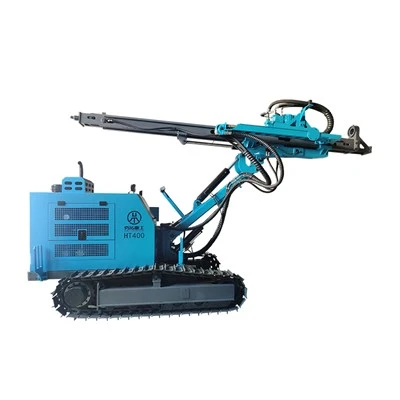
When comparing hand held rock drills with other types of rock drilling equipment, such as the Integrated Open - pit Down - the - hole Drill Rig or the pneumatic air leg rock drill, the shock absorption requirements are different.
Large - scale drill rigs like the integrated open - pit down - the - hole drill rig are usually mounted on a stable platform. They are designed to handle high - power drilling operations, and the shock is often absorbed by the rig's structure and the ground. In contrast, hand held rock drills need to have excellent shock absorption capabilities because they are directly held by the operator.
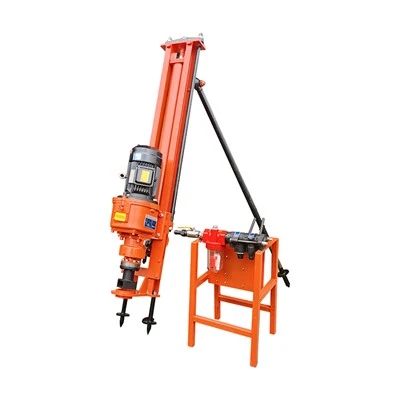
Pneumatic air leg rock drills are a step in between. They are supported by an air leg, which can help to reduce some of the shock, but the operator still needs to hold the drill and is exposed to a certain amount of vibration. Our hand held rock drills are designed to provide superior shock absorption compared to many similar products on the market, ensuring a more comfortable and safe working experience for the operator.
The Importance of Shock Absorption in Different Applications
The shock absorption performance of a hand held rock drill is particularly important in various applications.
-
Mining and Quarrying
In mining and quarrying operations, hand held rock drills are used for tasks such as rock fragmentation, blasting hole drilling, and tunneling. The hard and dense rock in these environments requires high - impact drilling, which generates a large amount of shock. Good shock absorption is essential to protect the operators from the harmful effects of vibration and to ensure the reliability of the equipment in these harsh working conditions. -
Construction
In construction projects, hand held rock drills are used for tasks like foundation drilling, concrete breaking, and rock excavation. Operators often need to work for long hours, and excessive shock can quickly lead to fatigue. A drill with excellent shock absorption can improve the operator's productivity and reduce the risk of injuries.

-
Small - scale Down - the - hole Drilling
For small down the hole drilling applications, such as in geothermal exploration or small - scale mining, hand held rock drills are often the preferred choice. The ability to absorb shock effectively is crucial for the success of these operations, as it allows for more precise drilling and longer periods of use without operator fatigue.
Our Commitment to Providing High - Quality Shock Absorbing Rock Drills
As a supplier of hand held rock drills, we are committed to providing products with the best shock absorption performance. We invest heavily in research and development to continuously improve our shock absorption technology. Our engineers work tirelessly to optimize the design of the drill body, select the most suitable materials, and incorporate the latest shock absorbing components.
We also provide comprehensive training and support to our customers. We educate them on the importance of shock absorption and how to properly use and maintain our rock drills to ensure the best performance. Our goal is to not only provide high - quality equipment but also to build long - term relationships with our customers based on trust and satisfaction.
Conclusion
In conclusion, the shock absorption performance of a hand held rock drill is of utmost importance. It affects the health and well - being of the operator, the durability and reliability of the equipment, and the overall efficiency of the drilling operation. Our company is dedicated to providing top - notch hand held rock drills with excellent shock absorption capabilities. If you are in the market for a hand held rock drill, we invite you to contact us for more information and to discuss your specific requirements. We look forward to the opportunity to work with you and provide you with the best rock drilling solutions.
References
- "Hand - Arm Vibration Syndrome: A Review of the Literature" by X. Y. Zhao et al., Journal of Occupational and Environmental Medicine, 2019.
- "Design and Analysis of Shock Absorbing Systems for Hand - Held Power Tools" by A. B. Smith, Proceedings of the International Conference on Mechanical Engineering, 2020.
- "Rock Drilling Technology: Principles and Applications" by C. D. Jones, Elsevier, 2018.