Hey there! As a drilling rod supplier, I often get asked about the internal pressure resistance of drilling rods. It's a crucial topic, especially for those in the oil, gas, and geotechnical industries. So, let's dive right in and explore what the internal pressure resistance of a drilling rod really means.
First off, what exactly is internal pressure resistance? Well, when a drilling rod is in use, it's subjected to all sorts of pressures from the fluids flowing inside it. These fluids can include drilling mud, water, or other specialized liquids. The internal pressure resistance of a drilling rod refers to its ability to withstand these pressures without failing.
Imagine you're drilling a deep - well for oil. The drilling mud is pumped down through the drilling rod at high pressures to cool the drill bit, carry the cuttings back to the surface, and maintain the stability of the wellbore. If the drilling rod can't handle the internal pressure, it could burst or develop leaks, which can lead to all sorts of problems. Not only is it a safety hazard, but it can also cause costly downtime and damage to the drilling equipment.
There are several factors that affect the internal pressure resistance of a drilling rod. One of the most important is the material it's made from. We offer different types of drilling rods, such as Oil Well Drill Rod, Tapered Drill Rod, and Geotechnical Drill Rod, each made from high - quality materials.

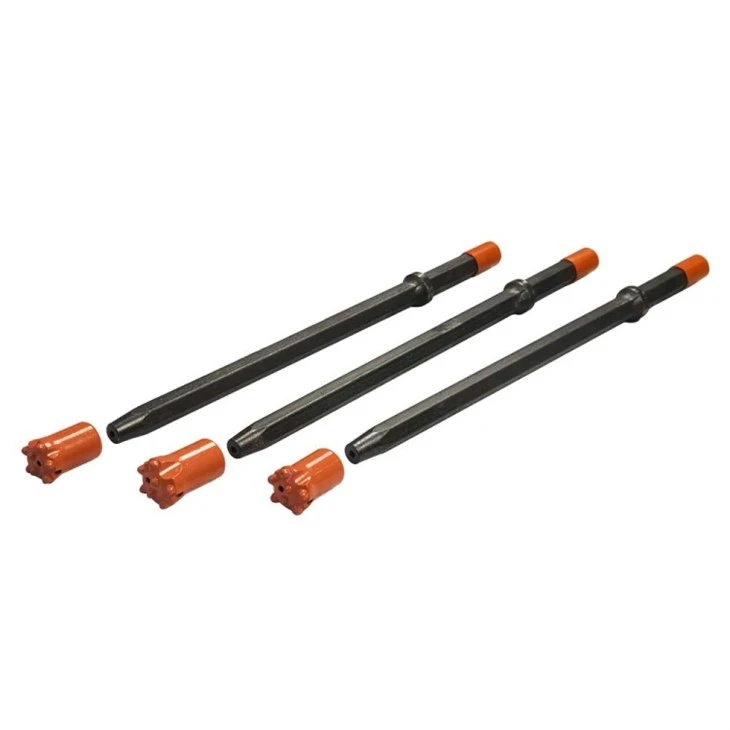
For instance, some drilling rods are made from high - strength steel alloys. These alloys are designed to have excellent mechanical properties, including high tensile strength and good ductility. Tensile strength is important because it allows the rod to resist the pulling forces that occur during drilling, while ductility helps it absorb energy without breaking. A rod with high tensile strength and good ductility is more likely to have a higher internal pressure resistance.
The wall thickness of the drilling rod also plays a significant role. A thicker - walled rod can generally withstand higher internal pressures. However, there's a trade - off. Thicker walls mean more weight, which can make the rod more difficult to handle and increase the overall cost of the drilling operation. So, it's important to find the right balance between wall thickness and internal pressure resistance based on the specific requirements of the project.
Another factor is the manufacturing process. A well - made drilling rod will have a uniform wall thickness and a smooth internal surface. Any irregularities in the wall thickness or rough spots on the internal surface can create stress concentrations, which can weaken the rod and reduce its internal pressure resistance. At our company, we use advanced manufacturing techniques to ensure that our drilling rods meet the highest quality standards.
Let's talk about how to test the internal pressure resistance of a drilling rod. There are several methods available. One common method is the hydrostatic pressure test. In this test, the drilling rod is filled with water and then pressurized to a specific level. The rod is then monitored for a certain period of time to check for any leaks or deformation. If the rod passes the test, it means it can withstand the specified internal pressure.
We also perform non - destructive testing methods, such as ultrasonic testing and magnetic particle testing. These methods can detect any internal flaws or defects in the rod that might affect its internal pressure resistance. By using a combination of these testing methods, we can ensure that our drilling rods are of the highest quality and can withstand the rigors of real - world drilling applications.
Now, let's look at some real - world examples of how the internal pressure resistance of a drilling rod matters. In an oil well drilling operation, the internal pressure of the drilling mud can reach several thousand pounds per square inch (psi). A drilling rod with insufficient internal pressure resistance could fail under these extreme conditions, leading to a blowout or other serious problems. On the other hand, in a geotechnical drilling project, the internal pressure requirements might be lower, but still need to be carefully considered to ensure the safety and efficiency of the operation.
In the geotechnical industry, for example, our Geotechnical Drill Rod is designed to meet the specific needs of soil sampling and groundwater monitoring. These rods need to be able to withstand the internal pressures generated by the drilling fluids while also being lightweight and easy to handle.
In the oil and gas industry, our Oil Well Drill Rod is engineered to handle the high - pressure and high - temperature conditions found in deep - well drilling. These rods are made from high - strength materials and have a thick enough wall to withstand the extreme internal pressures.
If you're in the market for high - quality drilling rods with excellent internal pressure resistance, we're here to help. We understand that every project is unique, and we can work with you to find the right drilling rod for your specific needs. Whether you're drilling a shallow well or a deep - sea oil well, we have the expertise and the products to ensure your success.
Contact us to discuss your requirements and start a procurement negotiation. We're confident that our drilling rods will meet your expectations in terms of internal pressure resistance, quality, and price. Don't hesitate to reach out and let us be your trusted partner in the drilling industry.
References
- "Drilling Engineering Handbook" by John A. Blair
- "Materials Science and Engineering: An Introduction" by William D. Callister Jr. and David G. Rethwisch