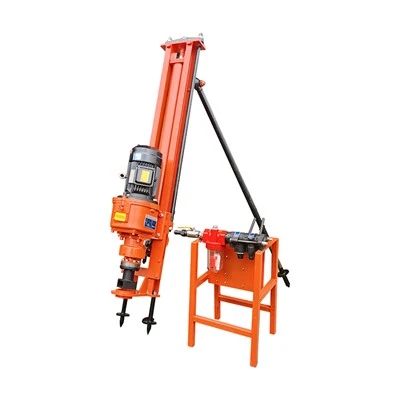
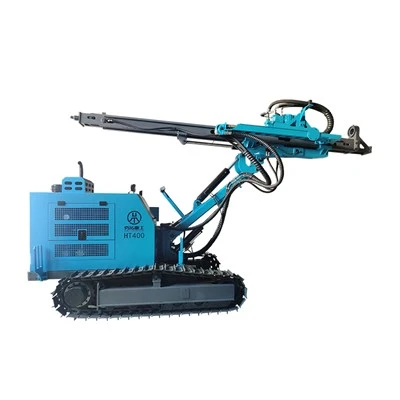
In the modern industrial landscape, rock drilling equipment plays a pivotal role in various sectors, including mining, construction, and infrastructure development. As a rock drilling equipment supplier, I have witnessed firsthand the evolution and challenges that this industry faces. This blog post aims to explore the key challenges in the development of rock drilling equipment and shed light on the strategies to overcome them.
Technological Advancements and Innovation
One of the primary challenges in the development of rock drilling equipment is keeping pace with rapid technological advancements. The demand for more efficient, precise, and environmentally friendly drilling solutions is constantly growing. Customers expect equipment that can deliver higher productivity, reduce downtime, and minimize environmental impact.
To meet these demands, manufacturers need to invest heavily in research and development. This involves exploring new materials, improving drilling techniques, and integrating advanced automation and control systems. For example, the use of high-strength alloys and composite materials can enhance the durability and performance of drilling components, while automation can improve drilling accuracy and reduce human error.
However, technological innovation also brings its own set of challenges. Developing new technologies requires significant financial resources, expertise, and time. There is also a risk of investing in technologies that may not be commercially viable or may become obsolete quickly. Therefore, manufacturers need to carefully evaluate the potential benefits and risks of each technological advancement before committing to its development.
Environmental Regulations and Sustainability
In recent years, there has been a growing emphasis on environmental regulations and sustainability in the rock drilling industry. Governments around the world are implementing stricter regulations to reduce emissions, minimize waste, and protect the environment. This has forced manufacturers to develop more environmentally friendly drilling equipment that meets these regulations.
One of the main environmental challenges in rock drilling is the generation of dust and noise. Dust can pose a health risk to workers and nearby communities, while noise can cause hearing damage and disrupt the surrounding environment. To address these issues, manufacturers are developing drilling equipment with advanced dust suppression systems and noise reduction technologies.
Another environmental challenge is the use of energy. Rock drilling equipment typically consumes a large amount of energy, which contributes to greenhouse gas emissions and climate change. To reduce energy consumption, manufacturers are exploring alternative energy sources, such as electric and hybrid power systems, and improving the energy efficiency of their equipment.
In addition to environmental regulations, there is also a growing demand for sustainable drilling practices. Customers are increasingly looking for equipment that is designed to minimize waste, reduce water consumption, and protect natural resources. Manufacturers need to respond to this demand by developing sustainable drilling solutions that are not only environmentally friendly but also economically viable.
Market Competition and Globalization
The rock drilling equipment market is highly competitive, with numerous manufacturers competing for market share. This competition is driven by factors such as price, quality, performance, and customer service. To succeed in this competitive market, manufacturers need to differentiate themselves by offering innovative products, superior quality, and excellent customer service.
Globalization has also had a significant impact on the rock drilling equipment market. With the increasing globalization of the economy, manufacturers are facing competition from both domestic and international players. This has forced manufacturers to expand their market reach and adapt to different cultural and regulatory environments.
One of the challenges of globalization is the need to comply with different standards and regulations in different countries. Each country may have its own set of safety, environmental, and quality standards that manufacturers need to meet. This can increase the cost and complexity of doing business in international markets.
Another challenge of globalization is the need to manage a global supply chain. Manufacturers need to ensure that they have a reliable supply of raw materials and components from different parts of the world. This requires effective supply chain management, including sourcing, procurement, logistics, and inventory management.
Skilled Labor Shortage
The rock drilling industry is facing a shortage of skilled labor, which is a significant challenge for its development. Skilled workers are essential for the design, manufacturing, installation, and maintenance of rock drilling equipment. However, there is a growing gap between the demand for skilled workers and the supply of qualified candidates.
One of the reasons for the skilled labor shortage is the aging workforce. Many experienced workers in the rock drilling industry are approaching retirement age, and there are not enough young workers entering the industry to replace them. This is due in part to the perception that the rock drilling industry is a dirty, dangerous, and low-paying job.
Another reason for the skilled labor shortage is the lack of training and education programs. There are few vocational training programs and educational institutions that offer courses in rock drilling technology. This makes it difficult for young people to acquire the skills and knowledge needed to enter the industry.
To address the skilled labor shortage, manufacturers need to invest in training and education programs to attract and retain young workers. This can include partnering with vocational training schools and educational institutions to develop customized training programs, offering apprenticeships and internships, and providing on-the-job training and development opportunities.
Cost and Affordability
Cost is always a major consideration in the development of rock drilling equipment. Customers are looking for equipment that is not only high-quality and reliable but also affordable. However, developing and manufacturing high-quality rock drilling equipment requires significant investment in research and development, production facilities, and marketing.
One of the challenges of reducing the cost of rock drilling equipment is the high cost of raw materials. The prices of steel, aluminum, and other metals have been fluctuating in recent years, which has increased the cost of manufacturing rock drilling equipment. To reduce the cost of raw materials, manufacturers need to explore alternative materials, such as composites and plastics, and negotiate better prices with their suppliers.
Another challenge of reducing the cost of rock drilling equipment is the need to balance cost and quality. Customers expect high-quality equipment that can deliver reliable performance and long service life. However, developing high-quality equipment often requires the use of expensive materials and advanced manufacturing processes, which can increase the cost of production. Therefore, manufacturers need to find ways to optimize the design and manufacturing process to reduce costs without sacrificing quality.


Conclusion
In conclusion, the development of rock drilling equipment faces a number of challenges, including technological advancements, environmental regulations, market competition, skilled labor shortage, and cost and affordability. To overcome these challenges, manufacturers need to invest in research and development, develop sustainable drilling solutions, differentiate themselves through innovation and customer service, invest in training and education programs, and optimize the design and manufacturing process to reduce costs.
As a rock drilling equipment supplier, we are committed to addressing these challenges and providing our customers with high-quality, reliable, and environmentally friendly drilling equipment. We offer a wide range of products, including small down the hole drilling, mini pneumatic drill, and Hand Held Rock Drill, that are designed to meet the diverse needs of our customers.
If you are interested in learning more about our rock drilling equipment or would like to discuss your specific requirements, please contact us. We look forward to the opportunity to work with you and provide you with the best possible drilling solutions.
References
- [List relevant industry reports, research papers, or books here]