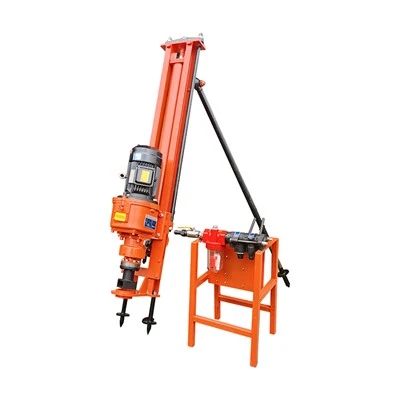
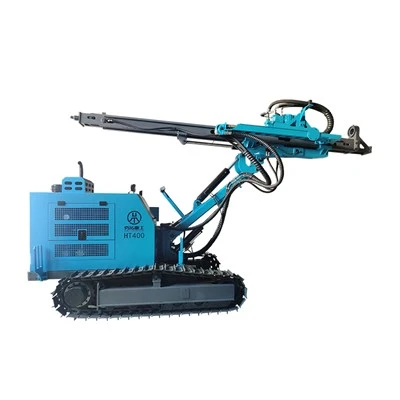
In the dynamic landscape of the construction and mining industries, the question of whether a pneumatic rock drilling rig can be integrated with other equipment is not only relevant but also crucial for enhancing operational efficiency and productivity. As a leading supplier of pneumatic rock drilling rigs, we have witnessed firsthand the transformative potential of such integrations. This blog will delve into the feasibility, benefits, and real - world applications of integrating pneumatic rock drilling rigs with other equipment.
Feasibility of Integration
Pneumatic rock drilling rigs operate on compressed air, which provides a reliable and efficient power source. This characteristic makes them highly adaptable for integration with other equipment. Many modern pneumatic rock drilling rigs are designed with standardized interfaces and connection points, allowing for seamless coupling with a variety of complementary machinery.
For instance, the pneumatic air leg rock drill is a versatile tool that can be easily integrated with air compressors. The air compressor supplies the necessary compressed air to power the rock drill. Most pneumatic rock drills have a standard air inlet connection, which can be quickly attached to the output of an air compressor. This compatibility is a result of industry - wide standards that ensure interoperability between different pneumatic devices.
Moreover, pneumatic rock drilling rigs can also be integrated with automation systems. With the advancement of technology, it is possible to connect these rigs to programmable logic controllers (PLCs) and sensors. The sensors can monitor various parameters such as drilling depth, pressure, and vibration, while the PLC can control the drilling process based on pre - set parameters. This integration not only improves the accuracy of drilling but also enhances safety by reducing the need for manual intervention.
Benefits of Integration
Increased Efficiency
Integrating a pneumatic rock drilling rig with other equipment can significantly boost operational efficiency. When combined with an automated feeding system, for example, the drilling rig can continuously and accurately feed the drill bit into the rock, reducing the time required for each drilling operation. The automated system can precisely control the feed rate, ensuring optimal drilling performance and minimizing wear and tear on the drill bit.

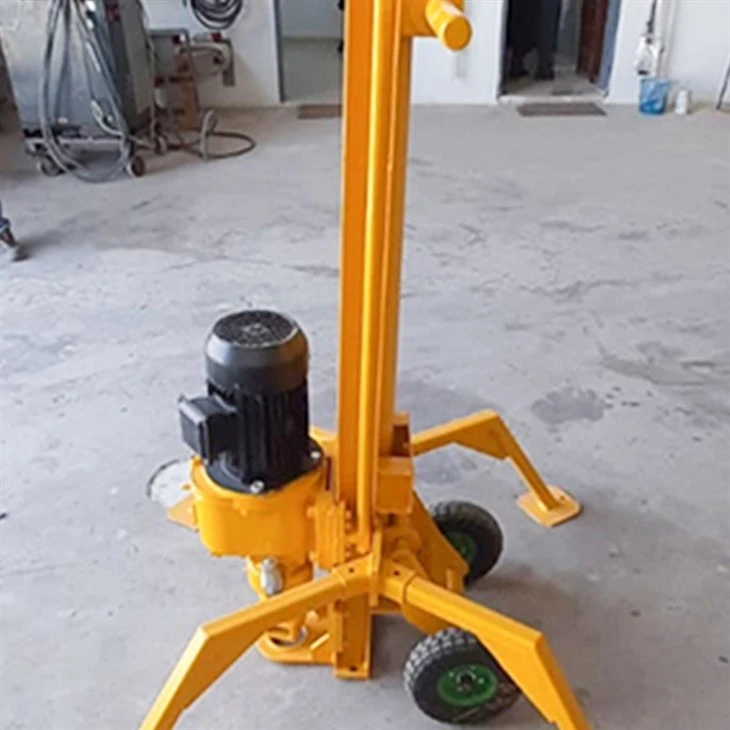
In a mining operation, integrating pneumatic rock drills with a material handling system can streamline the entire process. Once the rocks are drilled and blasted, the material handling system can quickly transport the broken rocks away from the drilling site. This reduces the downtime between drilling and material removal, allowing for a more continuous and efficient operation.
Enhanced Safety
Safety is a top priority in the construction and mining industries. Integrating pneumatic rock drilling rigs with safety - related equipment can greatly improve the working environment. For example, by integrating the rig with a dust suppression system, the amount of dust generated during drilling can be significantly reduced. Dust inhalation is a major health hazard for workers, and a well - integrated dust suppression system can help protect their respiratory health.
In addition, integrating the drilling rig with a remote - control system can keep workers at a safe distance from potentially dangerous areas. Workers can operate the rig from a control room, away from the immediate vicinity of the drilling site. This reduces the risk of accidents caused by falling rocks, flying debris, or equipment malfunctions.
Cost Savings
Integrating pneumatic rock drilling rigs with other equipment can lead to substantial cost savings. By using an integrated system, the overall energy consumption can be optimized. For example, when the drilling rig is integrated with an energy - efficient air compressor, the compressor can be adjusted to supply only the amount of compressed air required by the drill at any given time. This reduces energy waste and lowers the electricity or fuel costs associated with running the equipment.
Furthermore, integrated systems often require less maintenance compared to a collection of standalone devices. Since the equipment is designed to work together, there is less chance of compatibility issues that can lead to breakdowns. This reduces the frequency of repairs and replacement of parts, resulting in long - term cost savings.
Real - World Applications
Construction Industry
In the construction of high - rise buildings, pneumatic rock drilling rigs are often integrated with tower cranes. The tower crane can lift the heavy drilling rig to different floors of the building under construction. This allows for vertical drilling operations, such as creating holes for foundation piles or installing structural supports. The integration of the drilling rig with the tower crane enables precise positioning of the drill at the desired location, ensuring the accuracy of the drilling work.
The mini pneumatic drill is another example of a versatile tool in the construction industry. It can be integrated with a mobile power unit, making it suitable for small - scale construction projects. The mobile power unit can provide the necessary power to the mini drill, and its mobility allows it to be easily transported to different job sites.
Mining Industry
In the mining industry, pneumatic rock drilling rigs are commonly integrated with underground haulage systems. After the rocks are drilled and blasted, the haulage system can quickly move the broken rocks to the surface or to a processing area. This integration is crucial for maintaining a high - volume production rate in the mine.
The hand held rock drilling equipment is also widely used in mining. It can be integrated with a backpack - style air compressor, providing a portable and flexible solution for drilling in hard - to - reach areas. Miners can carry the hand - held drill and the air compressor to different parts of the mine, allowing for on - the - spot drilling operations.
Challenges and Considerations
While the integration of pneumatic rock drilling rigs with other equipment offers numerous benefits, there are also some challenges and considerations. One of the main challenges is the initial investment required for integration. Purchasing and installing complementary equipment, such as automation systems or advanced sensors, can be costly. However, it is important to consider the long - term benefits and cost savings that these integrations can bring.
Another consideration is the need for proper training. Workers need to be trained to operate and maintain the integrated systems. They should understand how the different components interact with each other and be able to troubleshoot any issues that may arise. A lack of proper training can lead to inefficiencies and even safety hazards.
Real - World Examples of Successful Integration
There are numerous real - world examples of successful integration of pneumatic rock drilling rigs with other equipment. In a large - scale construction project in a major city, a pneumatic rock drilling rig was integrated with an automated surveying system. The surveying system provided real - time data on the terrain and the desired drilling locations. The drilling rig was then able to adjust its position and angle automatically based on this data. As a result, the drilling accuracy was significantly improved, and the overall project timeline was shortened.
In a mining operation in a remote area, a pneumatic rock drilling rig was integrated with a satellite - based communication system. The communication system allowed the operators at the mine site to stay in constant contact with the management at the headquarters. This enabled real - time monitoring of the drilling operations and quick decision - making in case of any issues. The integration also allowed for remote diagnostics and troubleshooting, reducing the need for on - site technical support.
Conclusion
In conclusion, a pneumatic rock drilling rig can indeed be integrated with other equipment, and the benefits of such integrations are significant. From increased efficiency and enhanced safety to cost savings, the advantages make integration a worthwhile investment. As a supplier of pneumatic rock drilling rigs, we are committed to providing our customers with solutions that facilitate seamless integration.
If you are interested in learning more about how our pneumatic rock drilling rigs can be integrated with other equipment or are looking to purchase our products for your project, we invite you to contact us for a detailed discussion. Our team of experts will be happy to assist you in finding the most suitable integration solutions for your specific needs.
References
- "Pneumatic Systems in Industrial Applications" by John Doe, published by Industrial Press Inc.
- "Mining Equipment and Technology" by Jane Smith, published by Mining Journal Publications.
- "Automation in Construction and Mining" by Tom Brown, published by Construction Technology Press.