Introduction:
Drilling Failures Are Often Caused by Geology, Not Equipment
In water well drilling, geothermal drilling, and civil foundation projects, low efficiency and frequent drilling failures are often blamed on equipment quality or operator experience.
In reality, many drilling problems originate from mixed geological conditions, where a single drilling method is unable to adapt to rapidly changing formations within the same borehole.
This article explains why single-method drilling systems frequently fail in mixed geology, and why combined drilling methods are becoming the preferred solution for modern drilling projects.
What Are Mixed Geological Conditions in Drilling Projects?
Mixed geological conditions refer to drilling environments where multiple formation types coexist vertically, including:
- Surface soil or clay layers
- Gravel, cobble, or loose rock layers
- Hard rock or fractured bedrock at depth
These formations are commonly encountered in:
- Water well drilling projects
- Agricultural irrigation wells
- Geothermal heat pump wells
- Open-pit mining and blast hole drilling
- Civil and rural infrastructure projects
Each geological layer reacts differently to drilling force, flushing medium, and penetration method.
Why Rotary Water Drilling Often Fails in Hard Rock and Gravel Layers
Rotary water drilling is widely used due to its simplicity and effectiveness in soft formations.
However, when drilling transitions into hard rock or dense gravel layers, rotary drilling systems often experience:
- Sharp reduction in penetration rate
- Excessive bit wear and torque load
- Poor rock-breaking efficiency
- Increased fuel and maintenance costs
In mixed geological conditions, rotary drilling alone becomes inefficient and economically unsustainable.
Why Air DTH Hammer Drilling Struggles in Loose or Unstable Formations
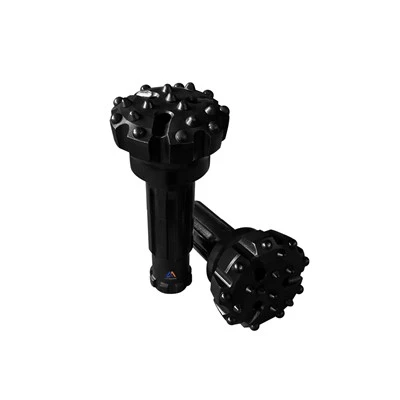
Air-powered DTH (Down-the-Hole) hammer drilling is highly effective in hard rock drilling due to its direct impact energy at the bit.
Yet in loose soil, sand, or water-bearing formations, air drilling faces serious limitations:
- Borehole wall instability
- Inadequate cuttings removal
- High risk of hole collapse or tool sticking
- Difficulty maintaining borehole straightness
Without sufficient borehole support, pure air DTH drilling is unreliable in mixed formations.
Typical Drilling Failure Scenarios in Mixed Geological Conditions
In real drilling operations, mixed geology often leads to:
- Smooth drilling in upper layers followed by sudden penetration failure
- Frequent method adjustments and downtime
- Stuck drilling tools during formation transitions
- Borehole collapse when switching drilling techniques
These failures are not random accidents-they are predictable outcomes of using single-method drilling systems.
Why Single-Method Drilling Systems Are Structurally Limited
Single-method drilling rigs are designed around one core drilling principle.
As a result:
- Rotary rigs lack impact energy for hard rock penetration
- DTH hammer rigs lack borehole stability control in soft layers
When geological conditions change within the same borehole, these systems cannot adapt without compromising efficiency or safety.
The Importance of Combined Drilling Methods in Mixed Formations
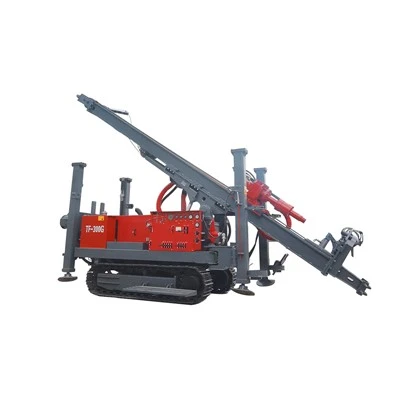
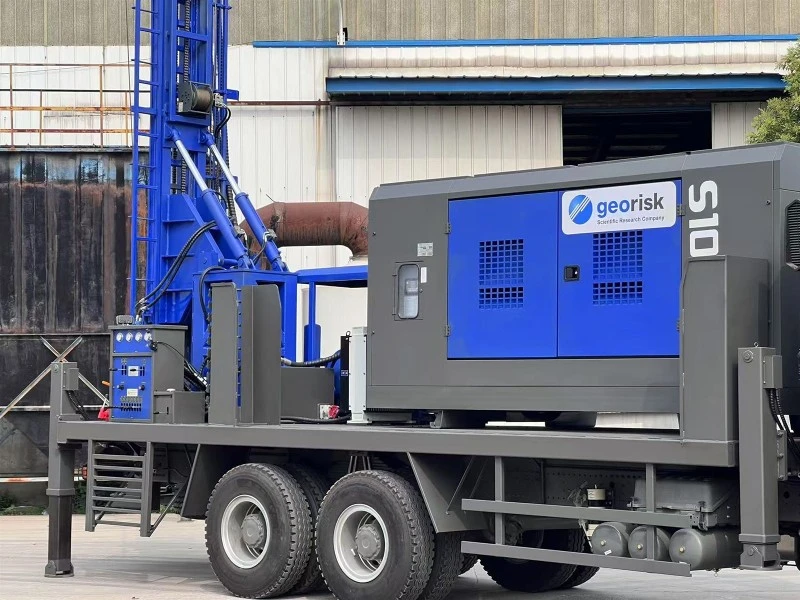
Modern drilling projects increasingly require rigs that support both rotary water drilling and air DTH hammer drilling.Like Tractor Mounted 4 Wheel Water Well Drilling Rig
Combined drilling systems allow operators to:
- Use water drilling to stabilize loose or water-bearing layers
- Switch to DTH hammer drilling for efficient hard rock penetration
- Maintain drilling continuity across changing formations
- Reduce non-productive time and overall drilling cost
This flexibility is essential for drilling success in complex geological environments.
Key Considerations When Choosing a Drilling Rig for Mixed Geology
When selecting drilling equipment for mixed geological conditions, operators should focus on:
- Ability to switch between water drilling and air drilling
- Wide torque and rotation speed range
- Stable mobility for mountainous or uneven terrain
- Reliable cuttings removal in both air and water modes
- Simple system design for maintenance and field operation
Depth capacity alone is not a reliable indicator of real drilling performance.
Conclusion:
Matching Drilling Method to Geological Reality
Single-method drilling systems may perform well in uniform formations, but they often fail in mixed geological conditions.
Successful water well and geothermal drilling depends on:
Understanding formation changes
Applying the appropriate drilling method at each stage
Using equipment designed for geological adaptability
In complex formations, drilling flexibility is the foundation of efficiency, safety, and cost control.