One of the most common questions asked by contractors and project owners is:
"How much does it cost to drill a water well?"
The answer depends on many factors such as drilling depth, geological conditions, equipment efficiency, and drilling method. In most projects, the total drilling price is usually calculated based on cost per meter.
Understanding what determines drilling costs can help contractors optimize operations and reduce project expenses.
If you want to understand the overall strategy of reducing drilling expenses, you can also read our guide:
How to Reduce Drilling Cost →
top service industries
Lorem ipsum dolor sit amet consectetur adipisicing elit.
1. Drilling Depth
Depth is the most obvious factor affecting the cost of drilling a borehole.
Typical water well depths include:
100–150 meters for rural water supply
200–300 meters for agricultural projects
400–600 meters for deep groundwater development
The deeper the well, the more drilling time, fuel, and equipment wear will occur.
However, the drilling cost does not increase linearly with depth. With efficient drilling equipment, the cost per meter can actually decrease in deeper projects.

2. Geological Conditions
Geology plays a major role in determining drilling difficulty.
Common formations include:
Soft soil and clay
These formations are relatively easy to drill.
Sand layers
Special drilling techniques may be required to prevent collapse.
Hard rock formations
These require powerful drilling rigs and high-pressure air compressors.
For hard rock drilling, DTH drilling methods are often used because they provide higher penetration rates.
3. Drilling Equipment Efficiency
Drilling equipment efficiency has a significant impact on the total project cost.
Two contractors drilling the same 300-meter well may have very different costs depending on their equipment.
High-efficiency drilling rigs can:
increase drilling speed
reduce fuel consumption
minimize downtime
If you want to understand how drilling efficiency affects project expenses, you can read this article:
How Drilling Speed Affects Project Cost →

4. Air Compressor Performance
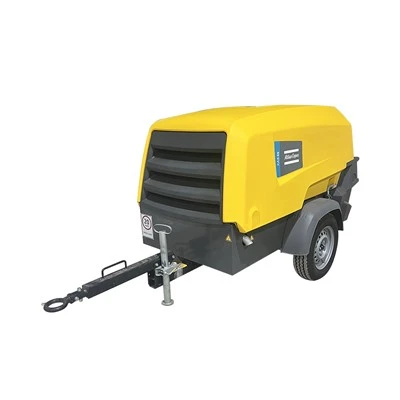
For many water well projects, especially in hard rock formations, the air compressor plays a critical role.
The compressor provides compressed air to drive the hammer during DTH drilling.
Key factors include:
air pressure
airflow volume
pressure stability
If the compressor is too small, drilling speed will decrease and fuel consumption will increase.
5. Drill Tools and Wear
Drilling tools such as drill pipes and drill bits are consumables.
Low-quality tools may wear out quickly, increasing replacement costs and downtime.
High-quality drilling tools may have a higher initial cost but usually offer longer service life and better performance.
The cost of drilling a water well per meter depends on many factors, including depth, geological conditions, equipment efficiency, and drilling tools.
Contractors who focus on system optimization rather than just equipment price can significantly reduce drilling costs.