Drilling cost is one of the most critical factors in mining and water well projects. Many contractors focus only on equipment price when trying to reduce costs. However, experienced drilling companies know that the real cost is not determined by the machine itself, but by the entire drilling system.
A modern approach to reducing drilling costs should focus on efficiency, system matching, and lifecycle performance, rather than simply purchasing cheaper equipment.
This article introduces a system-based strategy to help contractors reduce drilling costs while improving productivity.
One of the biggest misconceptions in drilling operations is evaluating equipment based solely on purchase price.
For drilling contractors, the real indicator should be:
Cost per meter drilled.
This includes:
- fuel consumption
- drilling speed
- maintenance cost
- tool wear
- downtime
A higher-quality drilling rig may cost more initially, but if it drills faster and requires less maintenance, the overall cost per meter can be significantly lower.
Example:
Rig A
Lower purchase price
Drilling speed: 8 meters/hour
Rig B
Higher purchase price
Drilling speed: 14 meters/hour
Even though Rig B is more expensive, it can complete projects faster and reduce labor and fuel costs.
Another overlooked factor is system compatibility.
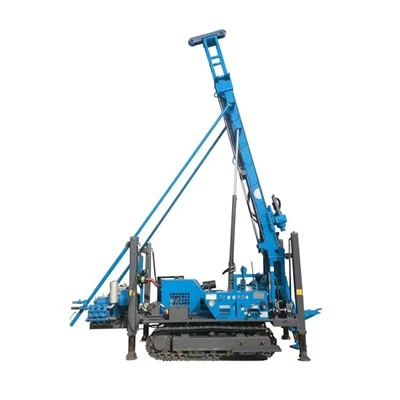
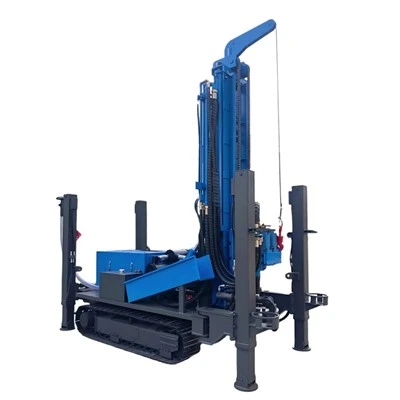
Drilling is not performed by a single machine. It is a complete system, including:
- drilling rig
- air compressor
- DTH hammer
- drill pipes
- drill bits
If these components are not properly matched, drilling efficiency can drop dramatically.
For example:
A high-performance DTH hammer requires sufficient air pressure and airflow.
If the compressor cannot deliver enough air volume, drilling speed will decrease and fuel consumption will increase.
Optimizing the entire drilling system can reduce drilling cost by 20–30% in many projects.
Different geological formations require different drilling strategies.
Many contractors lose money because they use the same drilling setup for every project.
For example:
Soft formations
Rotary drilling can be more efficient.
Hard rock formations
DTH drilling usually provides faster penetration and better hole quality.
By selecting the correct drilling method based on geology, contractors can significantly improve penetration rate and reduce operating costs.
Hidden costs often have a greater impact than equipment price.
Unplanned downtime can result in:
idle labor costs
delayed project schedules
additional fuel consumption
Modern drilling rigs are increasingly designed with simplified hydraulic systems and modular components, making maintenance easier and reducing repair time.
Regular maintenance planning can extend equipment life and prevent expensive failures.
A new trend in the drilling industry is data-driven drilling management.
Instead of relying only on operator experience, drilling contractors can monitor key performance indicators such as:
penetration rate
fuel consumption
compressor pressure stability
bit wear rate
By analyzing these parameters, companies can optimize drilling operations and continuously reduce costs.
This data-driven approach is becoming a key competitive advantage in modern drilling projects.
Conclusion
Reducing drilling costs is not simply about purchasing cheaper equipment. It requires a systematic strategy that considers drilling efficiency, equipment compatibility, geological conditions, and operational management.
Contractors who focus on cost per meter, system optimization, and data-driven operations can significantly improve project profitability.
In today's competitive drilling industry, the companies that control drilling costs most effectively are not those who spend the least-but those who manage the drilling system most intelligently.