When it comes to rock drilling, understanding the difference between a hand held rock drill and a large - scale rock drill is crucial for anyone involved in construction, mining, or other related industries. As a supplier of hand held rock drills, I've had the opportunity to see firsthand how these two types of drills serve different purposes and meet various needs.
1. Physical Characteristics
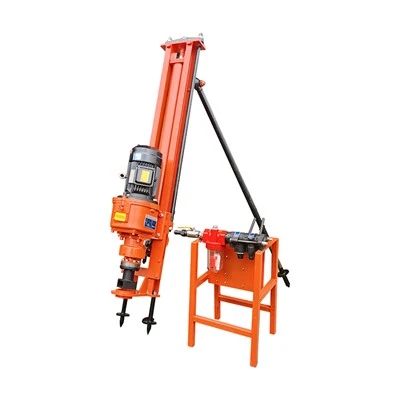
The most obvious difference between a hand held rock drill and a large - scale rock drill lies in their physical size and weight. A hand held rock drill, as the name suggests, is designed to be carried and operated by a single person. These drills are relatively compact and lightweight, typically weighing between 10 to 30 kilograms. For example, our Hand Held Rock Drill is engineered to be easily maneuverable, allowing operators to work in tight spaces with ease.
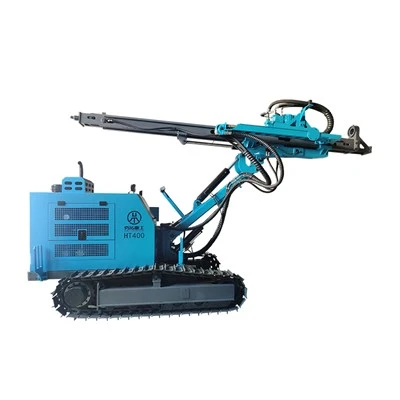
On the other hand, large - scale rock drills are massive machines. They are often mounted on trucks, trailers, or dedicated drilling rigs. These drills can weigh several tons and require a team of operators to set up and operate. Their large size enables them to handle more powerful drilling mechanisms and larger drill bits.
2. Drilling Capacity
The drilling capacity of the two types of drills also varies significantly. Hand held rock drills are suitable for small - scale projects. They can typically drill holes with diameters ranging from 20 to 50 millimeters and depths up to a few meters. For instance, in construction projects where you need to drill holes for anchor bolts or in mining operations for small - scale exploration, a hand held rock drill is an ideal choice. Our mini pneumatic drill is a perfect example of a hand held drill with good drilling capacity for such tasks.
Large - scale rock drills, however, are built for heavy - duty work. They can drill holes with diameters of over 100 millimeters and depths of tens or even hundreds of meters. In large - scale mining operations, these drills are used to extract minerals from deep underground. They are also employed in major construction projects such as building large dams or tunnels, where deep and large - diameter holes are required.
3. Power Source
Power sources are another differentiating factor. Hand held rock drills are commonly powered by compressed air, electricity, or gasoline. Compressed air - powered hand held drills, like our pneumatic air leg rock drill, are popular because they are relatively simple to operate and maintain. They are also suitable for use in environments where there is a risk of explosion, as they do not produce sparks. Electric - powered hand held drills are more common in indoor or well - ventilated areas, while gasoline - powered ones offer greater mobility in remote locations.
Large - scale rock drills usually rely on diesel engines or large - scale electrical power sources. Diesel engines provide the high - power output needed for heavy - duty drilling. Electrical power sources are used when the drill is located near a power grid, such as in a large construction site with access to electricity.
4. Mobility and Flexibility
Mobility and flexibility are important considerations in choosing the right drill. Hand held rock drills are extremely mobile. They can be easily transported from one location to another by a single person. This makes them ideal for projects that require drilling in multiple locations or in hard - to - reach areas. For example, in archaeological excavations, where drilling needs to be done in various spots across a site, a hand held rock drill can be quickly moved and set up.
Large - scale rock drills, due to their size and weight, have limited mobility. They need to be transported on large vehicles and require time to set up at the drilling site. However, once set up, they can provide continuous and efficient drilling over a long period.
5. Cost
Cost is a significant factor for many buyers. Hand held rock drills are generally more affordable. Their lower purchase price, combined with lower operating and maintenance costs, makes them a cost - effective option for small businesses or projects with limited budgets. The cost of a hand held rock drill can range from a few hundred to a few thousand dollars, depending on the brand, features, and power source.
Large - scale rock drills, on the other hand, are extremely expensive. The purchase price can run into hundreds of thousands or even millions of dollars. In addition, their operating costs, including fuel, maintenance, and labor, are also much higher.


6. Application Scenarios
The application scenarios for the two types of drills are quite different. Hand held rock drills are widely used in construction, mining exploration, and maintenance work. In construction, they are used for tasks such as installing curtain walls, drilling holes for plumbing and electrical systems. In mining exploration, they are used to collect rock samples from the surface or shallow depths.
Large - scale rock drills are mainly used in large - scale mining operations, major infrastructure projects, and oil and gas exploration. In mining, they are used to create large - scale boreholes for blasting and ore extraction. In infrastructure projects, they are used for foundation drilling and tunnel construction.
Conclusion and Call to Action
In conclusion, the choice between a hand held rock drill and a large - scale rock drill depends on the specific requirements of your project. If you are working on a small - scale project, need high mobility, and have a limited budget, a hand held rock drill is the way to go. On the other hand, if you are involved in large - scale, heavy - duty projects, a large - scale rock drill is necessary.
As a supplier of high - quality hand held rock drills, we are committed to providing our customers with the best products and services. Our hand held rock drills are designed to meet the diverse needs of different industries. If you are interested in our products or have any questions about hand held rock drills, please feel free to contact us for procurement and further discussions.
References
- Construction Equipment Handbook. McGraw - Hill.
- Mining Engineering: Principles and Practice. John Wiley & Sons.
- Rock Drilling Technology: A Comprehensive Guide. Elsevier.