The cutting ability of a mini rock drilling machine is a crucial aspect that determines its efficiency and effectiveness in various rock - drilling applications. As a supplier of mini rock drilling machines, I've witnessed firsthand the importance of understanding this concept for our customers.
Understanding the Basics of Cutting Ability
Cutting ability refers to the machine's capacity to penetrate and break through different types of rocks. It is a multi - faceted characteristic influenced by several factors. One of the primary factors is the power source of the mini rock drilling machine. Most of our mini rock drilling machines are powered by either electricity, hydraulics, or pneumatics. Each power source has its own advantages and limitations in terms of cutting ability.
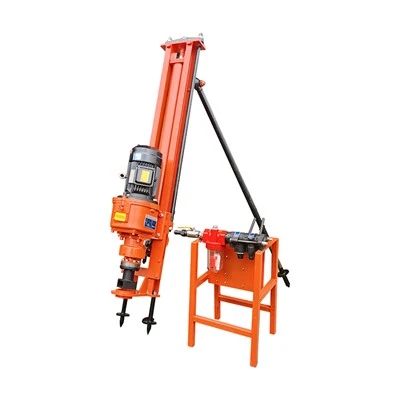
Pneumatic - powered mini rock drilling machines, like our mini pneumatic drill, are widely used due to their portability and relatively simple operation. The compressed air drives the piston inside the drill, which in turn transfers the energy to the drill bit, allowing it to cut through the rock. The cutting ability of a pneumatic drill depends on the air pressure and flow rate. Higher air pressure generally results in more force being applied to the drill bit, enabling it to break through harder rocks. However, it's important to balance the air pressure with the drill's design specifications to avoid damaging the machine.
Electric - powered mini rock drilling machines offer a consistent power supply. They are often used in indoor or areas where a stable electricity source is available. The cutting ability of an electric drill is determined by the motor's power rating. A more powerful motor can drive the drill bit at a higher speed and with greater torque, enhancing its ability to cut through tough rocks.
Hydraulic - powered mini rock drilling machines are known for their high - power output. They use hydraulic fluid to transfer energy, which can generate a large amount of force. This makes them suitable for drilling through very hard and dense rocks. The cutting ability of a hydraulic drill is related to the hydraulic pressure and the size of the hydraulic cylinders.
Drill Bit Design and Its Impact on Cutting Ability
The drill bit is the part of the mini rock drilling machine that directly interacts with the rock. Its design plays a vital role in the cutting ability. There are different types of drill bits available, such as carbide - tipped bits, diamond - impregnated bits, and roller - cone bits.
Carbide - tipped drill bits are commonly used in mini rock drilling machines. The carbide tips are extremely hard and can withstand high levels of wear and tear. They are effective in cutting through medium - hard rocks, such as limestone and sandstone. The shape of the carbide tips also affects the cutting ability. For example, a chisel - shaped tip is good for breaking up rocks, while a cross - shaped tip can provide more stable cutting.
Diamond - impregnated drill bits are used for drilling through very hard rocks, like granite. The diamonds, which are the hardest known natural material, can cut through the rock with high efficiency. The distribution and size of the diamonds on the drill bit surface determine its cutting performance. A well - designed diamond - impregnated bit can maintain a high cutting speed and a long service life.
Roller - cone drill bits are suitable for softer rocks. They have rotating cones with teeth that crush the rock as the drill rotates. The cutting ability of a roller - cone bit depends on the number and shape of the teeth on the cones.
Rock Properties and Their Influence on Cutting Ability
The type and properties of the rock being drilled also have a significant impact on the cutting ability of a mini rock drilling machine. Different rocks have different hardness, density, and brittleness.
Hardness is a measure of a rock's resistance to scratching and indentation. Rocks like granite and quartzite are very hard, while rocks like shale and gypsum are relatively soft. A mini rock drilling machine needs to have sufficient power and the right drill bit to cut through hard rocks. For example, when drilling through granite, a diamond - impregnated drill bit and a high - power drill are usually required.
Density refers to the mass per unit volume of the rock. Dense rocks are generally more difficult to drill through because they require more energy to break. A pneumatic or electric drill may struggle with very dense rocks, and a hydraulic drill might be a better choice in such cases.
Brittleness is another important property. Brittle rocks tend to break into small pieces when drilled, which can be an advantage as it reduces the resistance on the drill bit. However, if the rock is too brittle, it may cause the drill bit to chip or break.
Applications and Cutting Ability Requirements
The cutting ability requirements vary depending on the application of the mini rock drilling machine.
In construction projects, mini rock drilling machines are often used for creating holes for anchor bolts, installing utilities, or for small - scale excavation. For these applications, the drill needs to be able to cut through various types of rocks, including concrete and masonry. A medium - power drill with a suitable drill bit can usually meet the requirements. For example, our pneumatic air leg rock drill is a popular choice for construction sites due to its versatility and ease of use.
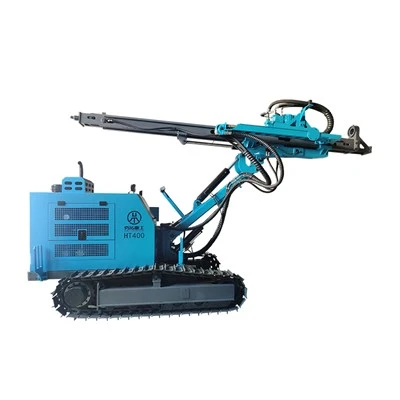
In mining exploration, the mini rock drilling machine needs to have a high cutting ability to drill through deep - seated rocks. The drill may need to penetrate through different layers of rocks, from soft overburden to hard ore - bearing rocks. Our Integrated Open - pit Down - the - hole Drill Rig is designed for such demanding applications. It combines high - power output with advanced drill bit technology to ensure efficient drilling in mining environments.
Measuring and Improving Cutting Ability
To measure the cutting ability of a mini rock drilling machine, several parameters can be considered. The rate of penetration (ROP) is a commonly used metric. It measures how fast the drill can penetrate the rock, usually expressed in meters per hour. A higher ROP indicates a better cutting ability.
The specific energy consumption is another important parameter. It measures the amount of energy required to drill a unit volume of rock. A lower specific energy consumption means that the machine is using energy more efficiently, which is related to a better cutting ability.
To improve the cutting ability of a mini rock drilling machine, regular maintenance is essential. Keeping the drill bit sharp, checking the power source (air pressure for pneumatic drills, electricity supply for electric drills, and hydraulic fluid for hydraulic drills), and ensuring proper lubrication can all enhance the machine's performance.
Conclusion
The cutting ability of a mini rock drilling machine is a complex concept that is influenced by multiple factors, including the power source, drill bit design, rock properties, and application requirements. As a supplier, we are committed to providing our customers with high - quality mini rock drilling machines that offer excellent cutting performance. Whether you are working on a small construction project or a large - scale mining exploration, our range of products, such as the mini pneumatic drill, Integrated Open - pit Down - the - hole Drill Rig, and pneumatic air leg rock drill, can meet your specific needs.


If you are interested in learning more about our mini rock drilling machines or have any questions regarding their cutting ability, please feel free to contact us for a detailed discussion and potential purchase. We look forward to working with you to find the best drilling solution for your projects.
References
- Redden, J. (2015). Rock Drilling Technology. Elsevier.
- Singh, R. N., & Goel, R. K. (2017). Rock Mechanics and Engineering. Springer.
- Telford, W. M., Geldart, L. P., & Sheriff, R. E. (1990). Applied Geophysics. Cambridge University Press.