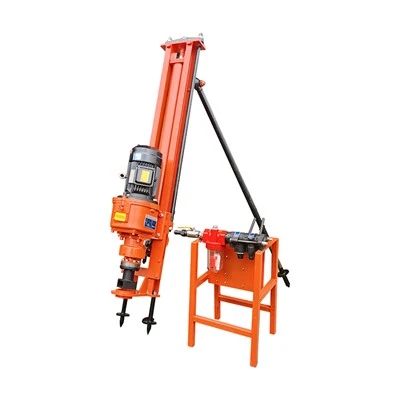
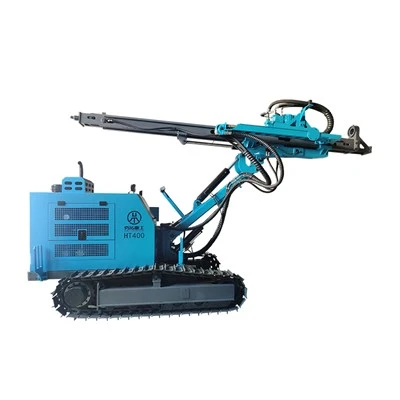
Hey there! As a supplier of pneumatic rock drilling rigs, I'm super excited to share with you the ins and outs of the training courses we offer for operating these bad - boys.
First off, let's talk about the pre - training basics. Before we even start the hands - on stuff, we give our trainees a solid understanding of what a pneumatic rock drilling rig is. A pneumatic rock drilling rig is a powerful tool that uses compressed air to drive the drilling mechanism. It's widely used in mining, construction, and other industries where you need to drill into hard rock.
In the theoretical part of the training, we cover the components of the pneumatic rock drilling rig. There's the air compressor, which is the heart of the system. It compresses the air and supplies it to the drill. We teach trainees how to select the right air compressor according to the size and type of the drilling rig. A too - small compressor won't provide enough power, while an oversized one can be a waste of energy and money.
Another key component is the drill bit. Different types of drill bits are used for different rock formations. For soft rocks, a more aggressive bit design might work well, while for hard and abrasive rocks, we need a bit with high - quality carbide tips. We show trainees how to inspect the drill bits for wear and tear and when it's time to replace them.
Safety is always our top priority. We spend a significant amount of time in the theoretical training on safety protocols. Trainees learn about personal protective equipment (PPE), like hard hats, safety glasses, ear protection, and steel - toed boots. They also learn about the potential hazards associated with operating a pneumatic rock drilling rig, such as flying rock fragments, noise pollution, and air compressor malfunctions. We teach them how to perform pre - operation safety checks, like checking the air hoses for leaks, making sure the rig is properly grounded, and verifying that all safety guards are in place.
Now, let's move on to the practical training. The first step in the practical part is setting up the pneumatic rock drilling rig. Trainees learn how to transport the rig to the drilling site safely. They need to know how to level the rig to ensure accurate drilling. An uneven rig can lead to crooked holes, which can be a big problem, especially in construction projects where precision is crucial.
Once the rig is set up, trainees learn how to connect the air compressor to the rig. They need to make sure the air hoses are properly attached and tightened to prevent air leaks. A small air leak can significantly reduce the efficiency of the drilling rig.
Next, it's time to start drilling. Trainees learn how to operate the control panel of the drilling rig. They learn how to adjust the drilling speed, feed rate, and air pressure according to the rock conditions. For example, when drilling into a hard rock, a slower drilling speed and higher air pressure might be required, while for softer rocks, a faster speed can be used.
We also train them on the correct drilling techniques. They learn how to start the drill slowly and gradually increase the speed and pressure. This helps to prevent the drill bit from getting stuck or breaking. Trainees are taught how to monitor the drilling process, looking for signs of problems like excessive vibration or abnormal noise. If they notice any issues, they know how to stop the drilling immediately and troubleshoot the problem.
During the practical training, we also cover maintenance and repair. Trainees learn how to perform basic maintenance tasks, like cleaning the drill bit, lubricating the moving parts, and checking the air filters. They also learn how to diagnose and fix common problems, such as a clogged air passage or a malfunctioning valve.
Now, let's talk about some of the different types of pneumatic rock drilling rigs we offer and how the training adapts to them. We have the Hand Held Rock Drill. This is a lightweight and portable option, often used for small - scale drilling jobs, like anchor installation or rock sampling. The training for this type of drill focuses on its ease of use and portability. Trainees learn how to hold the drill properly to maintain control and accuracy.

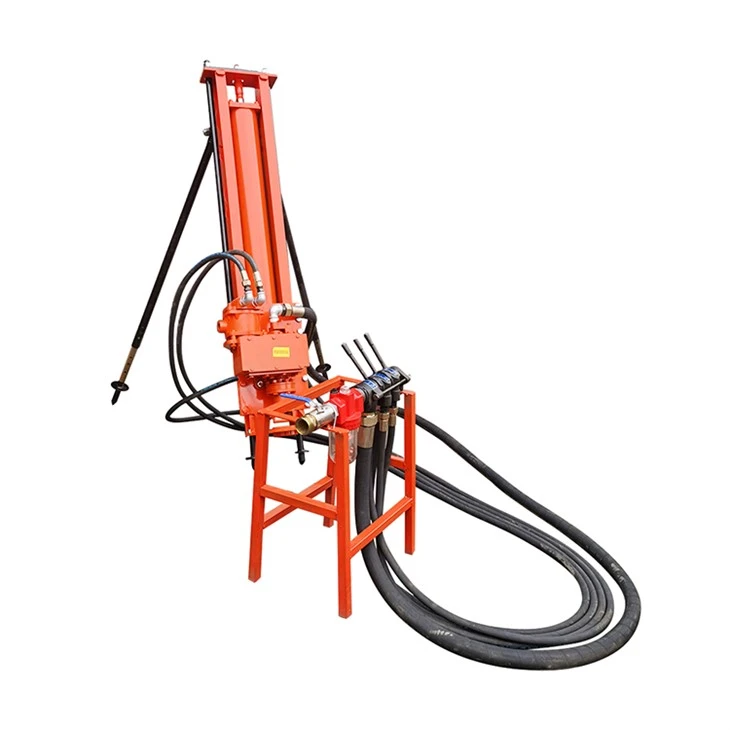
For small down the hole drilling, the training is a bit more in - depth. These rigs are used for drilling vertical or inclined holes in the ground. Trainees learn how to set up the rig for different hole depths and angles. They also learn about the down - the - hole hammer, which is a key component of this type of rig. The down - the - hole hammer uses the compressed air to deliver powerful blows to the drill bit, making it more efficient for drilling in hard rocks.
Our Integrated Open - pit Down - the - hole Drill Rig is a heavy - duty machine used in large - scale mining and open - pit operations. The training for this rig is comprehensive. Trainees learn about the advanced control systems, the automated drilling functions, and how to operate the rig in a large - scale mining environment. They also learn about the maintenance requirements for such a large and complex machine.
After the training is completed, we provide our trainees with a certification. This certification is recognized in the industry and shows that they have the skills and knowledge to operate a pneumatic rock drilling rig safely and efficiently.
If you're interested in our pneumatic rock drilling rigs or the training courses we offer, don't hesitate to reach out. Whether you're a small construction company looking for a handheld drill or a large mining operation in need of a heavy - duty open - pit rig, we've got you covered. Contact us for more information and let's start a conversation about how we can meet your drilling needs.
References
- Industry standards for pneumatic rock drilling rig operation
- Manufacturer's manuals for our pneumatic rock drilling rigs