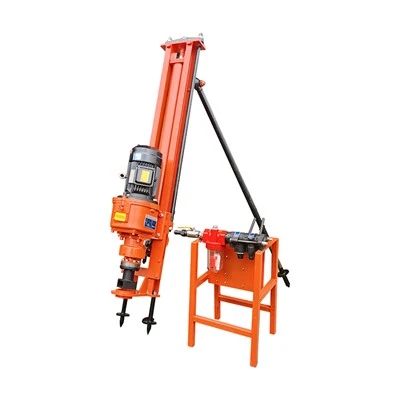
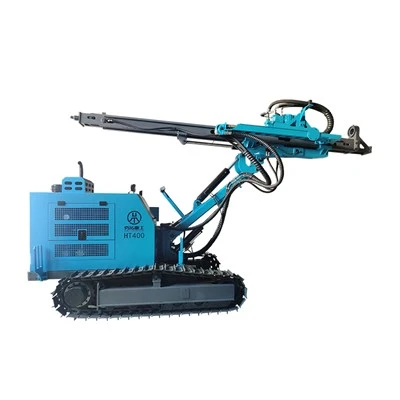
As a well - established supplier of water well drill rig trucks, I've had the privilege of witnessing the evolution and diversity of these remarkable machines. In this blog, I'll delve into the different types of water well drill rig trucks, exploring their features, applications, and advantages.
1. Rotary Water Well Drilling Rig Trucks
Rotary water well drilling rig trucks are among the most common types in the industry. These rigs operate on the principle of rotating a drill bit to break through the ground. The drill bit is attached to a drill string, which is rotated by a powerful motor on the rig.
One of the key advantages of rotary drilling rigs is their versatility. They can be used in a wide range of geological conditions, from soft soils to hard rock formations. For instance, the Rotary Water Well Drilling Rig is designed to handle various drilling depths and soil types. It is often equipped with a diesel - hydraulic system, which provides high torque and power for efficient drilling.

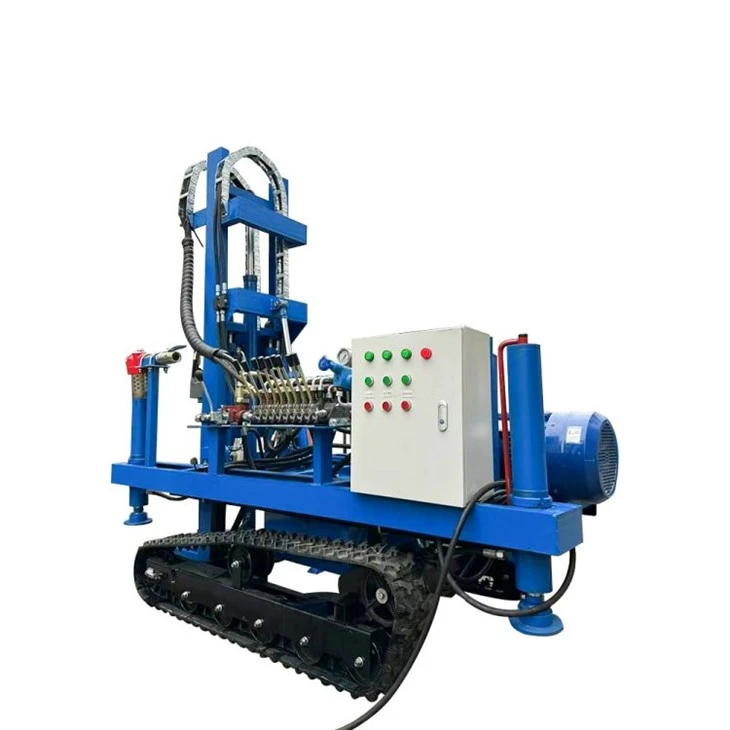
The drilling process of a rotary rig involves applying downward pressure on the drill bit while rotating it. As the bit cuts through the ground, the drill cuttings are removed from the borehole using a circulating fluid, usually water or drilling mud. This helps to keep the bit cool and clean, and also prevents the borehole from collapsing.
Rotary water well drill rig trucks are suitable for both small - scale domestic water well drilling and large - scale commercial projects. They can be easily transported on trucks, making them ideal for on - site drilling operations in different locations.
2. Reverse Circulation Water Well Drilling Rig Trucks
Reverse circulation (RC) water well drilling rig trucks offer a unique approach to drilling. In this method, instead of the traditional way of circulating fluid down the drill string and out through the bit, the fluid is circulated in the reverse direction.
The reverse circulation water well drilling rig uses a special drill bit and a double - walled drill pipe. The outer pipe is used to inject the drilling fluid into the borehole, while the inner pipe is used to extract the drill cuttings and the fluid back to the surface. This process allows for a more efficient removal of cuttings, especially in deep and large - diameter boreholes.
One of the main advantages of RC drilling is its ability to provide high - quality core samples. Since the cuttings are directly retrieved from the bottom of the borehole, they are less contaminated compared to other drilling methods. This makes RC drilling rigs popular in geological exploration and environmental monitoring projects.
Another benefit is the reduced risk of borehole collapse. The continuous circulation of fluid helps to maintain the stability of the borehole walls, even in loose or unconsolidated soils. However, RC drilling rigs are generally more complex and expensive than rotary rigs, and they require more skilled operators.
3. Cable Tool Water Well Drilling Rig Trucks
Cable tool drilling, also known as percussion drilling, is one of the oldest methods of water well drilling. Cable tool water well drill rig trucks use a heavy drill bit that is attached to a cable. The bit is repeatedly lifted and dropped, creating a pounding action that breaks through the ground.
This type of rig is relatively simple in design and operation. It consists of a mast, a winch, and a drill bit. The winch is used to lift the bit, and a set of pulleys and cables control the dropping motion. Cable tool drilling is effective in soft to medium - hard rock formations, as well as in unconsolidated soils.
One of the advantages of cable tool drilling is its low cost. The equipment is less expensive compared to other types of drill rigs, and the operating costs are also relatively low. It is also suitable for small - scale water well drilling projects, especially in rural areas where access to advanced drilling technology may be limited.
However, cable tool drilling has some limitations. It is a slow process, especially when compared to rotary or reverse circulation drilling. The depth of the borehole is also limited, and it may not be suitable for very deep or large - diameter wells.
4. Auger Water Well Drilling Rig Trucks
Auger water well drill rig trucks are commonly used for shallow water well drilling in soft soils. An auger is a helical - shaped drill bit that rotates and cuts through the ground, lifting the soil out of the borehole as it turns.
These rigs are relatively simple and easy to operate. They are often mounted on trucks for easy transportation. Auger drilling is fast and efficient for shallow wells, typically up to 50 - 100 feet deep. It is commonly used for domestic water supply wells in areas with sandy or loamy soils.
The main advantage of auger drilling is its speed. It can quickly drill a borehole, and the equipment is relatively inexpensive. However, it is not suitable for hard rock formations or deep wells. In addition, auger drilling may not be able to provide accurate core samples, which can be a drawback in some geological exploration projects.
5. Sonic Water Well Drilling Rig Trucks
Sonic water well drill rig trucks are a relatively new addition to the water well drilling industry. These rigs use high - frequency vibrations to break through the ground. The drill bit is attached to a sonic head, which generates vibrations in the range of 50 - 150 Hz.
The vibrations cause the soil particles to lose their cohesion, allowing the drill bit to penetrate the ground more easily. This method is especially effective in difficult - to - drill materials, such as frozen ground, hard clay, and some types of rock.
Sonic drilling offers several advantages. It can provide high - quality core samples, similar to reverse circulation drilling. The vibrations also help to reduce the friction between the drill bit and the ground, which can increase the drilling speed and efficiency. Additionally, sonic drilling is less likely to cause damage to the surrounding environment, as it generates less noise and vibration compared to other methods.
However, sonic water well drill rig trucks are more expensive than other types of rigs, and they require specialized training for operators. The technology is still evolving, and there may be some limitations in terms of drilling depth and borehole diameter.
In conclusion, the choice of water well drill rig truck depends on several factors, including the geological conditions, the depth and diameter of the well, the required core sample quality, and the budget. As a supplier, I understand the importance of providing the right equipment for each project. Whether you need a simple auger rig for a small - scale domestic well or a high - tech reverse circulation rig for a large - scale exploration project, we have a wide range of options to meet your needs.
If you are interested in purchasing a water well drill rig truck or need more information about our Well Drilling Machines, please feel free to contact us. Our team of experts is ready to assist you in making the right choice for your drilling project.
References
- "Water Well Drilling Technology" by John Smith, a comprehensive guide on different drilling methods and rig types.
- Industry reports from well - known drilling equipment manufacturers and associations.