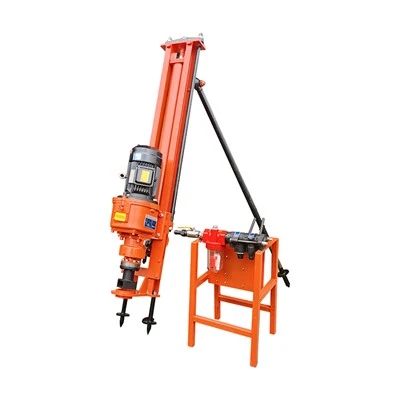
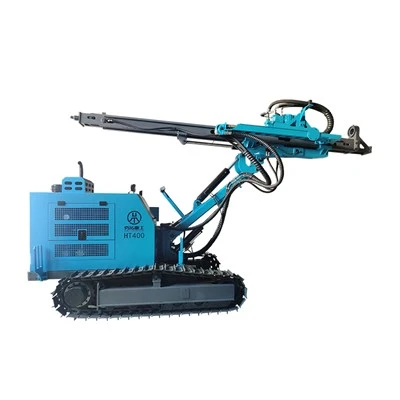
Over the years, I've been in the business of supplying hand rock drills, and I've witnessed firsthand how their design has evolved. It's been a wild ride, and I'm excited to share some insights with you about how these tools have changed.
Back in the day, hand rock drills were pretty basic. They were mainly simple mechanical devices that relied on brute force to break through rock. These early models were heavy, cumbersome, and not very efficient. Operators had to put in a lot of physical effort just to get the drill to work, and the results were often less than satisfactory. The designs were focused more on getting the job done rather than making the operator's life easier.
As technology advanced, the first major change came with the introduction of pneumatic power. Pneumatic hand rock drills were a game - changer. Instead of relying solely on manual labor, compressed air was used to power the drill. This made the drills more powerful and reduced the physical strain on the operators. The design of these pneumatic drills had to be adjusted to accommodate the air - delivery systems. They had hoses and valves that needed to be carefully integrated into the overall structure.


The new pneumatic designs also allowed for more precise control. You could adjust the air pressure to vary the drilling speed and force, which was a huge improvement over the old mechanical models. These drills were also more durable as the air - powered components were less prone to wear and tear compared to the purely mechanical parts.
Another significant development was the improvement in ergonomics. In the past, the handles of hand rock drills were often uncomfortable and didn't fit well in the operator's hands. This led to fatigue and even injuries over time. Modern designs take ergonomics into account. The handles are now shaped to fit the natural grip of the human hand, and there are often vibration - dampening materials used. This not only makes the drill more comfortable to use but also reduces the risk of repetitive - stress injuries.
The materials used in hand rock drills have also changed. Early drills were made mostly of heavy metals, which added to their weight. Today, manufacturers are using lighter and stronger materials like aluminum alloys and high - strength plastics. These materials reduce the weight of the drill without sacrificing its durability. A lighter drill is easier to maneuver, especially in tight spaces or when working at heights.
The bit design has also seen a lot of innovation. The bits are the part of the drill that actually comes into contact with the rock. In the past, they were simple and had a limited lifespan. Now, there are various types of bits available, each designed for different types of rock. Some bits have special coatings that increase their hardness and reduce wear. Others have unique shapes that improve the drilling efficiency. For example, there are bits with a spiral design that helps to remove the rock debris more effectively.
Let's talk about some of the specific types of hand rock drills and how their designs have changed.
The small down the hole drilling has become much more advanced. In the early days, these drills were large and difficult to transport. Now, they are more compact and lightweight. The design has been optimized to fit into smaller boreholes, and they are equipped with better control systems. The new designs also have improved cooling mechanisms to prevent overheating during long - term use.
The pneumatic air leg rock drill has also come a long way. The air leg, which provides support and feed force, has been redesigned to be more adjustable. It can now be easily set at different angles and heights, allowing for more flexible drilling operations. The connection between the drill and the air leg has also been improved to ensure a more stable and efficient transfer of power.
The mini pneumatic drill is another example. These drills were initially very basic and had limited power. Today, they are more powerful and can be used for a wider range of applications. Their small size makes them ideal for tasks in confined spaces, and the design has been refined to ensure that they are easy to operate even in difficult conditions.
In addition to these mechanical and physical design changes, there have also been improvements in the safety features of hand rock drills. Modern drills are equipped with safety switches that prevent accidental starts. There are also guards to protect the operators from flying debris and moving parts.
Looking to the future, I expect even more changes. With the rise of smart technology, we might see hand rock drills that can be connected to smartphones or other devices. These drills could provide real - time data on drilling parameters like speed, force, and temperature. This data could be used to optimize the drilling process and prevent breakdowns.
If you're in the market for a hand rock drill, I encourage you to consider these design changes. The modern drills offer better performance, more comfort, and greater safety. Whether you're a professional miner, a construction worker, or someone who needs to do some light rock - drilling at home, there's a hand rock drill out there that's right for you.
If you're interested in learning more about our hand rock drills or want to discuss a potential purchase, feel free to reach out. We're always happy to help you find the best drill for your needs.
References
- Industry reports on rock - drilling technology advancements
- Interviews with hand rock drill manufacturers
- Personal experience and observations over the years of supplying hand rock drills