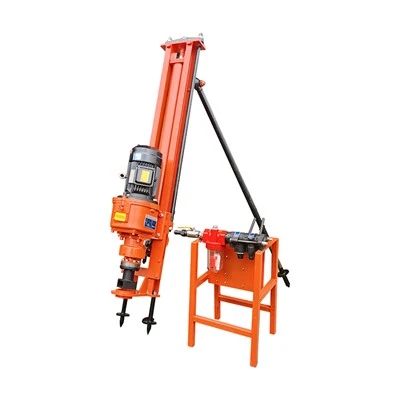
Can a mini rock drilling machine be used for seismic exploration? This is a question that has intrigued many in the geological and exploration industries. As a supplier of mini rock drilling machines, I've had numerous conversations with geologists, exploration companies, and researchers about the potential application of our equipment in seismic exploration. In this blog post, I'll delve into the feasibility of using mini rock drilling machines for seismic exploration, exploring the advantages, limitations, and real - world applications.
Understanding Seismic Exploration
Seismic exploration is a crucial technique used to map subsurface geological structures. It involves generating seismic waves on the surface, which then travel through the ground and are reflected or refracted by different rock layers. These reflected or refracted waves are detected by geophones, and the data is analyzed to create detailed images of the subsurface.


The generation of seismic waves is a critical step in this process. Traditionally, large - scale equipment such as weight - drop systems, vibrators, or explosive charges have been used to generate the required seismic waves. However, these methods often come with high costs, logistical challenges, and environmental concerns.
Advantages of Mini Rock Drilling Machines in Seismic Exploration
Portability and Accessibility
One of the most significant advantages of mini rock drilling machines is their portability. Unlike large - scale seismic sources, mini rock drilling machines are lightweight and easy to transport. They can be carried to remote or hard - to - reach locations, such as mountainous areas, forests, or offshore platforms. For example, in a mountainous seismic exploration project, a mini pneumatic drill can be easily disassembled and carried by a small team to the exploration site, eliminating the need for heavy - duty transportation equipment.
Cost - Effectiveness
Mini rock drilling machines are generally more cost - effective than traditional seismic sources. They have lower initial purchase costs, require less maintenance, and consume less energy. For small - scale seismic exploration projects or research studies with limited budgets, a small down the hole drilling machine can provide a cost - efficient alternative to large - scale equipment.
Precision and Control
Mini rock drilling machines offer a high degree of precision and control. They can be used to drill holes at specific locations and depths, which is essential for accurate seismic wave generation. By controlling the drilling parameters, such as the depth, diameter, and angle of the hole, geologists can optimize the seismic wave generation process and improve the quality of the seismic data.
Limitations of Mini Rock Drilling Machines in Seismic Exploration
Limited Energy Output
One of the main limitations of mini rock drilling machines is their limited energy output. Compared to large - scale seismic sources, mini rock drilling machines generate relatively weak seismic waves. This may limit their effectiveness in deep - penetration seismic exploration or in areas with high - impedance rock formations. In such cases, multiple mini rock drilling machines may need to be used in combination or other seismic sources may need to be supplemented.
Drilling Depth and Diameter Restrictions
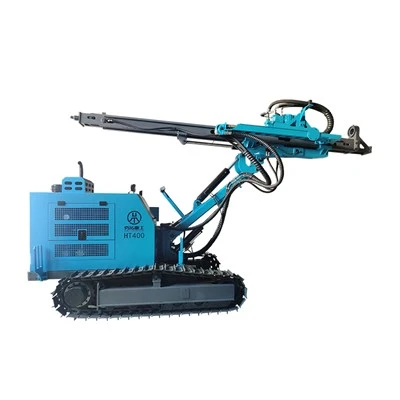
Mini rock drilling machines typically have limitations in terms of drilling depth and diameter. They are suitable for shallow - depth drilling, usually up to a few tens of meters. For deeper seismic exploration, where holes need to be drilled to hundreds or thousands of meters, larger and more powerful drilling rigs, such as the Integrated Open - pit Down - the - hole Drill Rig, may be required.
Real - World Applications
Despite their limitations, mini rock drilling machines have found some real - world applications in seismic exploration.
Shallow - Subsurface Mapping
In shallow - subsurface mapping projects, such as environmental studies, archaeological surveys, or near - surface geological investigations, mini rock drilling machines can be effectively used. For example, in an archaeological survey, a mini rock drilling machine can be used to drill small holes to generate seismic waves and map the subsurface structures, helping archaeologists to locate buried artifacts or ancient structures.
Research and Development
Mini rock drilling machines are also widely used in research and development projects. They provide a convenient and cost - effective way for researchers to conduct experiments and test new seismic exploration techniques. For instance, researchers can use mini rock drilling machines to study the propagation of seismic waves in different rock types or to develop new algorithms for seismic data processing.
Conclusion
In conclusion, while mini rock drilling machines have some limitations, they can be a valuable tool for seismic exploration, especially in shallow - subsurface mapping and research projects. Their portability, cost - effectiveness, and precision make them an attractive option for small - scale or specialized seismic exploration needs.
If you are involved in seismic exploration and are interested in exploring the potential of mini rock drilling machines for your projects, we would be delighted to discuss your requirements. Our team of experts can provide you with detailed information about our products, technical support, and customized solutions. Contact us to start a conversation about how our mini rock drilling machines can enhance your seismic exploration efforts.
References
- Dobrin, M. B., & Savit, C. H. (1988). Introduction to Geophysical Prospecting. McGraw - Hill.
- Telford, W. M., Geldart, L. P., & Sheriff, R. E. (1990). Applied Geophysics. Cambridge University Press.