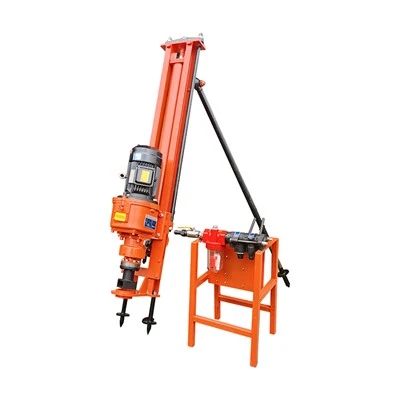
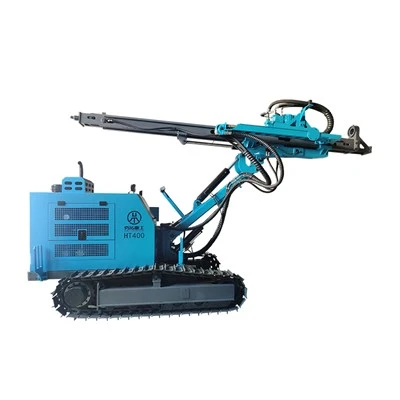
Can a hand rock drill be used for drilling in hard rock formations? This is a question that often comes up among professionals in the mining, construction, and geotechnical exploration industries. As a hand rock drill supplier, I've had numerous discussions with clients about the capabilities and limitations of our products in hard rock environments. In this blog, I'll delve into the technical aspects, practical applications, and considerations when using a hand rock drill for drilling in hard rock formations.
Understanding Hand Rock Drills
Hand rock drills are portable, handheld tools designed for various drilling tasks. They are typically powered by compressed air, hydraulic, or electric sources. These drills are favored for their versatility, ease of use, and ability to access tight spaces where larger drilling equipment cannot reach. Our hand rock drills are known for their high - power output, durability, and user - friendly design.
Hard Rock Formations: Characteristics and Challenges
Hard rock formations are defined by their high compressive strength. Rocks such as granite, quartzite, and basalt have compressive strengths that can range from 100 to 300 megapascals (MPa) or even higher. Drilling in these formations presents several challenges. The high hardness of the rock means that the drill bit experiences significant wear and tear. Additionally, the energy required to break through the rock is much higher compared to softer formations. This can lead to slower drilling speeds, increased power consumption, and potential overheating of the drill.
Can Hand Rock Drills Drill in Hard Rock?
The short answer is yes, but with some limitations. Hand rock drills can be used in hard rock formations, but their effectiveness depends on several factors.
Drill Bit Quality
The drill bit is the key component that comes into direct contact with the rock. For hard rock drilling, carbide - tipped drill bits are essential. Carbide is a super - hard material that can withstand the high pressures and abrasion associated with drilling in hard rock. Our hand rock drills are compatible with high - quality carbide - tipped drill bits that are designed to penetrate hard rock efficiently.
Power Source
The power of the hand rock drill is crucial for hard rock drilling. Compressed air - powered drills are a popular choice as they can deliver high impact energy. Our pneumatic hand rock drills are engineered to provide sufficient power to break through hard rock. For example, our pneumatic air leg rock drill is equipped with a powerful air motor that can generate high - frequency impacts, enabling efficient drilling in hard rock formations.
Operator Skill
Drilling in hard rock requires a skilled operator. The operator needs to adjust the drilling parameters, such as the feed force and rotation speed, according to the rock characteristics. A well - trained operator can optimize the drilling process, reduce drill bit wear, and increase the overall drilling efficiency.


Advantages of Using Hand Rock Drills in Hard Rock
Despite the challenges, there are several advantages to using hand rock drills in hard rock formations.
Portability
Hand rock drills are highly portable, which makes them ideal for remote or difficult - to - access sites. In hard rock mining operations, where access to certain areas may be limited, a hand rock drill can be easily carried to the drilling location. This allows for on - site exploration and drilling without the need for large, heavy equipment.
Cost - Effectiveness
Compared to large - scale drilling rigs, hand rock drills are relatively inexpensive. They require less capital investment, and the operating costs are also lower. For small - scale mining projects or geotechnical investigations, a hand rock drill can be a cost - effective solution for drilling in hard rock.
Versatility
Hand rock drills can be used for various types of drilling tasks in hard rock, such as sampling, bolting holes, and small - scale excavation. Our range of hand rock drills, including the mini pneumatic drill and small down the hole drilling, offers different capabilities to meet the diverse needs of our clients.
Limitations and Considerations
While hand rock drills can be used in hard rock formations, there are some limitations that need to be considered.
Depth and Diameter
Hand rock drills are generally limited in terms of the drilling depth and hole diameter they can achieve. For deep or large - diameter holes in hard rock, larger drilling rigs may be more suitable. Hand rock drills are better suited for shallow holes and small - diameter applications, typically up to a few meters in depth and a few centimeters in diameter.
Drilling Speed
The drilling speed of hand rock drills in hard rock is relatively slower compared to larger drilling equipment. This is due to the limited power and size of the drill. In projects where time is a critical factor, the slower drilling speed of hand rock drills may not be desirable.
Maintenance and Safety
Proper maintenance and safety procedures are essential when using hand rock drills in hard rock formations. Regular maintenance of the drill, including cleaning, lubrication, and inspection of the drill bit and other components, can extend the life of the equipment and ensure its optimal performance. Safety is also of utmost importance. Operators should wear appropriate personal protective equipment (PPE), such as safety glasses, helmets, and ear protection. They should also be trained on the proper use and handling of the hand rock drill to prevent accidents.
Conclusion
In conclusion, a hand rock drill can be used for drilling in hard rock formations, but it is important to understand its capabilities and limitations. With the right drill bit, power source, and operator skill, hand rock drills can be a valuable tool for small - scale and portable drilling tasks in hard rock. Our company offers a wide range of high - quality hand rock drills that are designed to meet the challenges of hard rock drilling. If you are interested in our products or have any questions about using hand rock drills in hard rock formations, please feel free to contact us for further information and to discuss your specific requirements. We look forward to working with you to find the best drilling solution for your projects.
References
- Brady, B. H. G., & Brown, E. T. (2004). Rock Mechanics for Underground Mining. Kluwer Academic Publishers.
- Hoek, E., & Brown, E. T. (1980). Underground Excavations in Rock. Institution of Mining and Metallurgy.
- Singh, R. N., & Goel, R. K. (2011). Engineering Rock Mass Classification. Springer.