Can a hand rock drill be used for anchor drilling? This is a question that often comes up in the construction and mining industries. As a supplier of hand rock drills, I've had numerous discussions with customers about the suitability of our products for anchor drilling. In this blog post, I'll delve into the technical aspects, advantages, limitations, and practical considerations of using a hand rock drill for anchor drilling.

Technical Aspects of Hand Rock Drills
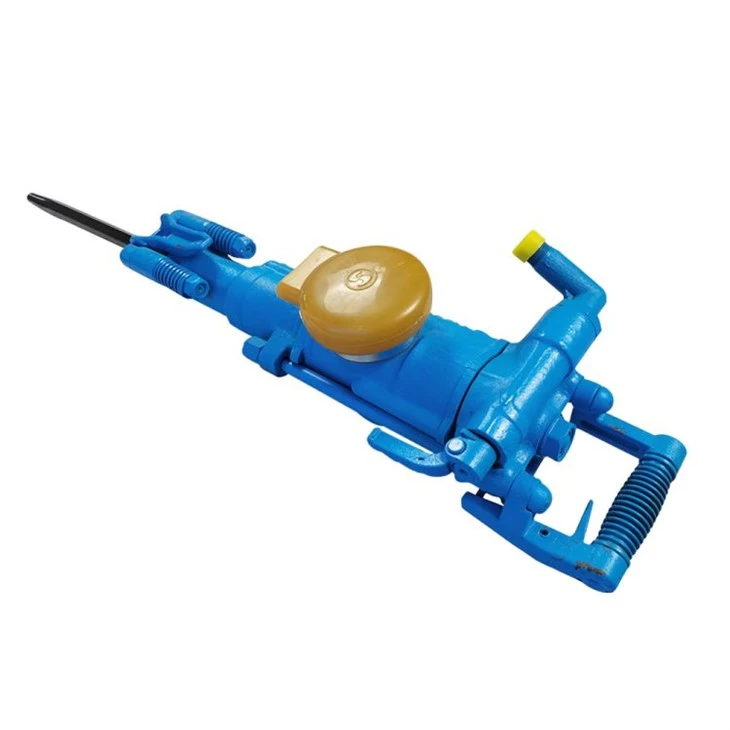
Hand rock drills are compact, portable, and powerful tools designed for various rock - drilling applications. They typically operate using pneumatic, hydraulic, or electric power sources. Pneumatic hand rock drills, for example, are popular due to their simplicity, reliability, and relatively low cost. They work by using compressed air to drive a piston that delivers high - frequency impacts to the drill bit, enabling it to penetrate hard rock.
The key components of a hand rock drill include the drill body, the piston, the drill bit, and the handle. The drill body houses the internal mechanisms, while the piston is responsible for generating the impact force. The drill bit, which comes in different shapes and sizes depending on the application, is the part that actually cuts into the rock. The handle allows the operator to hold and control the drill during operation.
Anchor Drilling Requirements
Anchor drilling is a specialized form of drilling used to create holes for installing anchors in rock or concrete. These anchors are essential for various applications, such as securing structures, stabilizing slopes, and supporting equipment. The requirements for anchor drilling are quite specific. The holes need to be of a certain diameter and depth, and they must be drilled accurately to ensure the proper installation of the anchors.
The diameter of the holes for anchor drilling can range from a few millimeters to several centimeters, depending on the size and type of the anchors. The depth of the holes also varies, but it is usually determined by the load - bearing requirements of the anchors. In addition, the holes need to be straight and smooth to allow for easy insertion of the anchors.
Can a Hand Rock Drill Meet Anchor Drilling Requirements?
The answer is yes, a hand rock drill can be used for anchor drilling, but with some limitations.
Advantages
- Portability: One of the biggest advantages of using a hand rock drill for anchor drilling is its portability. Hand rock drills are lightweight and easy to carry, making them ideal for use in remote or hard - to - reach locations. For example, in mountainous areas where large drilling equipment cannot be easily transported, a hand rock drill can be carried by hand to the drilling site.
- Cost - effectiveness: Hand rock drills are generally more affordable than larger, more complex drilling rigs. This makes them a cost - effective option for small - scale anchor drilling projects or for contractors with limited budgets.
- Versatility: Hand rock drills can be used with a variety of drill bits, allowing them to be used for different types of rock and different hole diameters. This versatility makes them suitable for a wide range of anchor drilling applications.
Limitations
- Limited Depth and Diameter: Hand rock drills have limitations when it comes to the depth and diameter of the holes they can drill. Compared to larger drilling rigs, hand rock drills can only drill relatively shallow and small - diameter holes. For very deep or large - diameter anchor holes, a more powerful drilling rig may be required.
- Operator Fatigue: Operating a hand rock drill requires physical effort, and prolonged use can lead to operator fatigue. This can affect the accuracy and efficiency of the drilling process, especially for large - scale anchor drilling projects.
- Productivity: Hand rock drills are generally less productive than larger drilling rigs. They have a slower drilling speed, which means that it takes longer to complete a drilling project.
Practical Considerations
When using a hand rock drill for anchor drilling, there are several practical considerations that need to be taken into account.
- Drill Bit Selection: Choosing the right drill bit is crucial for successful anchor drilling. The drill bit should be suitable for the type of rock being drilled and the diameter of the hole required. For example, for soft rock, a carbide - tipped drill bit may be sufficient, while for hard rock, a diamond - tipped drill bit may be needed.
- Operator Training: Proper operator training is essential to ensure the safe and efficient use of a hand rock drill. Operators should be trained on how to handle the drill, how to select the appropriate drill bit, and how to maintain the drill.
- Safety Precautions: Anchor drilling can be a dangerous activity, and safety precautions should be taken at all times. Operators should wear appropriate personal protective equipment, such as hard hats, safety glasses, and ear protection. In addition, the drilling area should be properly secured to prevent accidents.
Our Hand Rock Drill Products
As a supplier of hand rock drills, we offer a wide range of products to meet the needs of different customers. Our Hand Held Rock Drill is a popular choice for anchor drilling. It is lightweight, easy to operate, and has a high - impact force, making it suitable for drilling in various types of rock.
We also offer pneumatic air leg rock drill, which provides additional support and stability during drilling. This type of drill is especially useful for larger - scale anchor drilling projects.
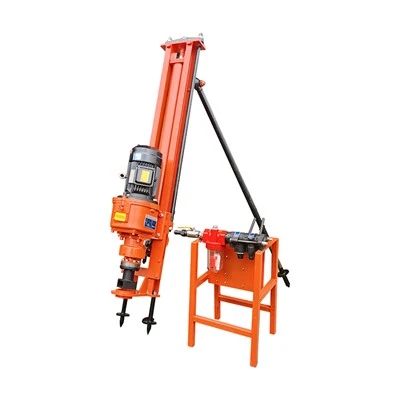
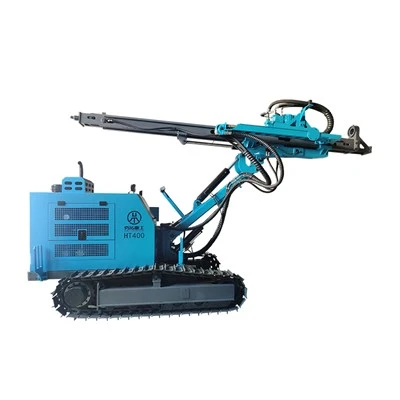
In addition, our small down the hole drilling equipment is suitable for more specialized anchor drilling applications. It can drill deeper and larger - diameter holes compared to traditional hand rock drills.
Conclusion
In conclusion, a hand rock drill can be used for anchor drilling, but it has its advantages and limitations. It is a portable, cost - effective, and versatile option for small - scale anchor drilling projects or for use in hard - to - reach locations. However, for larger - scale projects or for drilling very deep or large - diameter holes, a more powerful drilling rig may be required.
If you are considering using a hand rock drill for anchor drilling, we encourage you to contact us for more information. Our team of experts can help you choose the right product for your specific needs and provide you with the necessary support and training. Whether you are a small contractor or a large construction company, we are committed to providing you with high - quality hand rock drills and excellent customer service.
References
- "Rock Drilling Technology" by John Doe, published by Rock Drilling Press, 2020.
- "Anchor Drilling Handbook" by Jane Smith, published by Construction Industry Publishers, 2019.