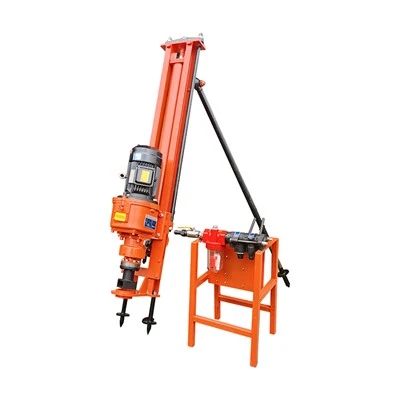
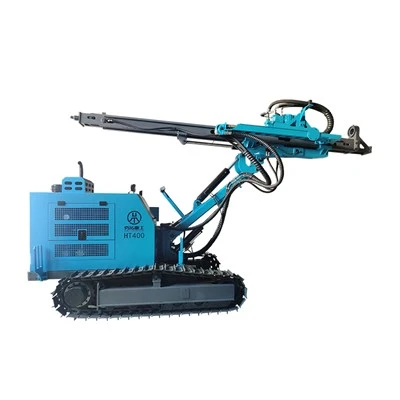
Horizontal drilling, a technique widely employed in various industries such as oil and gas extraction, geothermal energy development, and civil engineering, demands a comprehensive set of drilling accessories to ensure efficiency, safety, and precision. As a leading supplier of drilling accessories, I am well - versed in the diverse range of tools and equipment that are essential for horizontal drilling operations.
Drill Bits
One of the most crucial drilling accessories for horizontal drilling is the drill bit. Different types of drill bits are designed to suit various geological formations and drilling requirements. Polycrystalline diamond compact (PDC) drill bits are popular in horizontal drilling due to their high durability and cutting efficiency. These bits are capable of withstanding high temperatures and pressures, making them ideal for long - reach horizontal wells. They have a smooth cutting action, which reduces the risk of bit balling and improves the rate of penetration.
Another type is the roller cone drill bit. Roller cone bits consist of three cones with teeth that crush and shear the rock as the bit rotates. They are suitable for softer formations and can be customized with different tooth configurations to optimize performance. For horizontal drilling in hard rock formations, tri - cone bits with tungsten carbide inserts are often used. These inserts provide enhanced wear resistance and can maintain their cutting ability over a longer period.
Drill Pipes
Drill pipes are the backbone of the drilling system, connecting the surface equipment to the drill bit. In horizontal drilling, drill pipes need to withstand significant bending and torsional stresses. High - strength steel drill pipes are commonly used to ensure the integrity of the drill string. These pipes are designed with precise dimensions and high - quality threads to prevent leakage and ensure a secure connection.
Some drill pipes are also equipped with special features such as internal coatings to reduce friction and corrosion. This not only extends the service life of the drill pipes but also improves the overall efficiency of the drilling operation. Additionally, drill pipes can be equipped with measurement - while - drilling (MWD) and logging - while - drilling (LWD) tools, which provide real - time data on the wellbore conditions, such as temperature, pressure, and formation properties.
Downhole Motors
Downhole motors play a vital role in horizontal drilling by providing the necessary power to rotate the drill bit. Positive displacement motors (PDMs) are widely used in horizontal drilling operations. These motors convert the hydraulic energy of the drilling fluid into mechanical energy, which is then used to rotate the drill bit. PDMs offer high torque at low rotational speeds, making them suitable for directional drilling.
Turbine motors are another option for horizontal drilling. Turbine motors use the flow of drilling fluid to drive a series of turbines, which in turn rotate the drill bit. They can operate at high rotational speeds and are often used in applications where a high rate of penetration is required. Downhole motors are typically combined with bent subs or adjustable bent housings to control the direction of the drill bit during horizontal drilling.
Measurement and Guidance Systems
Accurate measurement and guidance are essential for successful horizontal drilling. Measurement - while - drilling (MWD) and logging - while - drilling (LWD) systems are used to collect real - time data on the wellbore trajectory, formation properties, and drilling parameters. MWD systems use sensors to measure the inclination, azimuth, and toolface angle of the drill bit, allowing the driller to make precise adjustments to the drilling direction.
LWD systems, on the other hand, provide information about the geological formations being drilled, such as porosity, permeability, and resistivity. This data helps the driller to optimize the drilling process and target specific hydrocarbon reservoirs. In addition to MWD and LWD systems, gyroscopic survey tools are also used for high - precision measurement of the wellbore trajectory. These tools are particularly useful in highly deviated and horizontal wells where traditional magnetic survey tools may be affected by magnetic interference.
Borehole Stabilizers
Borehole stabilizers are used to maintain the stability of the wellbore during horizontal drilling. These accessories are typically placed at intervals along the drill string to prevent the drill string from contacting the wellbore wall, which can cause friction, wear, and potential wellbore instability. Borehole stabilizers come in various designs, including blade - type stabilizers and roller - type stabilizers.
Blade - type stabilizers have helical or straight blades that provide support to the drill string and help to keep it centered in the wellbore. Roller - type stabilizers, on the other hand, use rollers to reduce friction between the drill string and the wellbore wall. This not only improves the drilling efficiency but also reduces the risk of stuck pipe incidents.


Underground Water Detectors
In some horizontal drilling projects, especially those related to water well drilling or environmental monitoring, underground water detectors are essential accessories. Our company offers a range of high - quality underground water detectors, including the Single - channel Real - time Imaging Underground Water Detector, the Deep Underground Water Detector, and the Underground Water Detector.
These detectors use advanced technologies such as electromagnetic induction and resistivity measurement to locate underground water sources accurately. They can provide real - time imaging of the subsurface water distribution, allowing the driller to optimize the well placement and increase the chances of successful water extraction.
Mud Pumps and Mud Additives
Mud pumps are responsible for circulating the drilling fluid (mud) through the drill string and back to the surface. In horizontal drilling, mud pumps need to generate sufficient pressure to overcome the frictional resistance in the long - reach wellbore. High - pressure mud pumps with large flow rates are commonly used to ensure proper circulation of the drilling fluid.
Mud additives are also an important part of the drilling process. These additives are used to control the properties of the drilling fluid, such as viscosity, density, and filtration. For example, bentonite is often added to the drilling fluid to increase its viscosity and improve its carrying capacity. Other additives, such as polymers and surfactants, can be used to reduce friction, prevent corrosion, and improve the stability of the wellbore.
Conclusion
In conclusion, horizontal drilling requires a wide range of drilling accessories to ensure the success of the operation. From drill bits and drill pipes to measurement and guidance systems, each accessory plays a crucial role in the efficiency, safety, and precision of the drilling process. As a trusted supplier of drilling accessories, we are committed to providing high - quality products and excellent customer service.
If you are involved in horizontal drilling projects and are looking for reliable drilling accessories, we invite you to contact us for more information and to discuss your specific requirements. Our team of experts is ready to assist you in selecting the most suitable accessories for your project and to provide technical support throughout the drilling process.
References
- Smith, J. D. (2018). Drilling Engineering Handbook. Gulf Professional Publishing.
- Bourgoyne, A. T., Chenevert, M. E., Millheim, K. K., & Young, F. S. (1986). Applied Drilling Engineering. Society of Petroleum Engineers.
- Redden, J. A. (2000). Directional Drilling Handbook. PennWell Books.