Yo, folks! I'm an air rock drill supplier, and today I wanna chat about the shock absorption design of an air rock drill. It's a super important aspect that affects how well these drills work and how long they last.
Let's start with why shock absorption matters in the first place. When an air rock drill is in action, it generates a whole bunch of vibrations. These vibrations can cause a ton of problems. For one, they can make the drill bit wear out faster. The constant jolting and shaking put extra stress on the bit, and it'll start to break down sooner than it should. Also, the vibrations can be really hard on the operator. Long - term exposure to high - intensity vibrations can lead to all sorts of health issues, like hand - arm vibration syndrome. This can cause pain, numbness, and reduced dexterity in the hands.
So, what's the deal with the shock absorption design? Well, there are a few key components and techniques that are commonly used.
One of the main ways to absorb shock is through the use of rubber or elastomeric components. These materials are great at absorbing and dissipating energy. For example, many air rock drills have rubber bushings or mounts. These are placed between different parts of the drill, like the drill body and the handle. When the drill vibrates, the rubber compresses and expands, taking in the energy of the vibration and preventing it from being transferred directly to the operator's hands or other parts of the machine.
Another important part of the shock absorption design is the use of springs. Springs work in a similar way to rubber components, but they have a different characteristic. They can store and release energy in a more controlled manner. In an air rock drill, springs can be used in the drill's internal mechanism. For instance, they can be placed between the piston and the drill bit. When the piston strikes the drill bit, the spring compresses, absorbing some of the impact energy. Then, as the piston moves back, the spring releases the stored energy, helping to smooth out the operation of the drill.


Some air rock drills also use hydraulic shock absorbers. Hydraulic systems are really good at providing a smooth and consistent damping effect. A hydraulic shock absorber in an air rock drill typically consists of a cylinder filled with hydraulic fluid and a piston. When the drill vibrates, the piston moves through the fluid, and the resistance of the fluid to the piston's movement absorbs the shock energy.
Now, I wanna talk a bit about how these shock absorption designs impact different types of air rock drills that we offer.
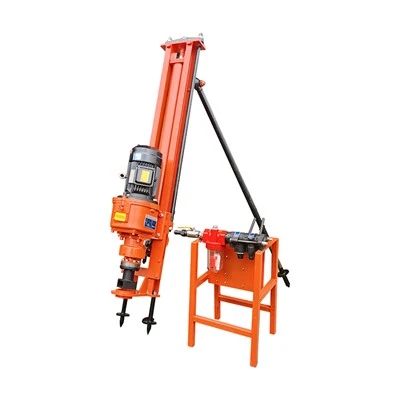
We've got small down the hole drilling. These are smaller, more portable drills that are often used in tight spaces or for lighter - duty drilling jobs. The shock absorption design in these drills is crucial because they are usually operated for longer periods without a lot of breaks. The operator needs to have a comfortable grip, and the drill needs to be protected from excessive wear and tear. The rubber mounts and light - duty springs in these drills help to keep the vibrations in check, making them easier to handle and more durable.
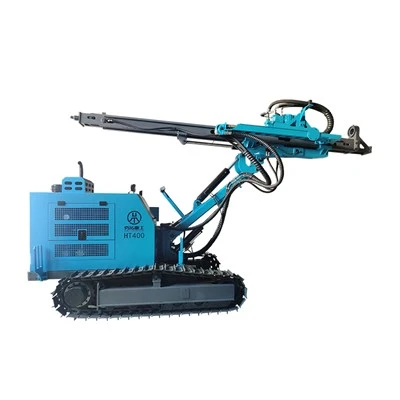
Then there's our Integrated Open - pit Down - the - hole Drill Rig. These are big, heavy - duty machines used in large - scale mining and construction projects. The shock absorption design in these rigs is even more complex. They often use a combination of hydraulic shock absorbers, large - scale springs, and multiple rubber components. This multi - layer approach is necessary because these drills generate a lot more power and vibrations compared to smaller ones. The shock absorption system helps to protect the entire rig, including the drill bit, the internal mechanisms, and the operator's cab, from the intense vibrations.
And of course, we have our pneumatic air leg rock drill. These drills are popular for their versatility and ease of use. The shock absorption design in these drills focuses on providing a good balance between absorbing vibrations and maintaining the drill's performance. The rubber components in the handle and the air leg help to reduce the amount of vibration felt by the operator, while the internal springs and dampers ensure that the drill operates smoothly.
We're constantly working on improving our shock absorption designs. We're always looking for new materials and techniques that can make our air rock drills even better at handling vibrations. For example, we're researching the use of new types of elastomers that have better energy - absorbing properties. We're also looking into more advanced hydraulic systems that can provide even more precise damping.
If you're in the market for an air rock drill, the shock absorption design should be one of the top things you consider. A well - designed shock absorption system will not only make the drill more comfortable to use but also increase its lifespan and reduce maintenance costs.
So, if you're interested in our air rock drills or want to learn more about our shock absorption designs, don't hesitate to reach out. We're here to answer all your questions and help you find the perfect drill for your needs. Whether you're a small - scale contractor or a large mining company, we've got the right air rock drill for you. Let's start a conversation and see how we can work together to get the job done right.
References
- Engineering textbooks on rock drilling equipment
- Industry research papers on vibration control in heavy machinery
- Internal product development records of air rock drills