Rock hardness is a critical factor that significantly influences the performance of rock drilling equipment. As a rock drilling equipment supplier, I have witnessed firsthand how the varying degrees of rock hardness can pose challenges and opportunities in the drilling process. In this blog, I will delve into the impact of rock hardness on rock drilling equipment performance, exploring the technical aspects, practical implications, and how our equipment is designed to tackle different rock conditions.
Understanding Rock Hardness
Rock hardness is a measure of a rock's resistance to indentation, scratching, or abrasion. The most commonly used scale to measure rock hardness is the Mohs scale, which ranges from 1 (softest) to 10 (hardest). For example, talc has a Mohs hardness of 1, while diamond, the hardest known natural material, has a Mohs hardness of 10. In the context of rock drilling, the hardness of the rock directly affects the drilling process, including the rate of penetration, tool wear, and energy consumption.
Impact on Drilling Rate
One of the most significant impacts of rock hardness on drilling equipment performance is the drilling rate. In general, the harder the rock, the slower the drilling rate. This is because harder rocks require more energy to break and penetrate. When drilling through soft rocks, such as shale or sandstone, the drilling equipment can achieve a relatively high rate of penetration. The drill bit can easily cut through the rock, and the chips can be efficiently removed from the borehole.


However, when dealing with hard rocks, such as granite or basalt, the situation is quite different. The drill bit has to exert more force to break the rock, which slows down the drilling process. The high compressive strength of hard rocks makes it difficult for the drill bit to penetrate, resulting in a lower rate of penetration. For instance, in a soft rock formation, a pneumatic air leg rock drill may be able to drill at a rate of several meters per hour. But in a hard granite formation, the same drill may only achieve a fraction of that rate.
Tool Wear and Bit Life
Rock hardness also has a profound impact on tool wear and bit life. Hard rocks are more abrasive than soft rocks, which means they cause more wear and tear on the drill bit. As the drill bit grinds against the hard rock surface, the cutting edges of the bit gradually wear down. This not only reduces the efficiency of the drilling process but also shortens the lifespan of the drill bit.
In soft rock drilling, the drill bit experiences less abrasion, and its cutting edges remain sharp for a longer time. This allows for more consistent drilling performance and longer bit life. On the other hand, in hard rock drilling, the drill bit may need to be replaced more frequently. The increased tool wear also leads to higher maintenance costs and downtime for the drilling equipment.
To mitigate the effects of tool wear in hard rock drilling, our company offers drill bits made from high-quality materials, such as tungsten carbide. These materials are highly resistant to abrasion and can withstand the harsh conditions of hard rock drilling. Additionally, our drill bits are designed with advanced geometries and cutting structures to optimize the cutting efficiency and reduce wear.
Energy Consumption
Another important aspect affected by rock hardness is energy consumption. Drilling through hard rocks requires more energy than drilling through soft rocks. This is because the drilling equipment has to work harder to break the rock and maintain the drilling rate. The increased energy demand can lead to higher operating costs and environmental impacts.
In soft rock drilling, the energy consumption is relatively low. The drill can operate at a lower power setting, and the overall energy efficiency is higher. However, in hard rock drilling, the drilling equipment may need to operate at maximum power to achieve a reasonable drilling rate. This not only increases the energy consumption but also puts more stress on the equipment, potentially leading to more frequent breakdowns.
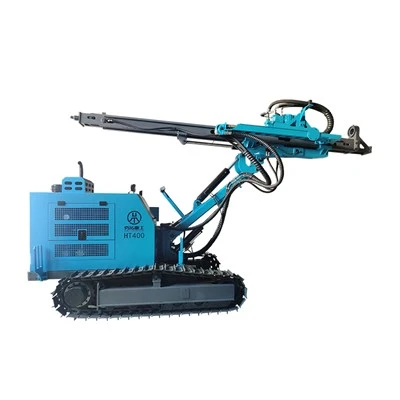
Our company's Integrated Open-pit Down-the-hole Drill Rig is designed to optimize energy consumption in different rock conditions. It is equipped with advanced power management systems that can adjust the power output according to the hardness of the rock. This helps to reduce energy waste and improve the overall efficiency of the drilling process.
Equipment Selection and Adaptation
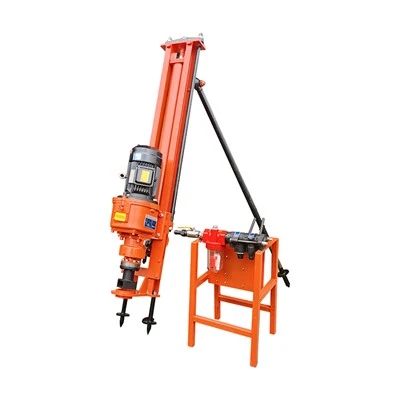
Given the significant impact of rock hardness on drilling equipment performance, it is crucial to select the right equipment for the specific rock conditions. For soft rock drilling, lighter and more portable equipment, such as mini pneumatic drill, may be sufficient. These drills are easy to operate and can achieve a good drilling rate in soft rocks.
However, for hard rock drilling, more powerful and robust equipment is required. Our company offers a range of high-performance drilling equipment specifically designed for hard rock applications. These equipment are equipped with powerful motors, heavy-duty drill bits, and advanced hydraulic systems to ensure efficient and reliable drilling in hard rock formations.
In addition to equipment selection, it is also important to adapt the drilling parameters to the rock hardness. For example, in hard rock drilling, a lower rotation speed and higher feed pressure may be required to optimize the drilling performance. By adjusting these parameters, the drilling equipment can better cope with the challenges posed by hard rocks.
Conclusion
In conclusion, rock hardness has a significant impact on rock drilling equipment performance, including the drilling rate, tool wear, energy consumption, and equipment selection. As a rock drilling equipment supplier, we understand the importance of providing high-quality equipment that can perform well in different rock conditions. Our range of drilling equipment, including pneumatic air leg rock drill, Integrated Open-pit Down-the-hole Drill Rig, and mini pneumatic drill, is designed to meet the diverse needs of our customers in various rock formations.
If you are in the market for rock drilling equipment and need to drill through different types of rocks, we are here to help. Our team of experts can provide you with professional advice on equipment selection, drilling parameter optimization, and maintenance. Contact us today to discuss your specific requirements and explore how our rock drilling equipment can enhance your drilling operations.
References
- Deer, W. A., Howie, R. A., & Zussman, J. (1992). An introduction to the rock-forming minerals. Longman Scientific & Technical.
- Goodman, R. E. (1989). Introduction to rock mechanics. Wiley.
- Jaeger, J. C., Cook, N. G. W., & Zimmerman, R. W. (2007). Fundamentals of rock mechanics. Blackwell Publishing.