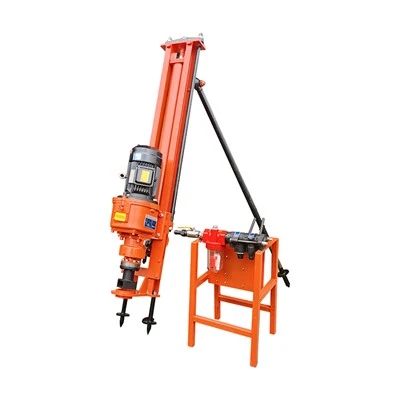
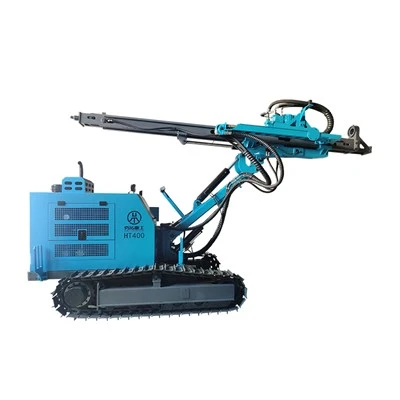
Altitude can have a significant impact on the performance of a hand held rock drill. As a supplier of hand held rock drills, I've seen firsthand how different altitudes can change how these powerful tools work. Let's dive into what exactly happens when you take a hand held rock drill up to higher ground.

First off, it's important to understand the basic working principle of a hand held rock drill. These machines use either compressed air, hydraulic power, or electricity to generate the force needed to break through rock. Most commonly, pneumatic hand held rock drills are used because they're relatively simple, reliable, and cost - effective.

At sea level, the air pressure is around 14.7 pounds per square inch (psi), or 1 atmosphere (atm). This provides a stable and sufficient amount of air for the drill to operate at its optimal level. The compressed air powers the drill's piston, which moves back and forth rapidly, delivering the high - impact blows necessary to shatter the rock.
But as you start to climb in altitude, the air pressure drops. For every 1,000 feet (about 305 meters) increase in altitude, the air pressure decreases by about 0.5 psi. At higher altitudes, there's simply less air available to power the drill. This means that the pneumatic hand held rock drill will receive less air volume and pressure, which directly affects its performance.
One of the most noticeable impacts is a reduction in the drill's striking power. The piston in the drill won't be able to move as forcefully because there's less air pushing it. As a result, the drill bit won't penetrate the rock as quickly or effectively. You might find that you have to apply more pressure manually to get the same amount of drilling done, which can be tiring and time - consuming.

The rate of penetration is also affected. With less striking power, the drill bit will take longer to break through the rock. This can slow down your entire project, especially if you're working on a large - scale rock - drilling job. For example, if you're doing hand held rock drilling equipment for mining exploration or construction in a mountainous area, the decrease in penetration rate can add significant time to the project timeline.
Another aspect is the air consumption of the drill. At higher altitudes, the drill might consume more air to try and maintain its performance. However, since the available air is already thinner, this can lead to inefficiencies. The compressor that supplies the air to the drill might have to work harder to meet the increased demand, which can increase energy costs and potentially lead to more wear and tear on the compressor.
The lubrication of the drill can also be affected by altitude. In a pneumatic drill, lubrication is crucial to keep the moving parts working smoothly. At higher altitudes, the thinner air can cause the lubricant to evaporate more quickly. This means that you might need to lubricate the drill more frequently to prevent overheating and premature wear of the components.
Now, let's talk about how these altitude - related issues can be mitigated. One solution is to use a more powerful compressor. A compressor with a higher capacity can supply more air to the drill, compensating for the lower air pressure at higher altitudes. This can help maintain the drill's striking power and penetration rate.
Another option is to use a hydraulic hand held rock drill. Hydraulic drills are not as affected by air pressure changes as pneumatic drills. They use hydraulic fluid to generate power, which is not subject to the same altitude - related variations as air. However, hydraulic drills can be more expensive and require more maintenance than pneumatic ones.
For those who still prefer pneumatic drills, there are some altitude - specific models available. These drills are designed to work more efficiently at higher altitudes, with features like larger air intakes and more optimized piston designs.
In addition to the performance of the drill itself, altitude can also affect the operator. Working at high altitudes can be physically demanding due to the lower oxygen levels. Operators might get tired more quickly, which can further impact the drilling efficiency. It's important to take breaks regularly and ensure that operators are well - hydrated and rested.
If you're involved in small down the hole drilling or other types of rock - drilling projects at different altitudes, it's crucial to choose the right equipment. As a supplier, I can offer a range of hand held rock drills that are suitable for various altitude conditions. Whether you need a pneumatic drill for general use or a more specialized hydraulic drill for high - altitude jobs, we have the products to meet your needs.
We also have pneumatic air leg rock drill models that can be very useful, especially in situations where you need more stability and support during drilling. These drills come with an air leg that helps to keep the drill in place and reduces the amount of manual effort required by the operator.
In conclusion, altitude has a real and measurable impact on the performance of hand held rock drills. But with the right knowledge and the right equipment, you can overcome these challenges. If you're planning a rock - drilling project at any altitude, don't hesitate to reach out. We're here to help you select the best hand held rock drill for your specific needs. Whether it's a small - scale DIY project or a large - scale industrial job, we've got you covered. Contact us today to start the conversation about your rock - drilling requirements.
References
- "Rock Drilling Handbook", Various industry experts, published by an industry - specific publishing house
- Technical manuals of hand held rock drill manufacturers