As a supplier of mini rock drilling machines, I often get asked about the versatility of these tools. One question that comes up more than you might think is, "Can a mini rock drilling machine be used for archaeological exploration?" It's an interesting query, and one that I'm excited to dive into.
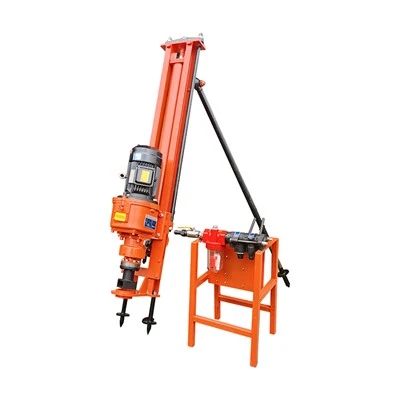
First off, let's talk about what a mini rock drilling machine is. We're not talking about the big, heavy - duty rigs you see on construction sites. These are compact, lightweight, and easy - to - maneuver machines. For example, our mini pneumatic drill is designed to be portable and efficient. It can be easily transported to different locations, which is a huge advantage in archaeological work.


Archaeological exploration is all about uncovering the past. It involves carefully studying the ground to find artifacts, structures, and other signs of ancient civilizations. One of the key steps in this process is soil sampling and core drilling. That's where mini rock drilling machines can really shine.
When it comes to soil sampling, precision is crucial. Archaeologists need to collect small, undisturbed samples of soil and sediment to analyze for things like pollen, seeds, and micro - fossils. Our mini rock drilling machines are capable of making very accurate holes with minimal disturbance to the surrounding area. They can drill through different types of rock and soil, from soft clay to hard limestone, without causing too much damage to the archaeological site.
One of the main benefits of using a mini rock drilling machine in archaeology is its non - invasive nature. Traditional excavation methods can be quite destructive, sometimes causing irreversible damage to the site. With a mini drill, we can take small core samples that give us valuable information about what's beneath the surface without tearing up large areas of the ground.
Let's say an archaeologist wants to study a potential burial site. Instead of digging up the whole area, a mini pneumatic drill can be used to drill small holes at strategic points. These core samples can then be analyzed to see if there are any signs of human remains, burial goods, or other archaeological features. This way, the site can be preserved as much as possible, and only targeted excavations are carried out when necessary.
Another advantage is the speed and ease of use. Mini rock drilling machines like our ones are relatively simple to operate. An archaeologist or fieldworker with minimal training can learn to use them effectively. And because they're small and lightweight, they can be set up quickly at different locations on the site. This means more time can be spent on actual research and analysis rather than on equipment setup and transportation.
The pneumatic air leg rock drill is another option. It's particularly useful when you need a bit more power in a compact form. It can handle slightly harder rocks and is great for making deeper holes. In an archaeological context, it could be used to drill deeper into the ground to reach different layers of sediment and rock, each of which may hold important clues about the history of the site.
However, it's not all sunshine and roses. There are some limitations to using mini rock drilling machines in archaeological exploration. One of the biggest challenges is the depth limitation. Mini drills are not designed to drill as deep as larger, industrial - scale rigs. While they can be great for shallow sampling, if archaeologists need to reach very deep layers, they may need to look for other solutions.
Cost is also a factor. Although mini rock drilling machines are generally more affordable than their larger counterparts, they still represent an investment. For small archaeological projects with limited budgets, purchasing or renting a drill may not be feasible.
There are also some potential risks associated with using these machines. If not used correctly, they can cause damage to the site. For example, drilling too close to a fragile archaeological feature could cause it to collapse. That's why it's important for users to be well - trained and to follow proper safety and operating procedures.
Despite these limitations, there's no denying that mini rock drilling machines have a lot to offer in the field of archaeological exploration. They're a valuable tool that can complement traditional excavation methods and help archaeologists learn more about the past in a less destructive way.
If you're involved in archaeological research and think a mini rock drilling machine could be useful for your projects, I'd love to have a chat with you. Whether you have a lot of experience in the field or you're just starting out, we can help you find the right machine for your needs. We also offer support and training to make sure you get the most out of your equipment.
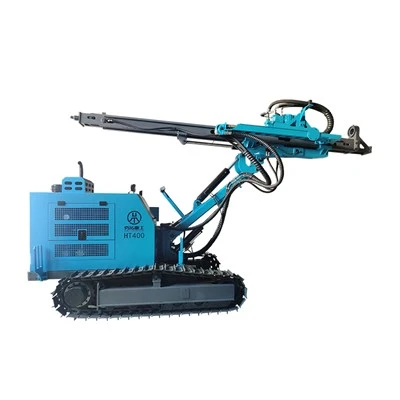
If you're interested in other types of drilling rigs, we also have the Integrated Open - pit Down - the - hole Drill Rig, which is more suitable for larger - scale operations. But for archaeological work, our mini - rigs are often the best choice.
Don't hesitate to reach out to us if you want to discuss your requirements, get a quote, or just learn more about our products. We're here to help you take your archaeological exploration to the next level.
References
- Archaeological Research Manuals. It provides general knowledge about archaeological exploration methods.
- Drilling Machine Technical Guides. These offer details about the features and limitations of different types of rock drilling machines.