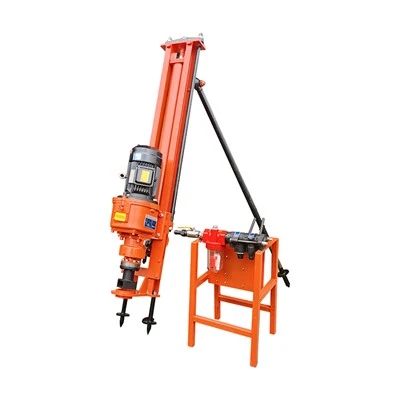
As a supplier of hand held rock drills, I often receive inquiries about the versatility of our products, especially when it comes to coal - rock drilling. This blog aims to explore whether a hand held rock drill can be effectively used for coal - rock drilling.
Understanding Hand Held Rock Drills
Hand held rock drills are compact, portable, and easy - to - operate tools. They are typically powered by compressed air, electricity, or hydraulics. These drills are widely used in various industries such as mining, construction, and quarrying for tasks like rock breaking, hole drilling in small - scale projects. Their design allows for manual control, which is beneficial in situations where precision and flexibility are required. For example, in small mining operations or construction sites with limited space, a hand held rock drill can be easily maneuvered to reach the desired drilling location.
Characteristics of Coal - Rock
Coal - rock is a composite material that consists of coal and rock components. The physical properties of coal - rock vary significantly depending on the location and the geological formation. Generally, coal has a relatively lower hardness compared to most types of rock. However, the presence of rock layers within coal - rock can increase its overall hardness and abrasiveness. Some coal - rock may contain quartz, feldspar, or other hard minerals, which can pose challenges to the drilling process.
Feasibility of Using Hand Held Rock Drills for Coal - Rock Drilling
Advantages
- Portability and Maneuverability: In coal mines, there are often narrow tunnels and small working spaces. Hand held rock drills can be easily carried and operated in these confined areas where larger drilling equipment may not be able to reach. For example, in underground coal mining, workers can use hand held rock drills to create holes for blasting or support installation in areas with limited access.
- Cost - effective: For small - scale coal - rock drilling projects, investing in large, expensive drilling rigs may not be economically viable. A hand held rock drill is a more affordable option, and it can still achieve satisfactory results in terms of small - scale hole drilling.
- Flexibility: With a hand held rock drill, operators can adjust the drilling angle and position easily according to the specific requirements of the coal - rock formation. This flexibility is particularly useful when dealing with uneven coal - rock surfaces or when precise hole placement is needed.
Limitations
- Drilling Depth and Diameter: Hand held rock drills usually have limitations in terms of the maximum drilling depth and diameter. In coal - rock, if the hole needs to be deep or have a large diameter for ventilation or coal extraction purposes, a hand held rock drill may not be able to meet these requirements. For instance, in large - scale coal mining operations, deep holes with diameters of several inches may be needed, which are difficult to achieve with a hand held drill.
- Hardness and Abrasiveness: As mentioned earlier, coal - rock can contain hard minerals. These hard components can cause rapid wear and tear on the drill bits of hand held rock drills. The continuous impact and friction during drilling can lead to dulled or damaged bits, which reduces the drilling efficiency and increases the operating costs due to frequent bit replacements.
- Power and Efficiency: Hand held rock drills generally have lower power compared to larger, stationary drilling rigs. In coal - rock with high hardness, the low power may result in slow drilling speed and more frequent stops to prevent overheating of the drill. This can significantly affect the overall productivity of the coal - rock drilling operation.
Cases of Using Hand Held Rock Drills in Coal - Rock Drilling
In some small - scale coal mines or coal processing plants, hand held rock drills have been used effectively for specific tasks. For example, in coal seam exploration, workers can use hand held rock drills to collect small - scale rock samples for analysis. These samples can provide valuable information about the coal quality, the structure of the coal - rock formation, and the presence of any potential hazards.
Another application is in the maintenance of coal - handling facilities. Hand held rock drills can be used to drill holes for installing support structures or for making minor repairs to the coal - rock surrounding the facilities.
Comparison with Other Drilling Equipment
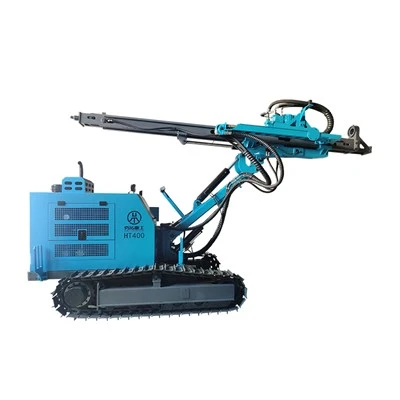
When compared to larger drilling equipment such as the Integrated Open - pit Down - the - hole Drill Rig, hand held rock drills are much more limited in their capabilities. The integrated open - pit down - the - hole drill rig is designed for large - scale, deep - hole drilling in open - pit mines. It has high power, large - scale drilling capacity, and advanced control systems, which are suitable for continuous and high - volume coal - rock drilling.
On the other hand, small down the hole drilling equipment offers a middle - ground solution. It is more powerful than a hand held rock drill and can achieve greater drilling depths and diameters. However, it may still lack the portability and flexibility of a hand held drill.
The mini pneumatic drill is similar to a hand held rock drill in terms of size and portability. However, it may have different power sources and operating mechanisms, which can affect its performance in coal - rock drilling.
Tips for Using Hand Held Rock Drills in Coal - Rock Drilling
- Select the Right Drill Bit: Choose a drill bit that is suitable for the hardness of the coal - rock. For coal - rock with high hardness, carbide - tipped or diamond - coated drill bits can be more effective in reducing wear and improving drilling efficiency.
- Proper Maintenance: Regularly clean and lubricate the hand held rock drill to ensure its smooth operation. Check the drill bits for wear and replace them promptly when necessary.
- Operator Training: Provide proper training to the operators to ensure they understand the characteristics of the coal - rock and the correct operation methods of the hand held rock drill. This can help improve the drilling quality and reduce the risk of equipment damage.
Conclusion
In conclusion, a hand held rock drill can be used for coal - rock drilling, but it has its own advantages and limitations. It is a suitable option for small - scale projects, confined spaces, and tasks that require high flexibility and precision. However, for large - scale, deep - hole, or high - volume coal - rock drilling, other types of drilling equipment may be more appropriate.


If you are interested in our hand held rock drills or have any questions about coal - rock drilling, please feel free to contact us for further discussions and potential procurement opportunities. We are committed to providing high - quality products and professional technical support to meet your needs.
References
- Smith, J. (2018). Rock Drilling Technology. Mining Press.
- Brown, A. (2019). Coal - Rock Mechanics and Drilling. Geological Publishing.