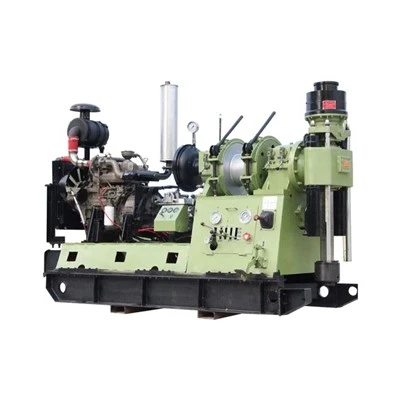
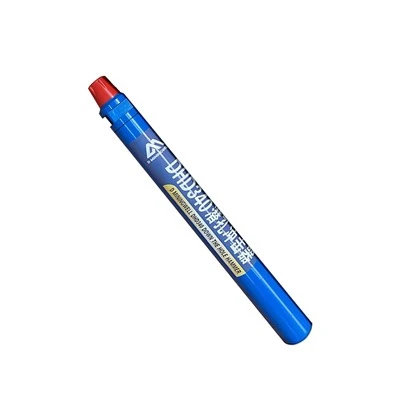
They use different machines and construction processes. The rotary drill is a large rotary head that uses rotation to rotate the underground soil into the drill bit, and then pulls out the soil to make a hole by reciprocating motion. The impact drill uses gravity and water to beat the soil in the pile hole into mud and then uses a pump to pressurize and pump it out of the ground to make a hole. The rotary drilling uses the rotation of the drill bit to mix the soil and water into mud and then pump it out to make a hole. The corresponding pile hole can be applied according to the machine used.
The following is an analysis and comparison between the three most common drilling rigs currently: impact drill, rotary drill and rotary drilling rig.
Analysis of impact drill
The impact drill is a kind of hole-making machine that can "take both soft and hard" and is suitable for almost all geological conditions, from clay, sandy soil, to gravel layer, pebbles, boulders to soft rock and hard rock. Impact drills are particularly suitable for the hole-making of rock-embedded piles in mountainous hills. When the surface layer is soft soil, the surface soil can be replaced to stabilize the drilling rig.
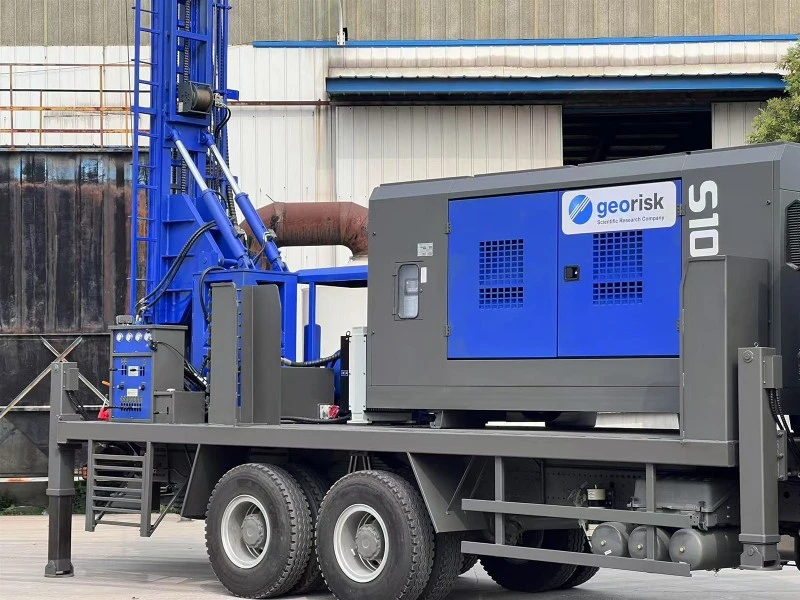
Impact drills can also be assembled by themselves according to the actual situation of the construction site, and they are easy to operate. In terms of the structure of the drilling rig and the simplicity of the operating procedures, impact drills are superior to rotary and rotary drilling rigs. If only the geological conditions are considered, without considering the progress of the project and the economic benefits, impact drills can be used. In terms of hole-making speed, in certain geology, impact drills are not as good as rotary and rotary drilling rigs. In terms of the cost per linear meter of single-hole drilling, impact drills are the highest, rotary drills are the lowest, and rotary drilling rigs are between the two.
Dminingwell's integrated crawler drilling machine is a straight-arm down-the-hole drill with excellent performance and wide application. It is suitable for blasting holes in open-pit mines, quarries and various step-type excavations, with a drilling range of 90-203mm. The powerful power head enables it to maintain high efficiency even when operating in large diameters.
Analysis of rotary drilling rigs
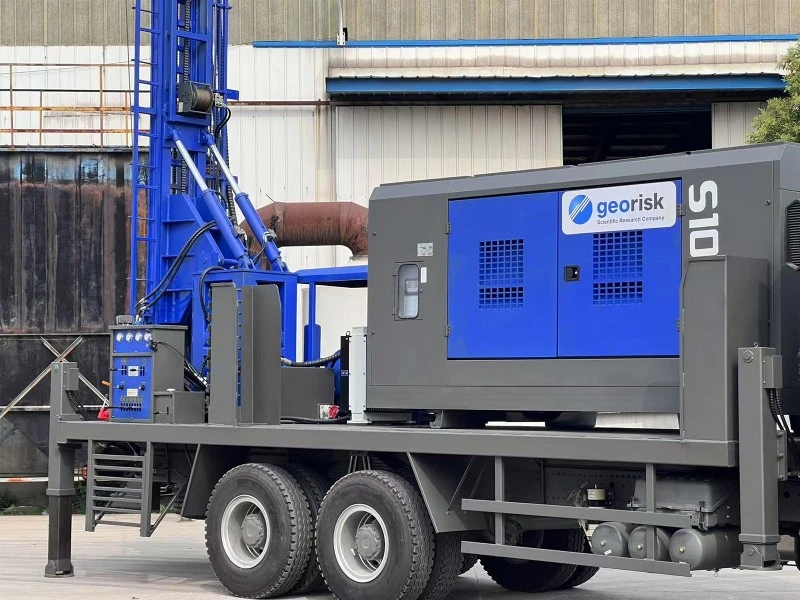
Whether it is positive circulation or split circulation, rotary drilling rigs are suitable for clay soil, soil layers containing a small amount of gravel and pebbles, and soft rocks, but not for a large number of pebble layers and hard rock layers. Among them, positive circulation drilling rigs are also suitable for silt sand, fine medium and coarse sand layers. If the mud conditioning index of the reverse circulation drilling rig is not enough or the drilling speed is too fast in the sand layer, it may cause a hole collapse accident.
Rotary drilling rigs prove to be exceptionally adept at friction pile drilling in flatlands characterized by dense inland alluvial strata and coastal tidal flats. Considering the rate of holes drilling, rotary drilling rigs surpass impact drilling rigs in speed, whereas they lag behind rotary drilling rigs. Considering the expense of each project, rotary drilling rigs stand out as the most cost-effective and economical among the trio of drilling rig varieties.
Analysis of rotary drilling rigs
Disadvantages of rotary drilling rigs
Rotary drilling rigs are also restricted by various conditions such as the geological conditions of the construction strata, the inherent factors of the machinery, and human factors such as operators, resulting in some situations that are currently difficult to deal with, mainly unsuitable for hard strata. In the initial stage of the use of rotary drilling rigs, blind superstition or lack of understanding of rotary drilling rigs can easily give people illusions and cause misunderstandings, which directly affect the use effect of rotary drilling rigs. Rotary drilling rigs are also restricted by the geological conditions of the strata. Drilling becomes more difficult in hard rock layers, dense gravel layers, and boulder layers. If the drill bit is not replaced, accidents are prone to occur. Although it is possible to equip hard rock layers, pebble layers with a particle size of more than 100mm, and boulder layers with a diameter greater than 200mm with barrel-type core drill bits, impact drill bits, and impact grab cone drill bits, their actual efficiency and actual effect are still not ideal compared with traditional impact drills.
Analysis of Misunderstandings in Use
When using rotary drilling rigs to form holes, common pile foundation construction accidents such as hole collapse and diameter reduction will occur like other drilling rigs. The causes of these accidents are subjective and objective, and human factors and defects in the current mechanical equipment design coexist. The construction process of rotary drilling rigs varies depending on the strata and methods. If you don't have an objective understanding of the rotary drilling rig and don't have a deep understanding of the local geological conditions, it will be difficult to avoid accidents.
Summary
When choosing a hole-forming machine in pile foundation construction, you need to consider many factors. When choosing a hole-forming machine, first consider the geological conditions of the stratum. According to the geological column chart, choose the hole-forming machine in a targeted manner. Secondly, consider the economic cost, construction period, environmental protection and civilized construction of the drilling rig. If you need high-quality drilling and mining solutions and drilling equipment, you can leave us a message, Dminingwell has more than 20 years of experience in the manufacture and sale of drilling rigs, and a professional team to answer your questions.