How Does a Water Well Drilling Rig Work? A Comprehensive Guide
Water well drilling rigs are essential for accessing groundwater, whether for residential, agricultural, or industrial purposes. These machines use specialized techniques to penetrate underground rock and soil layers, creating a sustainable water source. In this article, we'll break down how water well drilling rigs operate, explore their key components, and discuss the technologies that make them efficient across diverse geological conditions.
Basic Components of a Water Well Drilling Rig
A typical drilling rig comprises several critical parts working in tandem:
Derrick/Mast: A tall structure that supports the drilling tools and provides vertical stability.
Hoisting System: Includes a winch and cables to lift and lower the drill pipe.
Rotary Table or Power Head: Generates rotational force to drive the drill bit.
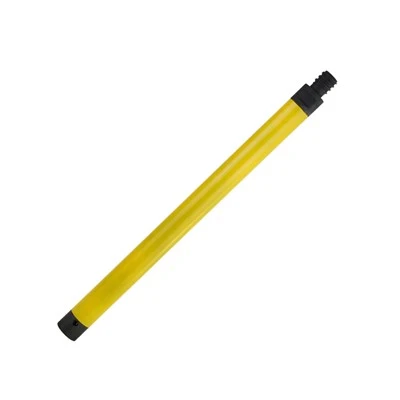
Drill Pipe and Bit: The pipe transfers torque to the bit, which crushes or cuts through rock.
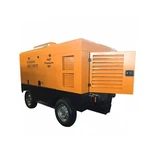
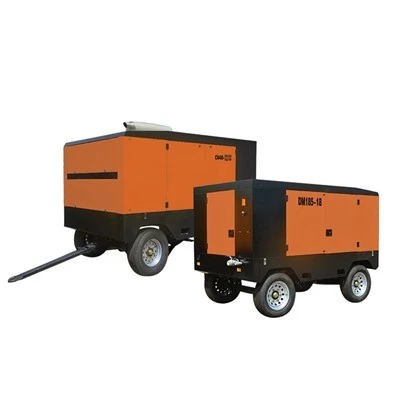
Mud Pump or Air Compressor: Circulates fluid (e.g., drilling mud) or air to remove cuttings and cool the bit.
Hydraulic System: Powers movement and pressure control for drilling operations.
Modern rigs, such as the "Epiroc T2W", integrate advanced features like self-propelled mobility, hydraulic controls, and dual drilling modes (rotary and down-the-hole), enabling adaptability to challenging terrains.
Core Drilling Principles
Drilling rigs primarily rely on two mechanical actions: "rotary motion"and "percussion". Here's how they work:
Rotary Drilling
Mechanism: The drill bit rotates at high speeds, grinding through soil and rock.
Fluid Circulation:
Positive Circulation: Drilling mud is pumped down the drill pipe, exits through the bit, and carries cuttings upward via the annular space between the pipe and borehole wall. The mud is then filtered and reused.
Reverse Circulation: Cuttings are suctioned upward through the drill pipe's inner cavity, creating faster debris removal. This method is ideal for loose or pebble-rich layers.
Applications: Effective in soft to medium-hard formations like clay, sand, and limestone.
Percussion Drilling
Mechanism: A heavy hammer or vibrator repeatedly strikes the drill bit, breaking hard rock layers.
Air or Mud Assist: Compressed air or foam is often used to flush out debris. This method suits extremely hard or fractured bedrock.
Advanced Drilling Technologies
To enhance efficiency, modern rigs incorporate specialized systems:
Dual Fluid Systems
Some rigs, like the "FYL200", support both "mud pumps" and "air compressors". Operators can switch between systems based on geological conditions:
Mud Drilling: Stabilizes boreholes in loose soils and prevents collapse.
Air Drilling: Reduces water usage, ideal for arid regions or frozen ground.
Down-the-Hole (DTH) Hammer
Used in hard rock drilling, the DTH hammer combines rotary motion with high-frequency percussion. Compressed air drives the hammer while simultaneously clearing cuttings, achieving speeds of 10–35 meters per hour in granite or basalt.
Foam Drilling
Foam injected into the drill pipe lightens the fluid density, enabling :"underbalanced drilling". This technique minimizes formation damage and improves penetration rates in water-sensitive or karst (limestone) layers.
Step-by-Step Drilling Process
1. Site Preparation: Clear the area and set up the derrick.
2. Drilling Initiation: The rotary table or power head spins the drill pipe, while the hoist applies downward pressure.
3. Cuttings Removal: Mud or air flushes debris to the surface.
4. Casing Installation: Steel or PVC pipes are inserted to stabilize the borehole.
5. Well Development: Pumping or surging cleans the well to maximize water flow.
Challenges and Solutions
Hard Rock Layers: DTH hammers or diamond-tipped bits improve efficiency.
Collapsible Soils: Bentonite mud reinforces borehole walls.
Deep Wells (200+ meters): Rigs like the **FYL200** use high-torque hydraulic systems and extended drill pipes.
Environmental and Cost Considerations
Water Conservation: Air drilling and foam systems reduce freshwater use.
Mobility: Self-propelled rigs (e.g., crawler-mounted or truck-mounted) minimize site disruption.
Cost Efficiency: Reverse circulation and dual-system rigs lower operational expenses by speeding up drilling and reducing downtime.
Water well drilling rigs combine mechanical power, fluid dynamics, and adaptive technologies to tackle diverse geological challenges. From rotary and percussion methods to advanced air/foam systems, these machines ensure efficient, sustainable water access. Innovations like the **Epiroc T2W** and **FYL200** highlight the industry's shift toward versatility and environmental responsibility, making them indispensable in global water resource development.