The design and functionality of the drilling rig enable it to adapt to various geological conditions, but different geological environments can indeed have an impact on the performance and operation of the drilling rig. Here are some key points to illustrate the adaptability of drilling rigs under different geological conditions:
1. Hardness: The drilling rig needs to be able to adapt to rocks of different hardness, ranging from soft soil to hard basalt or granite. Rocks with high hardness may require stronger and more durable drill bits.
2. Humidity: Geological conditions with high humidity may cause the drilling rig to encounter greater friction during operation, which may require special drill bits and mud systems to maintain drilling efficiency.
3. Dryness: In dry geological conditions, such as deserts or arid areas, drilling rigs may be affected by dust and wind, and additional protective measures may be required.
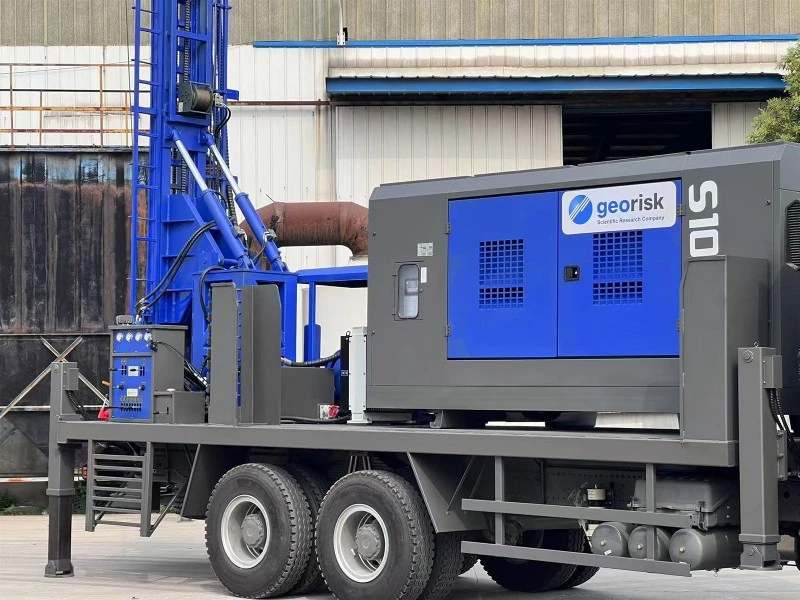
4. Geological structure: Different geological structures, such as fault zones, bedding structures, soft soil layers, etc., can affect the drilling direction and force of the drilling rig, and may require adjustments to the drilling rig settings or the use of special drilling tools.
5. Groundwater: The presence of groundwater may affect the operation of drilling rigs, such as groundwater pressure causing borehole collapse or requiring the use of special drilling fluids to control groundwater.
6. Rock stability: Unstable rock formations may cause borehole displacement or drill bit wear, requiring the use of geological exploration data to plan the position and direction of the drilling rig.
7. Environmental restrictions: In certain areas, such as cities or nature reserves, there may be noise, vibration, or other environmental restrictions that require drilling rigs to have low noise and vibration emissions.
8. Climate conditions: Extreme climate conditions such as high temperature, low temperature, storms, etc. may affect the efficiency of the drilling rig and require appropriate measures and equipment.
Of course, here are several special models of drilling rigs designed for different geological conditions and application scenarios. They are widely used around the world and have strong adaptability and professionalism:
🔹1. Atlas Copco ROC L8 Surface Drill Rig
Type: Top Hammer Surface Drill Rig
Applicable geology: medium-hard to hard rock formations (such as granite, basalt)
Application: quarry blasting holes, open-pit mines
Features:
High-frequency impact system improves hard rock penetration
Can be equipped with intelligent drilling control system for automatic positioning
Applicable to harsh environments such as high altitude and extreme cold
🔹2. Boart Longyear LR™250 Sonic Drill
Type: Sonic Drilling Rig
Applicable geology: sand, silt, pebble and other difficult-to-sample strata
Application: environmental sampling, geological survey, hydrological survey
Features:
High-frequency vibration of sonic waves enables the drill bit to "penetrate" complex loose layers
High-fidelity coring rate is suitable for scientific research and contaminated site investigation
Can minimize mud use, environmentally friendly and efficient
🔹3. MTI DM75 Blasthole Drill
Type: Rotary Blasthole Drill
Applicable geology: Hard rock formations, large-diameter drilling in mines
Application: Large open-pit mines
Features:
Maximum hole diameter up to 311mm
Optional air or foam-assisted drilling system
Powerful propulsion system suitable for deep hole operations (over 50 meters)
🔹4. ZHIGAO ZEGA D535T Crawler Drill
Type: crawler type fully hydraulic drilling rig
Applicable geology: medium hard rock, broken layer, mining rock mass
Application: water well, geothermal, mining blasting
Features:
Equipped with high pressure screw air compressor, suitable for DTH impactor
Equipped with automatic rod changing system and remote control operation function
Adaptable to inclined hole and multi-angle drilling
🔹5. Bauer BG 28 Rotary Drilling Rig
Type: Large Rotary Piling Rig
Applicable geology: gravel layer, clay layer, pebble layer, soft rock
Application: pile foundation of high-rise buildings, bridge foundation
Features:
Maximum drilling depth 70m, hole diameter 2.5m
Can switch between continuous spiral, drill tube, casing drilling and other tools
Equipped with automatic vertical control and data recording system
✅Summarize:
| model | type | Applicable Geology | Typical Uses |
|---|---|---|---|
| ROC L8 | Top hammer drill rig | Hard rock formations | Quarries, mines |
| LR™250 Sonic | Sonic drill rig | Loose formations | Environmental sampling, hydrology |
| DM75 | Large-diameter blasting drill rig | Hard rock, deep drilling | Open-pit mines |
| ZEGA D535T | Crawler hydraulic drill rig | Medium hard rock, broken zone | Wells, blast holes |
| Bauer BG 28 | Rotary pile foundation drill rig | Clay, pebble, sand layer | Building pile foundations, bridge foundations |
If you want to recommend a more specific model based on a certain country's market or a certain type of drilling project (such as geothermal, oil and gas, water wells), you can also tell me and I will match the appropriate equipment.