


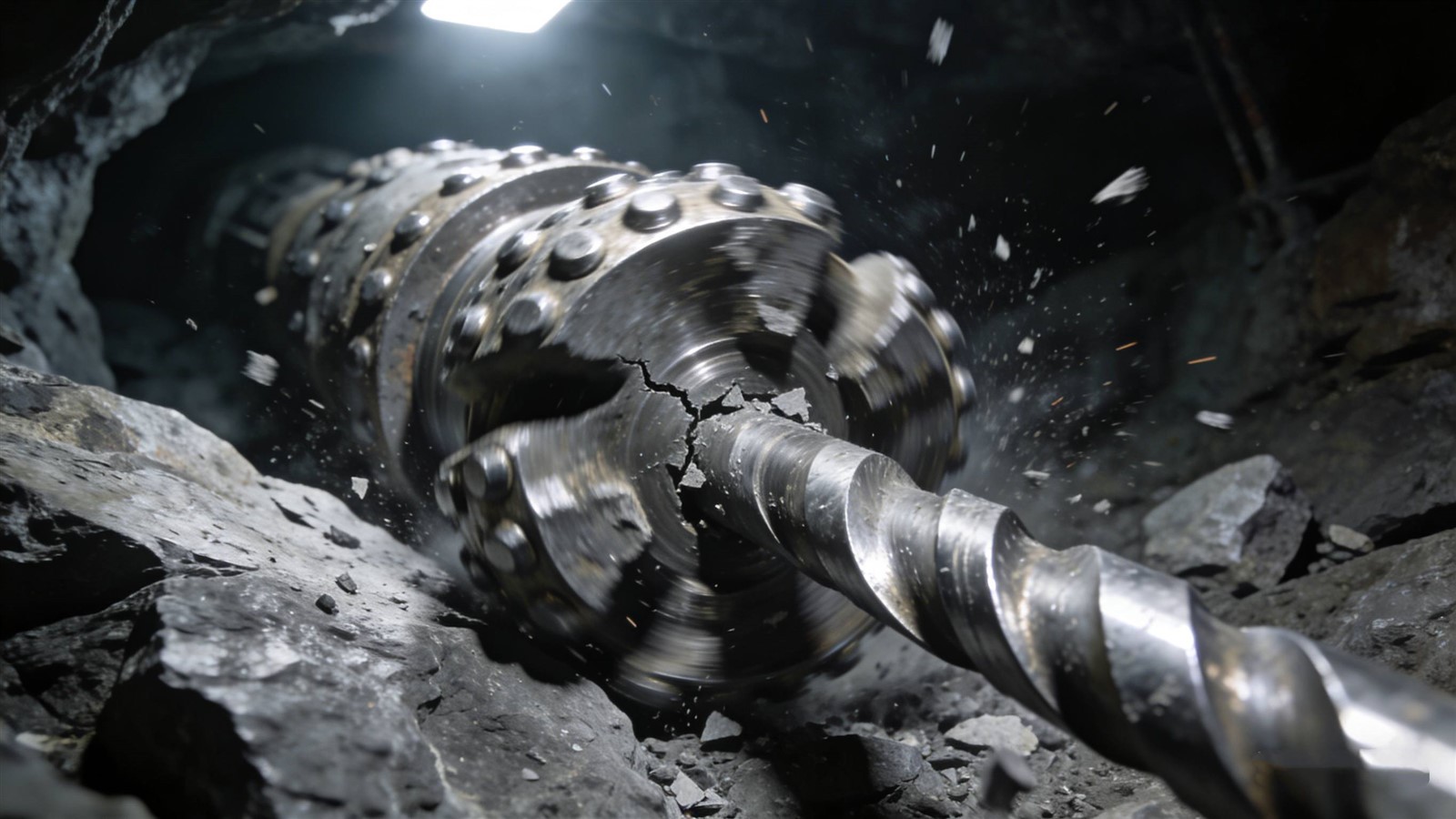
In the drilling industry, pressure is widely regarded as a core parameter affecting drilling speed-many operators intuitively believe that increasing drilling pressure can directly accelerate the rate of penetration (ROP), shorten drilling cycles, and reduce costs. However, this view overlooks the complexity of downhole environments, rock properties, and drill bit performance. The key question we need to explore is: Does higher pressure always improve drilling speed? The answer is clear: No. While appropriate pressure can promote rock breaking and improve drilling efficiency, excessive pressure often leads to counterproductive results, even causing equipment damage and safety risks. This article will deeply analyze the relationship between drilling pressure and drilling speed, and combine practical application scenarios to explain how to match pressure parameters with drill bit products and formation conditions to achieve optimal drilling efficiency.
The positive correlation between pressure and drilling speed: Within a reasonable range
Drilling pressure, as the axial force acting on the drill bit, is a necessary condition for rock breaking at the bottom of the well-it provides the driving force for the drill bit's cutting teeth to penetrate and shear the rock, directly determining the method and effect of rock breaking. When the pressure is controlled within a scientific range, its promotion effect on drilling speed is obvious, which is mainly reflected in three stages of rock breaking:
First, the surface crushing stage: When the pressure is less than the rock's compressive hardness, the cutting teeth cannot cut into the rock, and can only break the rock surface through friction, resulting in low drilling speed but a proportional increase with pressure. Second, the fatigue crushing stage: When the pressure is close to the rock's hardness, the rock surface will produce a large number of cracks under the repeated action of the cutting teeth, realizing volume fracture of the rock. Third, the volume crushing stage: When the pressure exceeds the rock's hardness, the cutting teeth can directly cut into the rock, forming efficient volume crushing, which is the ideal state of normal drilling. In this stage, matching the pressure with high-performance drill bits can maximize efficiency-for example, Baker Hughes' PDC drill bits have enhanced cutter durability, and when used with appropriate pressure, they can significantly improve ROP in hard and abrasive formations.
In addition, high-pressure jet-assisted drilling technology further verifies the positive role of reasonable pressure: by using high-pressure pumps to generate high-velocity drilling fluid jets, the jets cut slots in the rock, helping the drill bit cut rock more easily, which can increase drilling speed by 2 to 4 times in many oil wells when the pressure is controlled at 10,000 to 15,000 psi. This shows that under the premise of matching equipment and formation conditions, appropriate pressure is indeed an effective means to improve drilling speed.
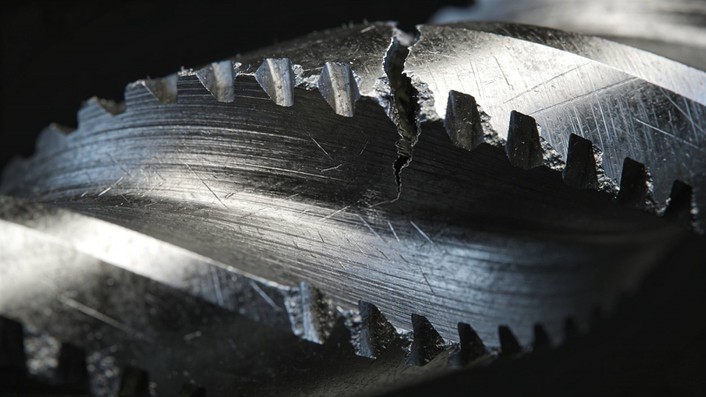
The negative impact of excessive pressure: Beyond the limit, counterproductive results
When the pressure exceeds the reasonable range, the positive correlation between pressure and drilling speed is broken, and a series of problems will occur, ultimately reducing drilling efficiency and increasing costs. The specific manifestations are as follows:
1. Accelerated drill bit wear and shortened service life
The drill bit's bearings, cutting teeth, and other components will bear greater load under excessive pressure, accelerating wear, dulling, or even damage-and the wear speed of the cutting teeth will increase significantly with the increase of pressure, and even tend to be infinite when the pressure reaches the limit value. For example, when using tricone drill bits to drill abrasive formations, excessive pressure will cause the tungsten carbide inserts to wear rapidly, making the drill bit lose rock-breaking capacity in advance, requiring frequent tripping to replace the drill bit, which not only increases non-productive time but also raises drilling costs. On the contrary, selecting appropriate drill bits and matching reasonable pressure can minimize cutting tooth wear and extend drill bit service life.
2. Drilling speed stagnation or decline
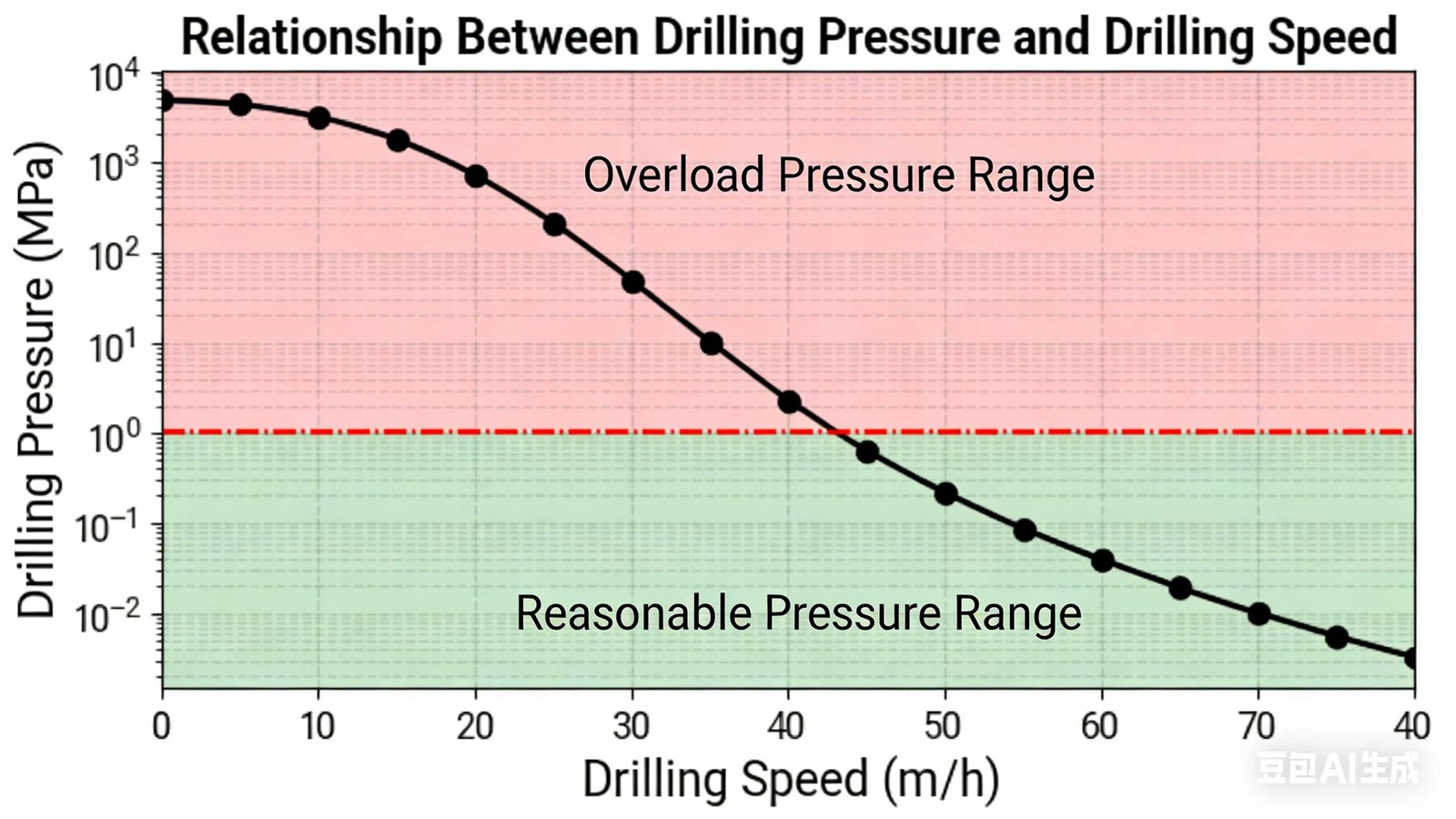
According to the relationship curve between drill pressure and drilling speed, when the pressure increases to a certain value, the growth rate of drilling speed will slow down significantly, and even stop increasing or decline. This is because excessive pressure will cause the drill bit to be overloaded, resulting in unstable drilling tool operation-such as bit jumping in fractured formations, which will not only fail to improve drilling speed but also cause the cutting teeth to chip or break, further reducing drilling efficiency. In addition, for cohesive soft rocks, excessive pressure is likely to cause water plugging and bit balling, making the drill bit unable to effectively break rock, and the drilling speed will drop sharply.
3. Increased downhole risks and equipment failure
Excessive pressure will increase the load on the drilling string, drill rig, and hydraulic system, easily leading to equipment failures such as drilling string deformation, fracture, and pump damage. In high-pressure jet-assisted drilling, if the pressure exceeds the bearing capacity of the coiled tubing and downhole motor, it will cause leakage at the drill pipe joint or damage to the motor seal, resulting in drilling accidents. At the same time, excessive pressure will increase the bottom hole differential pressure, leading to the pressure holding effect-rock cuttings are difficult to leave the bottom hole, resulting in repeated crushing, which not only reduces drilling speed but also may induce wellbore collapse and other risks.
Key factors determining the "reasonable pressure" for optimal drilling speed
To avoid the counterproductive effect of excessive pressure and give full play to the role of pressure in improving drilling speed, it is necessary to comprehensively consider three core factors and match the corresponding products and parameters:
1. Rock properties: The fundamental basis for pressure adjustment
Different grades of rocks have very different responses to pressure. Medium-hard rocks (rock grade 6 to 7) have the highest growth rate of drilling speed when pressure is increased; soft rocks (rock grade 4 to 5) are prone to bit balling, so the pressure should be reduced appropriately; hard rocks (rock grade 8 to 9) have high compressive hardness, and the growth rate of drilling speed with pressure is small, so it is necessary to match high-performance drill bits instead of simply increasing pressure. For example, when drilling geothermal formations with complex rock properties, selecting Baker Hughes' geothermal drill bits (including tricone, PDC, and hybrid types) and adjusting pressure according to formation hardness can achieve optimal drilling efficiency.
2. Drill bit type: Matching pressure to give play to product advantages
Different types of drill bits have different pressure adaptation ranges. PDC drill bits are suitable for medium and high pressure environments, and their continuous shearing action can be fully exerted under reasonable pressure to improve drilling speed; tricone drill bits have strong rock-crushing strength, but excessive pressure will accelerate bearing wear; Kymera hybrid drill bits combine the advantages of roller cones and diamond bits, and can adapt to different pressure environments, but still need to be adjusted according to downhole conditions. In addition, adaptive drill bits can adjust the depth of cut according to downhole pressure changes, automatically optimizing drilling efficiency, which is an ideal choice for complex formations where pressure is difficult to stably control.
3. Drilling system and auxiliary conditions: Ensuring pressure stability and effectiveness
The performance of the drilling rig, the quality of the drilling fluid, and the combination of drilling tools will all affect the effect of pressure adjustment. For example, the power of the drilling rig determines the maximum pressure that can be provided stably; the density and viscosity of the drilling fluid will affect the bottom hole differential pressure, and unreasonable drilling fluid performance will offset the positive effect of pressure adjustment. The advanced high-pressure coiled-tubing drilling system developed by the National Energy Technology Laboratory solves the problem of high-pressure fluid transmission through concentric coiled tubing, avoiding leakage and ensuring that the pressure can be effectively transmitted to the drill bit, thereby improving drilling speed.
Our Certificate

Conclusion: Optimal pressure, not higher pressure, is the key to improving drilling speed
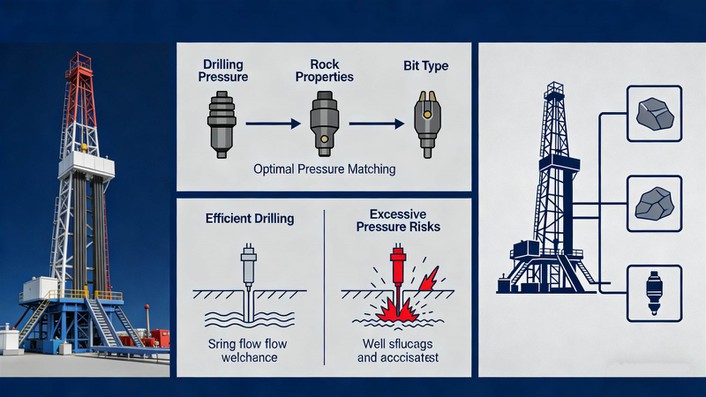
To sum up, higher pressure does not always improve drilling speed. The relationship between pressure and drilling speed is affected by rock properties, drill bit type, and drilling system performance-only when the pressure is controlled within a reasonable range and matched with appropriate drill bits, drilling fluid, and equipment can it effectively promote rock breaking and improve drilling efficiency. Excessive pressure will only accelerate equipment wear, cause drilling speed to decline, and increase downhole risks.
In practical drilling operations, operators should first conduct a comprehensive analysis of the formation conditions, select suitable drill bit products (such as PDC drill bits for abrasive formations and hybrid drill bits for complex formations), and then adjust the pressure parameters according to the drilling process and equipment status, combined with the drill speed equation to calculate the threshold pressure and optimal pressure range. At the same time, by using advanced drilling systems such as high-pressure jet-assisted drilling and adaptive drill bits, the adaptability of pressure to complex downhole environments can be improved, realizing efficient, safe, and low-cost drilling.
If you need to further match the pressure parameters with specific drill bit products or obtain technical guidance on pressure adjustment in different formations, you can consult our professional team and learn more about high-performance drilling solutions through our product center and technical news section.


